


Was Emergency the only time the country's democracy got trampled upon?
In her book ‘The Emergency: A Personal History’ journalist Coomi Kapoor aptly opined - “Indira Gandhi suffered from a deep sense of insecurity. In sharp contrast to her father, Jawaharlal Nehru, she saw politics as primarily a struggle for power that had nothing to do with ideals or ideology.”
The then Indira Gandhi government imposed the Emergency on this day in 1975, suspending civil liberties and censoring the press. The morning after a crackdown began on opposition leaders and activists with scores of them being jailed across the country. The Emergency was lifted on March 21, 1977.
The period of Emergency in India, declared by Prime Minister Indira Gandhi from 1975 to 1977, is a significant and controversial chapter in the country's history. Mrs Gandhi declared a state of Emergency in India citing internal disturbances. During this time, fundamental rights were suspended, civil liberties were curtailed, opposition leaders were arrested, censorship was imposed on the media, and the government acquired sweeping powers.
The Emergency period was marked by widespread political repression, mass sterilisation campaigns, forced evictions, and human rights abuses. Many critics argued that the Emergency was used by the government to suppress dissent, consolidate power, and weaken democratic institutions. The Emergency was seen by many as a serious blow to democracy and constitutional rights in India. However, it also led to a strong backlash against authoritarianism and played a role in mobilising public opinion against such undemocratic practices.
Emergency: Anti-constitutional?
During the period of Emergency there were several actions taken by the government that were seen as anti-constitutional and a direct assault on democratic principles. One of the most notable aspects of the Emergency was the suspension of fundamental rights guaranteed by the Indian Constitution.
Freedoms such as the right to freedom of speech and expression, the right to assemble peacefully, and the right to move freely throughout the territory of India were suspended. This curtailment of fundamental rights went against the spirit of the Constitution.
During the Emergency, prominent opposition leaders, activists, and political opponents of the government were arrested under preventive detention laws. The arrests were often arbitrary and without proper legal recourse, leading to a crackdown on dissent and political opposition.
The government imposed strict censorship on the media during the Emergency. News outlets were heavily censored, and journalists were pressured to toe the government line. This control over the media violated the freedom of the press, a key pillar of democracy.
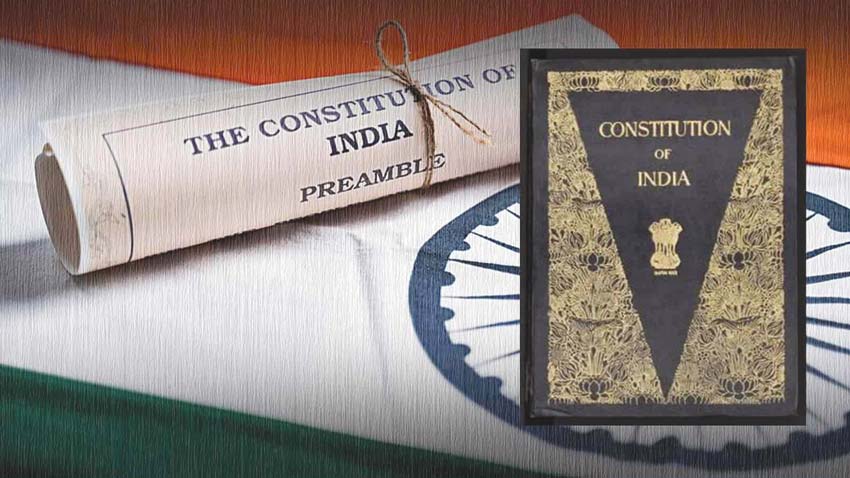
Indira Gandhi's government used the Emergency period to centralise power in the hands of the executive, diminishing the role of other democratic institutions such as the judiciary and the legislature. This centralisation of power undermined the system of checks and balances enshrined in the Indian Constitution.
One of the most controversial aspects of the Emergency was the government's implementation of a forced sterilisation program as a form of population control. This violated the bodily integrity and reproductive rights of individuals, going against the principles of human rights and individual liberty.
The Emergency also saw a significant erosion of federalism in India, with the central government exerting control over state governments and undermining the autonomy of states. This centralisation of power at the expense of states' rights was seen as a violation of the constitutional principles of federalism.
The Emergency declared by Indira Gandhi was widely condemned for its anti-constitutional and anti-democratic actions. The period served as a stark reminder of the fragility of democratic institutions and the importance of safeguarding the principles of democracy, rule of law, and individual rights.
Emergency: Was there a positive?
While the popular perception about Emergency is largely negative, there are some who argue that certain actions taken during that time had positive outcomes as well. The centralisation of power during the Emergency allowed for swift decision-making and implementation of policies without the delays associated with bureaucratic processes and political opposition.
Proponents argue that this efficiency helped in the implementation of certain development projects and programs. The government's emphasis on population control during the Emergency, although controversial due to forced sterilisation programs, brought attention to the issue of population growth in India. Some argue that this focus on population control laid the groundwork for future policies and initiatives aimed at addressing population growth in a more humane and voluntary manner.
There is a section of people who suggest that the Emergency period saw the implementation of land reforms and measures aimed at addressing issues related to land distribution and tenancy rights. These reforms were seen as positive steps towards social justice and equitable distribution of resources.
It is important to note that these arguments are not universally accepted, and the negative repercussions of the Emergency, including the erosion of democratic institutions, political repression, and human rights violations, are significant and have had lasting effects on Indian society and politics. The debate over the legacy of the Emergency in India continues to be a complex and contentious issue.
One of the arguments for a positive aspect of the Emergency is the implementation of certain policies that were aimed at improving governance efficiency and addressing social issues.
Efficient Administration: The centralisation of power during the Emergency allowed for swift decision-making and implementation of policies without the delays associated with bureaucratic processes and political opposition. Proponents argue that this efficiency helped in the implementation of certain development projects and programs.
Population Control Measures: The government's emphasis on population control during the Emergency, although controversial due to forced sterilisation programs, brought attention to the issue of population growth in India. Some argue that this focus on population control laid the groundwork for future policies and initiatives aimed at addressing population growth in a more humane and voluntary manner.
Land Reforms: Some proponents suggest that the Emergency period saw the implementation of land reforms and measures aimed at addressing issues related to land distribution and tenancy rights. These reforms were seen as positive steps towards social justice and equitable distribution of resources.
It is important to note that these arguments are not universally accepted, and the negative repercussions of the Emergency, including the erosion of democratic institutions, political repression, and human rights violations, are significant and have had lasting effects on Indian society and politics. The debate over the legacy of the Emergency in India continues to be a complex and contentious issue.
Key Players: Sanjay Gandhi, the younger son of Prime Minister Indira Gandhi, played a significant role during the Emergency. He was a key figure in the government and the ruling Indian National Congress party at the time, and he wielded considerable influence over policy decisions and political matters.
During the Emergency, Sanjay Gandhi was involved in implementing various controversial policies and programs that were seen as authoritarian and repressive. Some of the key aspects of Sanjay Gandhi's role during the Emergency include:
Forced Sterilisation Campaign: Sanjay Gandhi was closely associated with the government's forced sterilisation campaign, which aimed to control population growth in India. Under his influence, the government implemented a program that involved coercive sterilisation of men, often targeting vulnerable and marginalised populations. The program was criticised for its human rights abuses and violation of individual freedoms.
Demolition Drive: Gandhi was also involved in a controversial slum clearance and demolition drive in Delhi known as "beautification campaign." Thousands of slums were demolished, and residents were forcefully relocated. The campaign was criticised for its disregard for the rights of the poor and marginalised communities.
Youth Congress and Political Control: Sanjay Gandhi was instrumental in reorganising the Youth Congress and promoting a cult of personality around himself. He sought to centralise power within the party and suppress dissent, leading to a weakening of democratic processes within the Congress party.
Influence on Government Policies: Sanjay Gandhi's close association with his mother, Prime Minister Indira Gandhi, meant that he had significant influence over government policies and decisions during the Emergency. His role in shaping key government initiatives and programs further consolidated his power within the ruling establishment.
Overall, Sanjay Gandhi's role during the Emergency was controversial and marked by authoritarian tendencies. His involvement in implementing repressive policies and programs contributed to the perception of the Emergency period as a time of political repression, curtailment of civil liberties, and violation of democratic norms.
More players in Emergency: Jagdish Tytler, Ambika Soni, Kamal Nath, and Sajjan Kumar - were some figures who were close to Sanjay Gandhi and might have some influence on the young leader.
Jagdish Tytler: Tytler has held various positions within the party and served as a Member of Parliament. Tytler has been involved in several controversies, including allegations related to the 1984 anti-Sikh riots in Delhi. These allegations have tarnished his political career and led to legal proceedings against him.
Ambika Soni: Soni has held several important positions within the party and the government. She has served as a Member of Parliament, Minister of Information and Broadcasting, Minister of Tourism, and Minister of Culture in the Indian government. Soni has been a prominent figure in Congress party politics for many years.
Kamal Nath: He has held various ministerial positions in the Indian government, including Minister of Urban Development, Minister of Commerce and Industry, and Minister of Road Transport and Highways. Kamal Nath has also served as the Chief Minister of the state of Madhya Pradesh.
Sajjan Kumar: Sajjan Kumar was a Congress politician who was implicated in cases related to the 1984 anti-Sikh riots in Delhi. He faced allegations of involvement in the violence against Sikhs that occurred following the assassination of Prime Minister Indira Gandhi. Sajjan Kumar's role in the events of 1984 led to legal proceedings against him, and he was eventually convicted of his involvement in the riots.
These individuals have had significant political careers in India, but their roles during the Emergency period specifically do not align with their later political profiles. It is important to differentiate between the Emergency period and the subsequent political activities and controversies involving these individuals.
In democratic societies, emergencies can sometimes pose challenges to the principles of democracy and the constitution. Emergency situations may require the government to take extraordinary measures to address a crisis, such as natural disasters, public health emergencies, or national security threats.
However, there is a risk that emergency powers can be abused or used in ways that undermine democratic principles and constitutional rights. In some cases, leaders have used emergency declarations to consolidate power, restrict civil liberties, suppress dissent, or bypass normal democratic processes. It is crucial for emergency powers to be limited in scope, time-bound, subject to oversight, and consistent with the rule of law and constitutional principles. Maintaining the balance between addressing emergencies effectively and upholding democratic values is a crucial challenge for any democratic society.
Indira Gandhi attempted to absolve herself and had said in her midnight address to the nation that set off a series of arrests of opposition leaders, “The President has proclaimed Emergency. There is nothing to panic about.”
Memories have different shades of emergency depending on which side of the table one is.

By Alok Sharma
(The content of this article reflects the views of writers and contributors, not necessarily those of the publisher and editor. All disputes are subject to the exclusive jurisdiction of competent courts and forums in Delhi/New Delhi only)














Leave Your Comment