


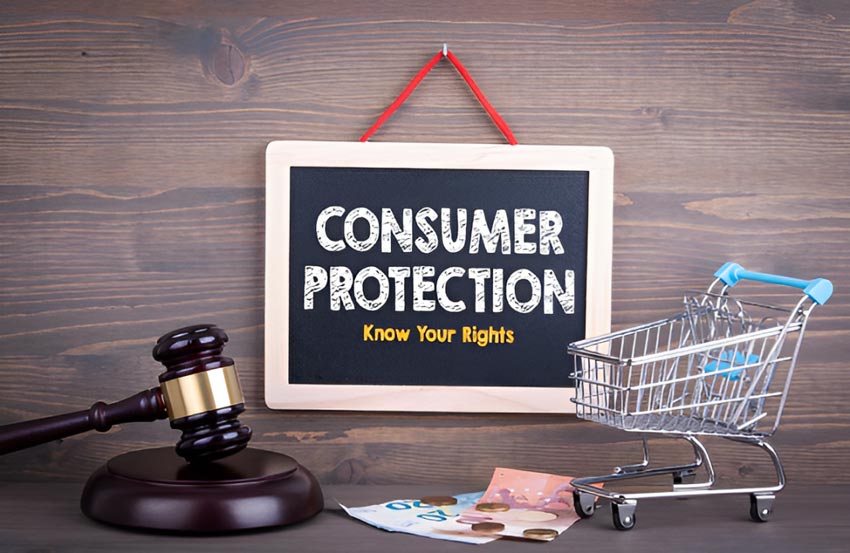
India is one of the fastest growing economies in the world and is poised to move ahead on the path of becoming a global market with the aspiration of reaching the status of upper middle income by 2047, the centenary year of independence. The country is also committed to ensure that the Indian market establishes such an ideal market system in which the increasing incidents of consumer fraud are completely controlled. For this, 24 December is celebrated as National Consumer Day in India with the objective of increasing productivity and quality related awareness among consumers, to free consumers from problems like hoarding, black marketing, adulteration, high prices, low measurement, fraud etc. and to protect the interests of consumers by informing people about consumer protection laws. In India, consumer itself has become a victim of fraud. Every person in the country is often being cheated somewhere or the other. Incidents of fraud in online market system and e-marketing have become a big problem and challenge. The government has also made laws for the protection of consumer rights. Continuous efforts are being made to awaken them. Yet consumers are asleep, while new methods of cheating are being tried for profit, because more than two-thirds of the population is not aware of its own rights.
To protect consumers from exploitation, on 24 December 1986, the Government of India implemented the historic Consumer Protection Act-1986. The purpose of this Act and subsequent amendments is to protect consumers from defective goods, careless services and unfair trade practices. The six fundamental rights of the Consumer Protection Act are right to safety, right to choose, right to be informed, right to be heard, right to get redressal and right to consumer education. This day is written in golden letters in the history of the Indian consumer movement. An important fact related to the Consumer Protection Act is that this bill was not prepared by any ruling party, rather the All India Consumer Panchayat first drafted this bill. Every one of us is a consumer in some form or the other. Any person who buys goods for his own use is a consumer. Because consumers are not organized, they are cheated everywhere. Therefore, the consumer has to wake up and save himself from these crises. Very few consumers would know what their rights are. Through National Consumer Day, consumers are made aware of their rights and along with this, if they become victims of fraud, black marketing, underweighing, cheating, etc., then they can complain about it. This law gives the right to protection against the sale of goods and services harmful to life and property, the right to be informed about the quality, quantity, capacity, purity, level and price of the purchased item, as the case may be, and the right to raise voice for it.

In this era of increasing commercialism and liberalization, as soon as we take any thing or service of our need, then the brand of consumerism is put on us. As per the law, there should not be any kind of fraud and cheating in the price paid in exchange for any thing or service, but often consumers are cheated. The identity of an aware consumer is the fight for the rights of poor quality goods and service providers. While celebrating Consumer Day, we not only talk about consumer rights but also develop advanced and proper thinking of consumers. Consumer awareness is necessary to remove economic discrepancies and disparities. Today's consumerist approach has become a kind of hypnosis, a disease of hysteria. The consumer will dance as the hypnotist makes him dance, then how will consumer protection be possible? This is possible only when we have a proper approach towards consumption. New consumerism is a kind of undertaking of new violence. Violence, competition, race for power and economic empire have got a new cruel shape from this. Because the blind race of consumerism has linked a person with accumulation, convenience, happiness, enjoyment and selfishness. Injustice, exploitation and immorality started happening in the conflict of interests. As consumerism is increasing in today's consumerist and convenience-oriented life stream, situations of climate change, pollution, nature exploitation, terrorism, war, conflict are increasing. It is necessary to control the display, show-off and extravagance prevailing in society, nation and world. The government is making consumers aware and also protecting their interests, the result of this is campaigns like 'Jago Grahak Jago'. NGO CUTS International, which works on consumer rights, has found out from time to time through surveys how many consumers are cheated and how many consumers are aware of their rights. Despite the extensive awareness campaign of the Consumer Ministry, the number of people earning profits by selling wrong products is increasing. 90 percent of the victims of such fraud have never complained. Only four to five percent of consumers register their complaint with the company or the product manufacturer. However, in recent years, due to the increase in online shopping and cyber crime, awareness is increasing among the people automatically. People in urban areas have become more aware, while people in villages are still unaware. People in villages do not even know that before shopping, one should check for quality certifications like ISI, ISO and Agmark.
Uday India Bureau














Leave Your Comment