


India’s needs to make gully erosion management a priority, to meet its target of halting land degradation by 2030 in line with the agenda of the United Nations, argues this study.
Gully erosion is increasing the severity of land degradation in India.
What are gullies?
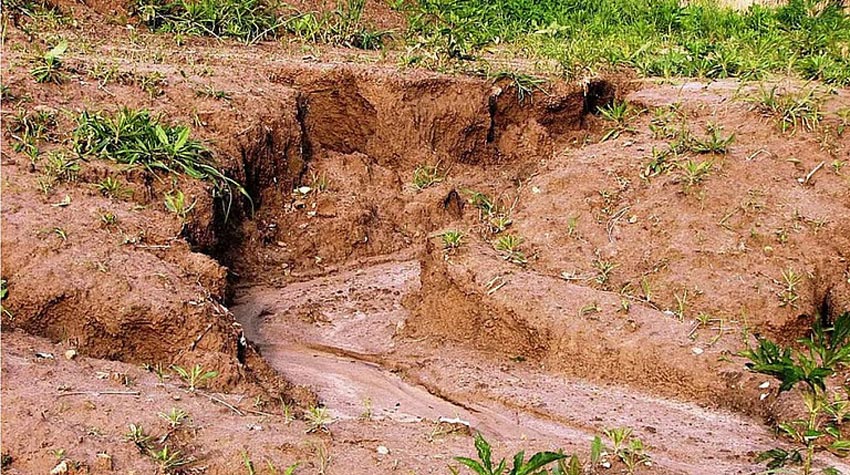
A gully is a common landform system found in mountainous and hilly areas and is formed by surface erosion as a result of temporary water flows. It can however get drastically eroded due to flow of concentrated amounts of surface and /or subsurface runoff forming open, unstable channels that have been cut more than 30 centimetres deep into the ground, causing severe land degradation.
Gully erosion is the most destructive form of land erosion
Gully erosion stands out from other types of soil erosion in terms of depth and intensity of erosion and has a negative impact on soil quality, depletes the landscape of carbon and heavy metal storage, decreases crop yields and biomass, affects water quality, reduces reservoir storage capacity, alters catchment hydrological functioning and brings about drastic land use changes.

Prolonged gully erosion can lead to creation of badlands or degraded lands
Earlier gully mapping exercises in India involved identification of badlands as areas to be rehabilitated and reclaimed and badlands management was a national policy priority. However, there is no accurate information on the current spatial distribution and severity of gully erosion in India beyond the regions affected by the badlands. This paper titled 'Gully erosion is a serious obstacle in India’s land degradation neutrality mission' published in Nature, Scientific Reports presents the findings of a study that aimed at creating the first detailed spatial inventory of gully erosion in India.
The study finds that:
Gully erosion is extensive in India
The features of gully erosion differ by regions
Gully erosion in the eastern states though significant continues to be ignored
Gully erosion in the eastern and southern regions needs attention
Gully erosion in eastern India poses a higher challenge to achieving land degradation neutrality in India as compared to central and western India
Land management policies in India need to focus on gully erosion and recognise differences between badlands and gullies
India urgently needs a land management policy that not only shows an appreciation for the overall scale of its gully erosion problem, but also recognises the fundamental differences between badlands and gullies in terms of geomorphology and evolutionary dynamics as well as the range of their social and environmental impact.
An agroforestry policy formulated in 2014 constitutes one of the cornerstones of India’s LDN mission. There is a need for a complementary land management policy, which outlines a strategy to find solutions to remedy various types of land degradation, including gully erosion.
However, considering that gully erosion rates are expected to increase further due to higher rainfall intensities induced by climate change, gully rehabilitation should be accorded maximum importance in India’s LDN plans, argues the paper.
By Anindya Majhi et al
(https://www.indiawaterportal.org/agriculture/farm/improved-gully-erosion-map-needed-india)
(The content of this article reflects the views of writers and contributors, not necessarily those of the publisher and editor. All disputes are subject to the exclusive jurisdiction of competent courts and forums in Delhi/New Delhi only)














Leave Your Comment