


The history of defence equipment manufacturing in India since independence reflects a gradual shift from dependence to self-reliance. In 1947, India inherited a limited industrial base and relied heavily on imports to meet its military needs. Early efforts focused on strengthening government-run factories under the Ordnance Factory Board, which produced small arms, ammunition, and basic military equipment. In the 1950s and 1960s, India expanded its defence production by establishing public-sector undertakings. However, wars such as the Indo-China War of 1962 and the Indo-Pak War of 1965 exposed weaknesses in indigenous capabilities, prompting increased imports.
India ranks among the world’s top three arms importers, driven by security challenges and the need for advanced military technology. The country sources major defence equipment from Russia, France, the United States, and Israel. Russia has traditionally been the largest supplier, providing fighter aircraft such as the Su-30 MKI, tanks (T-90), and the S-400 air defence system. France supplies Rafale fighter jets and advanced avionics, while the United States provides transport aircraft (C-17, C-130J), helicopters, and surveillance systems. Israel contributes drones, missile systems, and electronic warfare technology. Key imports include fighter aircraft, submarines, air defence systems, artillery guns, and high-tech electronics. Despite growing domestic production, imports remain essential due to technological gaps and urgent operational requirements.
Defence Manufacturing Ecosystem
India has developed a robust and diverse defence manufacturing ecosystem comprising public sector undertakings (DPSUs), private companies, and MSMEs. DPSUs form the backbone of India’s defence manufacturing sector, accounting for about 75% of total production. There are 16 such enterprises under the Ministry of Defence.
Hindustan Aeronautics Limited (HAL)
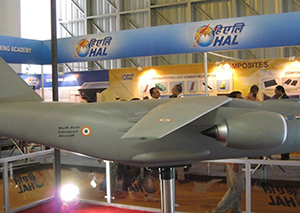
It is India’s premier aerospace and defence company, established in 1940 and headquartered in Bengaluru. It plays a crucial role in the design, manufacture, and maintenance of aircraft, helicopters, and avionics for the Indian Armed Forces. HAL is known for producing the Light Combat Aircraft (Tejas), the Advanced Light Helicopter (Dhruv), and the Light Combat Helicopter. It also undertakes licensed production and upgrades of aircraft such as the Su-30MKI and the Jaguar. The company supports indigenous defence production and contributes significantly to India’s self-reliance in aerospace technology, while expanding into exports and global partnerships.
Bharat Electronics Limited (BEL)
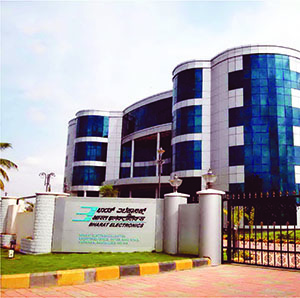
BEL, a leading public sector enterprise under the Ministry of Defence, was established in 1954 and is headquartered in Bengaluru. It specialises in defence electronics, supplying advanced systems to the Indian Armed Forces. BEL manufactures radars, communication systems, electronic warfare equipment, naval systems, and missile electronics. It has played a key role in projects such as the Akash missile systems and integrated battlefield communication networks. The company also serves civilian sectors, including homeland security and space electronics. With strong R&D capabilities, BEL contributes significantly to India’s self-reliance and modernisation in defence technology.
Bharat Dynamics Limited (BDL)
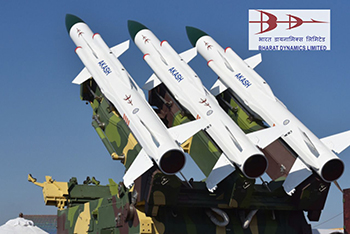
It is another public sector enterprise under the Ministry of Defence, established in 1970 and headquartered in Hyderabad. It specialises in manufacturing guided missile systems and allied defence equipment. BDL produces a wide range of missiles, including anti-tank guided missiles, surface-to-air missiles, and underwater weapons, often in collaboration with the DRDO. It is a key production agency for systems such as Akash and other strategic missile platforms. The company plays a vital role in strengthening India’s missile capabilities and promoting self-reliance in defence manufacturing.
Bharat Earth Movers Limited (BEML)
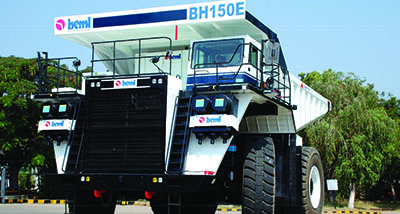
BEML, a leading public sector enterprise under the Ministry of Defence, was established in 1964 and is headquartered in Bengaluru. It manufactures a wide range of heavy equipment for the defence, mining, construction, and rail sectors. In defence, BEML produces military vehicles, including high-mobility trucks, tank transporters, and logistics support vehicles for the Indian Armed Forces. It also supplies engineering equipment for infrastructure development in border areas. With strong manufacturing capabilities and innovation, BEML contributes significantly to India’s defence logistics and self-reliance in critical ground support systems.
ISRO
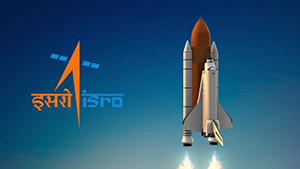
The Indian Space Research Organisation (ISRO) plays a vital role in strengthening India’s defence capabilities through space-based technologies. It provides satellite support for communication, navigation, surveillance, and intelligence gathering, all essential for modern warfare. ISRO has developed advanced satellites, including the GSAT series for secure military communications and the Cartosat series for high-resolution imaging, which aid border monitoring and strategic planning. The NavIC system ensures accurate positioning and navigation for the armed forces. A major milestone was Mission Shakti in 2019, which demonstrated India’s capability to neutralise enemy satellites. ISRO also supports disaster management and maritime security. In the future, it aims to enhance space situational awareness, develop advanced surveillance satellites, and strengthen integration with the defence forces, thereby making space a key pillar of India’s national security strategy.
India has several specialised and emerging companies that focus on niche technologies and advanced systems. Prominent among them are BrahMos Aerospace, which produces supersonic cruise missiles, one of India’s most successful export products; Solar Industries India Limited, which manufactures explosives, propellants, and missile and ammunition warheads; and Astra Microwave Products and Apollo Micro Systems, which work in radar, avionics, and communications.
DRDO
.jpg)
The Defence Research and Development Organisation (DRDO), established in 1958, is India’s premier agency for developing indigenous defence technologies. It operates under the Ministry of Defence and focuses on research in missiles, aeronautics, electronics, combat vehicles, naval systems, and life sciences. DRDO plays a key role in reducing dependence on imports and strengthening self-reliance. A major breakthrough came in 1983 with the launch of the Integrated Guided Missile Development Programme (IGMDP) under the leadership of A. P. J. Abdul Kalam. The programme led to the development of key missile systems. Key achievements include the Agni and Prithvi missile series, the BrahMos missile, the Light Combat Aircraft Tejas, the Akash air defence system, and advanced radars. These systems have significantly enhanced India’s defence capability. DRDO’s future planning focuses on artificial intelligence, cyber warfare, hypersonic weapons, unmanned systems, and space-based defence technologies. It also encourages private-sector participation and startups. Through innovation and collaboration, DRDO aims to make India a leader in defence technology and achieve long-term strategic autonomy.
Shipbuilding Sector
India also has strong shipbuilding and naval defence companies, including Mazagon Dock Shipbuilders Limited, Cochin Shipyard Limited, and Garden Reach Shipbuilders & Engineers. These companies build warships, submarines, and aircraft carriers for the Indian Navy.
Private Sector Participation
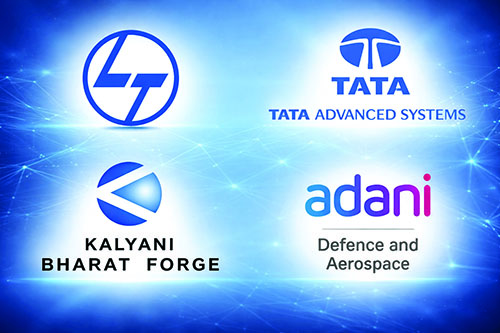
Since the liberalisation of the defence sector, private firms have emerged as key players, particularly in high-technology areas. Larsen & Toubro (L&T Defence) manufactures submarines, artillery systems, missile launchers, and naval platforms. It has advanced manufacturing facilities and plays a major role in indigenous defence production. Tata Advanced Systems Limited (TASL) is engaged in aerospace structures, UAVs, and missile systems and collaborates with global defence majors. Bharat Forge (Kalyani Group) is known for artillery systems such as ATAGS and armoured platforms, combining metallurgy with defence innovation. Adani Defence & Aerospace produces ammunition, drones, and small arms and has invested heavily in domestic manufacturing infrastructure. Mahindra Defence Systems manufactures armoured vehicles, naval systems, and surveillance equipment.
Our defence manufacturing sector comprises established public-sector giants and rapidly growing private firms. While DPSUs still dominate high-end platforms such as aircraft and warships, private companies are increasingly contributing in areas such as artillery, electronics, and drones. With policy support, innovation, and rising exports, India is steadily transforming from a major arms importer into a significant defence manufacturer.
Nuclear Program
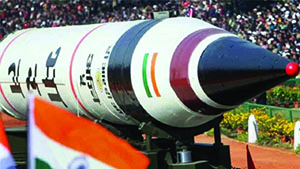
India’s nuclear weapons programme was not developed by a single company. It has been led by government scientific and research institutions. The primary organisation is the Bhabha Atomic Research Centre (BARC), which designed and developed India’s nuclear devices. The programme was guided by scientists such as Homi J. Bhabha and later A. P. J. Abdul Kalam. Other key contributors include the Department of Atomic Energy (DAE), which oversees nuclear policy and research, and the DRDO, which assisted with weaponisation and delivery systems. India demonstrated its nuclear capability through tests at Pokhran-I and Pokhran-II. Thus, India’s nuclear bomb programme is a state-led scientific effort, not the work of any private or public company.
Conclusion
“It is India's responsibility to display its strength to the world through knowledge and innovation. We dream of a day when India is completely self-reliant in defence production & exports defence equipment worldwide.
Prime Minister Narendra Modi
The complex geopolitical landscape of the 21st century is characterised by emerging threats, evolving technologies, and shifting power dynamics, in which India’s resilience and self-reliance in its industrial base assume paramount importance. The pursuit of a robust defence industry is not merely an academic exercise or a bureaucratic mandate; it is a mission that resonates deeply with the aspirations of millions of Indians. It transcends individual careers and organisational interests, encompassing the aspirations of a nation striving to assert its rightful place on the global stage. The strength of India's defence industry is not measured solely by budgets allocated or weapons procured; it is measured by the resilience of our supply chains, the ingenuity of our innovations, and the determination of our resolve. As we confront the challenges and seize the opportunities ahead, let us stand united in our commitment to strengthening India's defence industry and realising the aspirations of a nation poised to fulfil its true potential.
India is actively reducing its dependence on imports through policies such as “Make in India” and Atmanirbhar Bharat. India has a large pool of skilled engineers, scientists, and technicians, crucial for research and development (R&D) in defence technologies. Indigenous defence production has expanded significantly, and exports are rising. However, challenges remain, including heavy reliance on imports. India can compete in global markets by improving product reliability, meeting delivery timelines, focusing on niche strengths, and investing in advanced technologies such as AI, drones, and space systems. With the right balance of quality, affordability, and strategic partnerships, India can emerge as a credible global defence exporter.
 Manoj Dubey
(The content of this article reflects the views of writer and contributor, not necessarily those of the publisher and editor. All disputes are subject to the exclusive jurisdiction of competent courts and forums in Delhi/New Delhi only)


















Comments (3)
S
Article clearly provides gtowth of Indian arms industry over imports, highly knowledgeable keep it up.
D
As expected, Manoj Dubey sir has explained everything related to the topic. Thoroughly enjoyed and learnt a lot. Thanks
N
Very comprehensively covered.