


Finance Minister Nirmala Sitharaman on Monday said the government is closely monitoring gold prices, even as she sought to allay concerns over recent price movements, noting that demand for the yellow metal has risen but has not reached alarming levels.
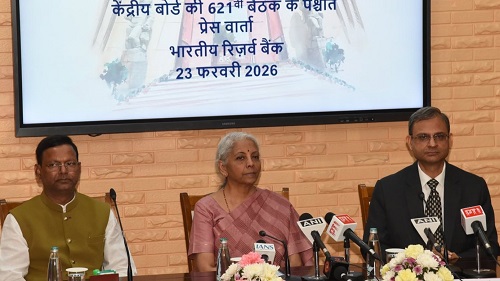
Addressing a press conference following the customary post-Budget meeting with the Central Board of Directors of the Reserve Bank of India (RBI) in New Delhi, Ms. Sitharaman acknowledged that gold prices tend to spike during festival seasons, a pattern that has held consistent over the years. However, she stressed that prices have remained within circuit limits and have not breached thresholds that would warrant immediate intervention.
"Gold traditionally sees seasonal spikes during festival periods," the Finance Minister said, adding that the current uptick in demand was being watched carefully. "The prices have stayed within circuit limits," she affirmed.
Gold holds a place of deep cultural and economic significance in India, with demand typically surging around festivals such as Diwali, Dhanteras, Akshaya Tritiya, and the wedding season. Jewellers and analysts have long noted this cyclical pattern, and the government has historically tracked price movements during these periods with heightened attention.
Ms. Sitharaman's remarks come at a time when global gold prices have seen considerable volatility, driven by a combination of geopolitical uncertainties, shifting currency dynamics, and increased investor appetite for safe-haven assets. Domestically, the festive calendar and rising household incomes in semi-urban and rural markets have added to demand pressures.
The Finance Minister's reference to "circuit limits" points to the price band mechanisms that commodity exchanges use to prevent extreme intraday volatility. Her assurance that gold prices have not crossed these limits is intended to signal that the market, while active, is functioning in an orderly manner.
Market participants have been keeping a close watch on bullion prices amid speculation about import duty adjustments and policy signals from the government. The Finance Minister's statement is likely to be read as a signal that no immediate corrective policy action is being planned, though the government remains vigilant.
The press conference followed the Finance Minister's meeting with the RBI's Central Board of Directors — a regular engagement that takes place after the Union Budget is presented. Such meetings typically cover a broad range of macroeconomic and financial stability issues, including inflation, credit growth, and commodity price trends.
Gold prices and their implications for inflation, the current account deficit, and household savings are all subjects of interest to both the Finance Ministry and the Reserve Bank, given India's position as one of the world's largest consumers of gold.
India imported gold worth billions of dollars annually, making the commodity a significant contributor to the country's import bill. Any sustained surge in gold prices or demand can widen the trade deficit and put pressure on the rupee, which is why the government and the RBI keep a close watch on developments in the bullion market.
For now, Ms. Sitharaman's message was one of cautious reassurance — the government is watching, the situation is under control, and there is no cause for alarm. However, the continued monitoring signals that authorities are prepared to act should prices move beyond acceptable bounds.


















Leave Your Comment