


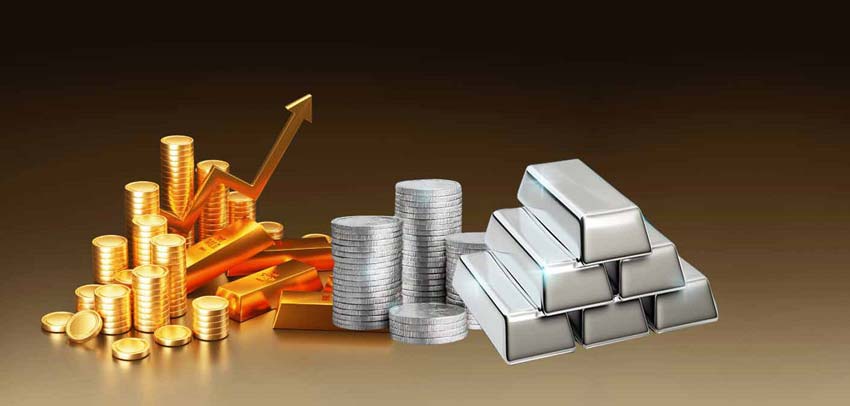
Every Diwali, millions of Indians follow a sacred tradition — buying gold or silver as a symbol of prosperity, purity, and good fortune. The twinkling diyas, the fragrance of sweets, and the glitter of gold coins all merge into one sentiment — wealth that shines and stays forever. But this year, there’s a twist. Gold and silver prices have skyrocketed to record highs. With gold soaring nearly 47 per cent this year and silver touching an even higher 52 per cent rally, investors are wondering: is this the right time to buy, or should they wait for the shine to settle?
To understand the answer, we must look beyond the festive fervour and examine what’s driving these glittering prices. The sharp rally in precious metals isn’t just because of Diwali demand. Globally, economic uncertainty, inflationary pressure, central bank buying, and a weakening dollar have all fuelled the uptrend. In times of geopolitical tension or market instability, gold traditionally becomes the “safe haven” asset — a financial shelter when other markets falter. Silver, meanwhile, has found fresh momentum not only from investment demand but also from its industrial use in electronics, solar panels, and electric vehicles. Together, these forces have pushed prices to levels unseen in years.
Yet, when prices are this high, enthusiasm should be balanced with caution. Historically, Diwali is a time when families make small, symbolic purchases — coins, small bars, or ornaments. But this year’s steep rise means that buyers may end up paying inflated premiums, especially when adding GST, making charges, and jeweller margins. Market analysts caution that while gold remains a long-term wealth preserver, entering at the peak could limit short-term returns. Corrections — even modest ones — can shave off a part of the investment if one enters impulsively.
However, opportunity still exists. For disciplined investors with a long-term horizon, gold and silver remain strategic assets.
In a diversified portfolio, they act as stabilizers, providing security when equity or debt markets fluctuate. If one invests with a horizon of three to five years, today’s elevated prices might not matter much, especially given inflation’s persistent bite. Moreover, India’s cultural affinity for gold means that demand rarely disappears — it merely adjusts. Even when global markets cool, the domestic pull remains strong.
On the other hand, silver is emerging as a dark horse. Its growing demand from the clean energy and industrial sectors could make it an outperformer in the coming decade. The World Silver Survey 2025 highlighted a consistent supply deficit — industrial consumption is rising faster than mining output. That structural shortfall could mean silver’s rally has deeper roots than festive enthusiasm alone. For those willing to hold through volatility, silver can offer higher long-term returns, though it remains far more volatile than gold.

The question then becomes not “whether” to invest this Diwali, but how. Financial planners suggest adopting a staggered approach — rather than investing all at once, buy in small tranches over weeks or months. This helps average out the cost and cushions against sudden corrections. Limiting one’s exposure to 5–10 per cent of the total portfolio in gold and silver is another prudent guideline. Beyond physical forms like coins or jewellery, modern investors have the advantage of digital options: Gold Exchange-Traded Funds (ETFs), Sovereign Gold Bonds (SGBs), or even silver ETFs. These offer liquidity, purity assurance, and lower transaction costs — all without the hassle of storage or security risks.
It’s also crucial to differentiate between emotional and financial buying. Buying a small gold coin or silver diya during Diwali is tradition — a gesture of faith and fortune. But making a heavy investment purely because prices are rising could backfire. Investors should remember that sentiment-driven rallies often lead to sharp profit-taking later. When everyone is buying, markets tend to overheat; when fear returns, prices correct swiftly. This cycle has repeated many times in the past — from 2011’s gold peak to the subsequent slowdown that followed.
Still, there’s no denying that Diwali 2025 has rekindled the golden glow of prosperity in India. Cities like Surat, Chennai, and Lucknow have reported record bookings for gold ornaments and silverware. Jewellers are witnessing an upsurge in pre-orders despite prices touching new highs, a testament to how deep-rooted the love for precious metals runs in Indian households. Psychologically, gold and silver offer not just value but comfort — a tangible asset that neither defaults nor disappears. Amid stock market fluctuations and digital uncertainties, people still find peace in something they can hold, feel, and pass on.
That emotional anchor gives gold and silver a unique dual identity — both as cultural symbols and financial instruments. This duality has helped them outlive every economic era. Whether it was the pandemic shock, global wars, or inflationary cycles, precious metals have always resurfaced as guardians of wealth. But every guardian comes at a price. For new buyers, that price today is higher than ever. So, prudence is essential.
The smart investor this Diwali should embrace a middle path — honouring the tradition with small, meaningful purchases, while planning serious investments with long-term logic. If you must invest now, do so strategically, with staggered entries and clear expectations. Avoid chasing short-term gains; instead, look for stability and preservation. Remember, gold doesn’t multiply overnight — it compounds quietly over decades.
Ultimately, investing in gold and silver this Diwali isn’t just about numbers. It’s about faith, foresight, and financial balance. The glitter of the metal must not blind one to the fundamentals of investing. A Diwali coin or a silver bar can indeed bring joy and luck — but sustained wealth comes from patience and planning.
So, as diyas light up your home and the scent of marigolds fills the air, pause for a moment before you rush to the jeweller. Ask yourself — am I buying gold for tradition, for security, or for speculation? The first two make sense; the last one often ends in regret.

In conclusion, while soaring prices may tempt you to believe that you’re missing out, true prosperity lies in disciplined decisions. Yes, this Diwali can be an auspicious moment to begin or add to your gold and silver holdings — but only with foresight and moderation. Celebrate the festival of lights with wisdom as your guiding lamp. Let your investments, like your diyas, shine bright — steadily, safely, and for years to come.
De-Dollarisation and the Soaring Shine: How Gold and Silver Became the New Currency of Trust
In the last two years, the world has witnessed a remarkable rally in the prices of gold and silver — metals that have outperformed equities, bonds, and even oil in some phases. Gold has surged to historic highs, crossing multiple psychological barriers, while silver has followed suit, powered by both industrial demand and investor appetite. At first glance, this might appear to be just another cycle of inflation and safe-haven buying. But beneath this glitter lies a much deeper global shift — the slow but steady de-dollarisation of the world economy.
De-dollarisation, simply put, refers to the process through which countries reduce their reliance on the US dollar for international trade, reserves, and financial settlements. For decades, the dollar has been the anchor of the global financial system. It has dominated global trade, debt markets, and foreign exchange reserves. Yet, in the post-pandemic, post-sanctions world, cracks have begun to appear in this dominance. The freezing of Russian assets by the US and its allies in 2022 served as a turning point. Many nations suddenly realised that holding dollar reserves was not just a financial choice — it was a geopolitical vulnerability. What if, in a future conflict, their dollar assets could be blocked too?
This fear triggered a silent yet significant movement. Countries like China, Russia, Brazil, and even Middle Eastern powers began exploring alternatives — trading in local currencies, forming currency-swap agreements, and increasing gold reserves as a hedge against the dollar. According to the World Gold Council, central banks have been on a historic gold-buying spree, adding over 1,000 tonnes of gold annually — the highest pace seen in more than half a century. This is not mere diversification; it is strategic insurance against the dollar’s dominance.
Gold, in this context, has re-emerged not just as a commodity but as a neutral reserve asset. It carries no political allegiance, no counterparty risk, and no dependency on any single nation’s policies. In a de-dollarising world, that neutrality is its greatest strength. As nations accumulate gold, its price naturally surges — not because of speculative trading, but due to a fundamental shift in how global reserves are being structured.
Silver, though less central in monetary history compared to gold, has benefited from this shift too. It acts as the “younger cousin” in the precious metal family — often following gold’s direction. But this time, silver has its own powerful drivers. Alongside its role as a monetary metal, it has become indispensable to green technology — from solar panels to electric vehicles. As de-dollarisation drives more nations to invest in tangible assets rather than paper currencies, silver finds itself doubly blessed: as a store of value and as a building block of the next industrial revolution.
The link between de-dollarisation and the rising prices of gold and silver can also be traced through another macroeconomic lens — the weakening of the dollar index (DXY). When central banks diversify out of the dollar, demand for the currency decreases, leading to depreciation. A weaker dollar, in turn, makes commodities priced in dollars — such as gold and silver — cheaper for other currency holders. This fuels additional demand, pushing prices even higher. Thus, the very process of moving away from the dollar accelerates the upward momentum in precious metal prices.
Another layer of this dynamic lies in inflation and interest rate management. As the US grapples with high debt levels and persistent fiscal deficits, its ability to keep real interest rates sustainably positive becomes difficult. A scenario of negative real yields — where inflation outpaces interest rates — tends to make non-yielding assets like gold and silver more attractive. Central banks and sovereign wealth funds, anticipating long-term inflationary trends, have thus been reallocating reserves toward precious metals.
This structural demand shift reinforces the de-dollarisation theme.
China’s role in this movement cannot be overstated. As the largest gold importer and consumer, and as the key driver of de-dollarisation through the BRICS bloc, Beijing’s policies have a profound influence on global metal prices. Over the past few years, China has quietly increased its official gold holdings, while simultaneously promoting the use of the yuan in energy trade through the so-called “petro-yuan” system. By settling oil and gas transactions in yuan — and sometimes backing them with gold — China is effectively challenging the petrodollar order established in the 1970s. This trend directly boosts gold’s strategic importance and, consequently, its price.
The BRICS alliance (Brazil, Russia, India, China, South Africa), and now its expanded members including Saudi Arabia and Iran, have also discussed creating a new trade settlement system possibly backed by commodities or gold. Even if such a system remains years away, the idea itself nudges central banks toward diversification. In this geopolitical reshuffling, gold has become the one asset everyone agrees on — a silent consensus in a divided world.
Meanwhile, retail investors are also responding to this global undercurrent. The more headlines about “de-dollarisation” make their way into financial media, the more individuals perceive gold and silver as shields against uncertainty. In countries like India, the Middle East, and Turkey — where faith in tangible assets runs deep — this sentiment becomes self-fulfilling. Increased buying from households complements the institutional accumulation by central banks, creating a virtuous cycle of demand.
However, it would be simplistic to say that de-dollarisation alone is driving the price boom. It acts as the structural backbone, while cyclical factors — inflation, interest rates, supply disruptions, and industrial demand — add layers of momentum. Yet, what makes the current rally different from past cycles is the breadth and coordination of gold accumulation across nations. In earlier decades, gold buying was mostly opportunistic or speculative; today, it is strategic and systemic.
What we are witnessing, therefore, is not just a commodity rally — it is a quiet revolution in global monetary architecture. Gold and silver are reclaiming their ancient status as universal money. As confidence in fiat currencies wanes, tangible assets regain allure. The same dynamic that once made gold the anchor of the Bretton Woods system is resurfacing, this time without formal treaties but through organic shifts in policy and perception.
In the coming years, as the US faces growing debt and fiscal strain, and as emerging economies continue to strengthen alternative trade mechanisms, the dollar’s supremacy will likely erode gradually. This doesn’t mean the end of the dollar, but it does mean a more multipolar financial order — one where gold once again acts as the neutral referee of value.
In conclusion, the skyrocketing prices of gold and silver are not mere market anomalies; they are signals of transformation. They tell the story of a world seeking stability outside the reach of sanctions, deficits, and political control. In the age of de-dollarisation, these metals are no longer just safe havens — they are symbols of sovereignty. Their shine, today, reflects not greed but a global craving for financial independence. As nations diversify, as currencies compete, and as trust redefines wealth, gold and silver are reclaiming the throne they once held — as the true, timeless currencies of faith and freedom.
(--NK)

By Nilabh Krishna
(The content of this article reflects the views of writer and contributor, not necessarily those of the publisher and editor. All disputes are subject to the exclusive jurisdiction of competent courts and forums in Delhi/New Delhi only)














Leave Your Comment