


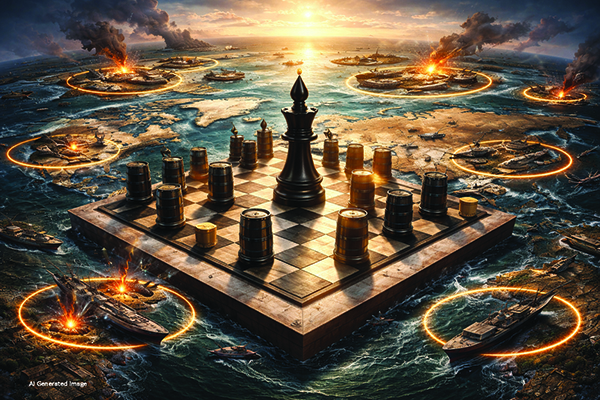
If geopolitics were a chessboard, 2026 has opened with a series of bold, high-risk moves centered not on territory—but on energy. From Latin America to the Middle East and Southeast Asia, the United States, under President Donald Trump, appears to be playing a long game: control the world’s oil arteries, and you control the pace of global power.
Opening Move: Venezuela’s Strategic Capture
In January, Washington made its first decisive play. A covert operation in Venezuela removed President Nicolás Maduro from power, effectively placing the country’s vast oil wealth—over 300 billion barrels—within the US sphere of influence.
This wasn’t just regime change; it was a resource grab of historic proportions. Venezuela, long isolated by sanctions, had been a key supplier of discounted crude to China. By stepping in, the US disrupted one of Beijing’s most reliable energy pipelines.
Middle Game: Iran and the Hormuz Pressure Point
February saw a far more volatile move. US forces launched precision strikes on Iran, targeting military and energy infrastructure. The fallout was immediate: Tehran retaliated by tightening its grip on the Strait of Hormuz—through which roughly a quarter of global seaborne oil flows.
Unlike Venezuela, Iran proved resilient. Despite early strikes that reportedly killed Supreme Leader Ali Khamenei, Tehran’s decentralized “mosaic doctrine” allowed it to sustain resistance and maintain the blockade.
Ironically, the disruption didn’t hurt Washington as much as it did others. The US, now the world’s largest oil producer, could absorb the shock. But Asia and Europe—deeply reliant on Hormuz—felt immediate pressure as oil prices surged past $110 per barrel.
Strategic Pivot: Malacca and the China Squeeze
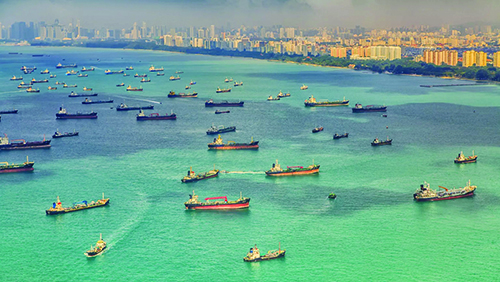
By March, the chessboard expanded eastward. A new US defense arrangement with Indonesia granted American forces greater access to airspace over the Strait of Malacca—one of the world’s busiest shipping lanes.
This is where the strategy becomes clearer.
If Hormuz is a pressure point, Malacca is a chokehold. Nearly 80% of China’s oil imports pass through this narrow corridor. Control or surveillance here gives Washington unprecedented leverage over Beijing’s energy lifelines.
The move directly touches on what former Chinese President Hu Jintao once called the “Malacca Dilemma”—China’s vulnerability to disruptions in this critical route.
China’s Counterplay
Beijing, however, is far from cornered.
First, it has diversified. Imports from Russia have surged, while reliance on Iranian crude has dipped. Overland pipelines through Central Asia and Pakistan are gradually reducing dependence on maritime routes.
Second, China has built massive buffers. With strategic reserves estimated at over 1.3 billion barrels, it can weather short-term disruptions.
Third, it has adapted tactically. A shadow fleet of tankers—operating outside traditional tracking systems—continues to move sanctioned oil across the globe, blurring enforcement lines.
And finally, diplomacy remains a powerful piece. China can exert influence over Southeast Asian nations like Indonesia, Malaysia, and Singapore, potentially fracturing any US-led alignment around Malacca.
A Game Without Checkmate
Despite the dramatic moves, this is not checkmate—yet.
What’s unfolding is less a decisive battle and more a test of endurance. The US strategy hinges on gradually tightening the noose around China’s energy supply lines without triggering full-scale conflict. China, in turn, is playing for time—rerouting flows, leveraging reserves, and avoiding direct confrontation.
The result is a fragile equilibrium, where every move risks escalation.
India’s Quiet Advantage
Amid this global contest, India finds itself in a position of growing strategic relevance.
The Andaman and Nicobar Islands sit close to the western entrance of the Malacca Strait, offering a natural vantage point over one of the world’s most critical shipping lanes. Enhanced infrastructure and military capabilities in the region give New Delhi the ability to monitor—and potentially influence—traffic flows.
As tensions rise, India’s role as a balancing power and a trusted partner for multiple sides could become increasingly significant.
The Endgame: Who Blinks First?
This is chess played at a global scale, with النفط (oil) as the central piece. But unlike a traditional game, there is no clear checkmate in sight.
Instead, the question is one of resolve:
How far is Washington willing to go to squeeze China’s energy lifelines?
And how long can Beijing adapt, absorb, and counter?
In this high-stakes contest, the winner may not be the one who captures the most pieces—but the one who outlasts the other.


















Leave Your Comment