


Whose gain, whose loss
Appeasement politics always limits the development of the nation
The Framers of the Constitution wisely understood that constitutional principles must not be sacrificed on the altar of political appeasement, said Max Baucus - a former United States senator and ambassador to China.
Appeasement politics is not a new phenomenon but it is being used by shrewd politicians to gain power again, again and again. Playing one against another has been the master card that politicians play with near perfection and make the communities believe that the existence of other communities is the main reason for their poor state of affairs.
The use of appeasement politics in general elections is a tactic often observed worldwide, where political parties tailor their policies or rhetoric to specific groups to garner votes, sometimes at the expense of broader, more inclusive political strategies. This approach can manifest in various forms, including promising particular benefits, legal reforms, or financial incentives to certain demographics, communities, or interest groups.
While appeasement politics can be a useful tool for electoral success, it carries significant risks and challenges. It often prioritises immediate electoral advantages over sustainable, inclusive governance, potentially leading to a governance model that might undermine the broader societal harmony and democratic values.
India has witnessed this trick being played on it, elections after elections and various regional parties came to power by playing this card. Some of the great players of the game are - Mayawati, Mulayam Singh Yadav, Lalu Prasad, etc who have completely sidelined competence and merit while appeasing one or a few communities. Interestingly, the community also, in most cases, never got its due or what was promised. These promises are shelved in some box only to be invoked again at the time of elections.
The hapless voter does not understand and again believes the same trick that has been tricking her / him for the last many years. There is a little anecdote about Japan after the Hiroshima and Nagasaki bombing when the Americans wanted to export their oranges to the island nation, and Japan could not stop the imports as it was bound by international treaties to open its markets for foreign goods.
However, the Japanese showed remarkable patriotism and nobody was buying American pulpy, sweet, juicy oranges which were available at cheaper rates as compared to Japanese not so juicy, bland oranges. Finally the US had to stop exporting its premium fruit to Japan as it wasn’t fetching the desired money from the Asian nation. Not many countries would have shown this attitude to better products at a much cheaper price.
India with its diversity is uniquely positioned to get exploited by this devil while the only beneficiary of this game is the politician. We have seen many parties who take a stand to support one or the other community to gain the confidence and votes of the community. Sometimes it is the backward class, sometimes muslims, sometimes regional voters where the basis is language, like Shiv Sena positioned itself to be the caretaker of ‘Marathi Manus’, and they rose to power when people believed them.
Historically in India, the Congress has been accused of appeasement politics where critics said that the party was specifically appeasing Muslims, among other groups. This criticism is part of a broader debate about secularism, communal politics, and the role of identity in Indian electoral politics.
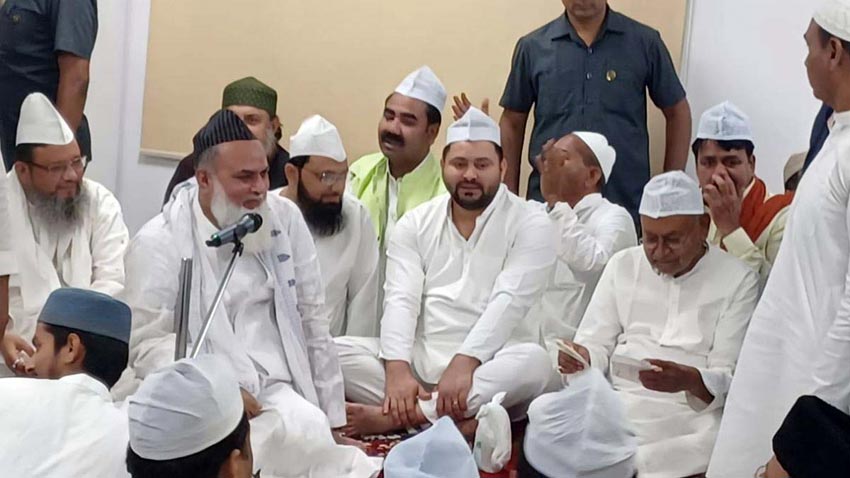
The Congress Party, which has traditionally positioned itself as a secular force in Indian politics, has been accused by some of playing identity politics, particularly with respect to the Muslim community, to solidify its electoral base. Critics argue that certain policies or statements made by Congress leaders are designed to appeal specifically to Muslim voters. This might include opposing laws or policies that are seen as unfavourable to Muslims, or proposing initiatives that could benefit the community in areas such as education or employment.
Such accusations often stem from the perception that Congress is attempting to counter the influence of parties like the BJP, which is often seen as promoting Hindu-centric policies. The strategic aim, according to critics, is to present Congress as a protector of minority rights, thereby consolidating the Muslim vote.
Likewise, the criticism of Bharatiya Janata Party or the BJP often revolve around its efforts to consolidate Hindu voters, which critics label as Hindu appeasement. These allegations are part of a larger discussion about the intersection of religion and politics in India, where the BJP is perceived by some as promoting Hindu-centric policies.
The BJP is known for its strong ties to Hindu nationalism, often symbolized by its emphasis on Hindu culture and history in its policies and public messaging. This includes promoting Hindu festivals, traditions, and historical narratives at a national level.
Critics point to various policies and legislative actions that they argue cater predominantly to Hindu interests. Examples might include the push for a Uniform Civil Code, changes in the status of regions like Jammu and Kashmir, the construction of the Ram Temple in Ayodhya following a long-standing and contentious legal battle, and laws perceived to affect the rights of religious minorities.
During election campaigns, some BJP leaders have been accused of using rhetoric that appeals to Hindu sentiments, potentially at the expense of communal harmony. This is seen by critics as a strategy to galvanise the Hindu majority.
Now when the two leading national parties have been accused of polarising voters by playing appeasement politics, who can bell the cat. Our so-called neutral institutions too have been not playing by the rule and there have been allegations where the neutrality of the institution was questioned.
Several institutions have the responsibility and authority to check and balance appeasement politics, ensuring that governance remains fair, transparent, and inclusive. Here are key institutions that play a vital role in this process.
As the guardian of the constitution, the judiciary plays a critical role in overseeing the legality of government actions and policies. It can check appeasement politics by ensuring that all laws and government actions comply with constitutional mandates regarding equality and non-discrimination.
Election Commissions are responsible for ensuring free and fair elections. They can regulate campaign practices and enforce laws regarding election conduct to prevent parties from using government resources for electoral gains or making promises that encourage communalism or favouritism.
Free and independent media serve as a watchdog and can play a pivotal role in exposing and critiquing policies that are aimed at appeasing particular groups at the expense of public good. Investigative journalism can uncover the motives behind certain policies and hold politicians accountable for divisive tactics.
NGOs, advocacy groups, and other civil society organisations can help monitor and challenge government policies that promote appeasement. They can mobilise public opinion, provide platforms for discussion, and represent the interests of marginalised or overlooked groups.
Parliamentary Committees scrutinise government policies and expenditures. They can question government officials and demand justifications for specific policies, ensuring that policy decisions are made transparently and in the best interests of the entire population.
Bodies like the Comptroller and Auditor General (CAG) in India audit government expenditures and programs. By ensuring that funds are used efficiently and for intended purposes, they help prevent the misuse of public resources for appeasement.
Anti-Corruption Agencies can investigate and prosecute misuse of office, ensuring that public resources are not diverted to gain electoral advantages through appeasement.
Human Rights Commissions too can monitor and report on government actions that discriminate against or unfairly favour particular groups, ensuring adherence to national and international human rights standards.
Policy Think Tanks and Academic Institutions can analyse and critique government policies from a scholarly perspective, providing data and research that expose the impacts of appeasement politics and suggest alternative approaches.
International bodies like the United Nations, the European Union, and other international coalitions can provide oversight and criticism regarding a country’s adherence to international norms and practices, including how equitably and fairly a government treats its citizens.
Given the scenario, can the voters come up with something to check this pattern that is going against the development of the nation? To my mind, citizens play a crucial role in shaping political practices and can effectively challenge and potentially reduce the prevalence of appeasement politics through various means. Here are some strategies citizens can employ to promote more equitable and inclusive governance.
Educating oneself about the policies, practices, and track records of political parties and their leaders is fundamental. Informed voters are less likely to be swayed by superficial appeals and can make decisions based on a comprehensive understanding of the issues. Encourage open dialogue on political and social issues within the community. This includes discussing the long-term implications of appeasement politics and exploring more sustainable and inclusive policy alternatives.
Active participation isn't limited to voting. It includes engaging in community meetings, public consultations, and forums where policies are discussed. Engaging with representatives to express concerns and preferences encourages transparency and accountability. Civil society organisations often work to hold governments accountable and advocate for fair and equitable policies. Supporting these organisations can amplify efforts to counteract the effects of appeasement politics.
Citizens must insist that political candidates and parties be transparent about their policies and the interests they serve. Utilising tools like Right to Information acts and participating in public audits and monitoring of government programs can help ensure accountability.
Make voting decisions based on thorough analysis of a party’s or candidate’s policies and their potential impact on society as a whole, rather than charismatic leadership or populist promises. Leverage social media platforms to spread awareness about the negative impacts of appeasement politics. Social media can be a powerful tool for mobilising opinion and encouraging more informed discussions among wider audiences.
Advocate for policies that address the needs of all sections of society rather than just specific groups. This includes supporting policies that are based on principles of equity and justice. Support or initiate educational programs that teach critical thinking and civic education. Understanding the rights and responsibilities of citizens and the workings of government can empower individuals to make more informed decisions.
Whenever divisive or appeasement politics is apparent, challenge it publicly and constructively. Writing op-eds, speaking at community gatherings, and participating in debates can help shift public discourse towards more substantive issues.
We must also be vigilant to understand how it works. Like political entities may offer specific concessions to influential voting blocs. These can include subsidies, grants, or policy adjustments that directly benefit a particular group.While such strategies can boost a party’s performance in an election by securing the support of targeted groups, they often lead to policies that may not necessarily serve the long-term public good or sustainable development.
Appeasement politics can sometimes exacerbate divisions within society. By focusing on the needs and desires of specific groups, politicians may alienate others, potentially leading to social fragmentation. This approach can divert attention from more pressing national issues that affect the larger population, such as economic reform, healthcare improvements, and educational enhancements.
Groups that benefit from appeasement politics might become cyclically dependent on specific political parties for benefits, which can undermine democratic processes and lead to political patronage and clientelism. Over reliance on appeasement can erode trust in political processes if citizens perceive that electoral success is being bought through promises rather than earned through effective governance and leadership.
Appeasement was never a very clever policy, and it should not be our option today. - José María Alfredo Aznar López - prime minister of Spain from 1996 to 2004.

By Alok Sharma
(The content of this article reflects the views of writers and contributors, not necessarily those of the publisher and editor. All disputes are subject to the exclusive jurisdiction of competent courts and forums in Delhi/New Delhi only)















Leave Your Comment