


The American economy, valued at approximately $30 trillion, is the largest in the world. It is driven by technology, finance, manufacturing, and services. The country boasts a robust infrastructure, a high capacity for innovation, and a significant influence on global trade. The U.S. dollar serves as the main global reserve currency. However, the economy faces challenges like inflation, income inequality, public debt, and economic fluctuations. The United States mainly imports machinery, electronics, crude oil, vehicles, pharmaceuticals, clothing, and consumer goods. Major suppliers include China, Mexico, Canada, and Germany. The U.S. spends over $3 trillion annually on imports, reflecting high consumer demand and dependence on global supply chains for industrial and household products. The United States exports machinery, aircraft, vehicles, medical equipment, refined petroleum, agricultural products like soybeans and corn, and technology services. Major export destinations include Canada, Mexico, China, Japan, and the European Union. The U.S. earns over $2 trillion annually from exports, supporting industries, employment, and global trade influence.
Indian Economy: India is the fourth-largest ($ 4 trillion) and the fastest-growing economy in the world. India imports crude oil, gold, electronics, machinery, chemicals, and fertilisers to meet industrial and consumer demand. Major import partners include China, Russia, the United States, the UAE, and Saudi Arabia. India spends over $700 billion annually on imports, with petroleum being the largest component. India exports petroleum products, pharmaceuticals, textiles, gems and jewellery, engineering goods, rice, tea, and IT services. Key export destinations include the United States, the UAE, China, the Netherlands, and Bangladesh. India earns around $450–470 billion annually from merchandise exports, while services exports, especially IT and business services, significantly boost foreign exchange earnings and strengthen India’s position in global trade.
Donald Trump: Donald Trump is an American businessman, television personality, and politician who served as the 45th President of the United States from 2017 to 2021. Known for his outspoken style, he focused on immigration control, tax reforms, and “America First” policies. He remains an influential and controversial figure in American politics. Trump was re-elected as the 47th President for his second term and assumed office in January 2025. During the past year of Donald Trump’s second presidency, several decisions have generated controversy. He intensified immigration enforcement, including mass deportation drives and stricter border controls. His tariff policy focused on protecting American industries and reducing trade deficits as part of his “America First” strategy. He imposed high tariffs on imports, especially from China, on goods such as steel, aluminium, electronics, and machinery, raising global trade tensions. Trump rolled back climate commitments and promoted fossil fuel production. He reduced diversity and inclusion programs in federal institutions. His administration also attempted to expand presidential authority over federal agencies and the justice system. Supporters view these actions as strengthening national security and economic independence, while critics argue they weaken democratic norms, harm global cooperation, and increase domestic political polarisation.
US tariff on India: On 2nd April 2025, the Trump administration imposed a 26% ‘reciprocal tariff’ on several Indian imports. On April 10, 2025, the tariff was suspended for 90 days, but a 10% duty remained on all US imports. On 31st July, Trump announced a 25% tariff on all Indian goods and warned of additional penalties if India continued buying Russian oil. On August 7, Trump raised tariffs to 50% on Indian goods shipped to the US, citing India's continued purchase of Russian oil. These actions created significant concern among Indian exporters. While this tariff didn't seem to have affected India's imports of Russian crude, the sanctions on Rosneft and Lukoil announced in October forced Indian refiners to look for alternative sources. In the past, India has benefited substantially from global restrictions on Russian crude sales, emerging as the main purchaser of Russian crude amid price reductions due to sanctions. The tariff on Indian goods became the highest among US trade partners. This affected textiles, seafood, gems and jewellery, and leather exports to the US. India exports about $87 billion worth of goods annually. Of this, roughly 66% faced a 50% tariff. India sends about 18% of its total exports to the United States, equivalent to about 2. 2.2% of GDP. The tariff shock dominated trading sentiment; the Sensex and Nifty were both down by one per cent the next day. Countries with lower US duties, such as Bangladesh, Vietnam, Cambodia, Indonesia, Pakistan, and Kenya, could quickly step in to capture India's share. Once buyers shift, winning them back isn't easy. The merchandise trade deficit of the US with India has been growing over the years, not just in absolute terms but also relative to overall US trade. It has increased from about 2% of the US overall trade deficit of $ 1. 9 billion in 1992 to 3. 3. 8% or $ 45. 8 billion in 2024. In agricultural trade, the US ran a $ 3. 8 billion farm trade deficit with India in 2024, about 5% of its overall agricultural deficit. The US, which has been the biggest agricultural exporter in the world and long accustomed to running a surplus in farm goods, has slipped into a deficit in recent years. US agricultural exports to India reached $ 2. 4 billion in 2024, while the country imported agricultural goods worth $ 6. 2 billion. India mainly imports dry fruits, soybean oil, ethanol, and cotton. US imports from India include seafood, rice, spices, baked goods, cereals, and pasta.
Trump’s statements: Trump wrote on Truth Social, Remember, while India is our friend, we have, over the years, done relatively little business with them because their Tariffs are far too high, among the highest in the world, and they have the most strenuous and obnoxious non-monetary Trade Barriers of any Country. Also, they have always bought a vast majority of their military equipment from Russia, and are Russia’s largest buyers of energy, along with China, at a time when everyone wants Russia to stop the Killing in Ukraine. All things not good.
He once said, China kills us with tariffs, Brazil kills us with tariffs. I’ve understood tariffs better than they did. I understood tariffs better than any human being in the world. India was the most highly tariffed nation in the world.
He once posted on Truth Social, “What few people understand is that we do very little business with India, but they do a tremendous amount of business with us. In other words, they sell us massive amounts of goods, their biggest ‘client’, but we sell them very little. Until now a totally one-sided relationship, and it has been for many decades. The reason is that India has charged us, until now, such high tariffs, the most of any country, that our businesses are unable to sell into India. It has been a totally one-sided disaster”.
India-US Trade Deal
On 2nd February 2026, Trump wrote on his Truth Social platform, "Out of friendship and respect for Prime Minister Modi and, as per his request, effective immediately, we agreed to a Trade Deal between the United States and India, whereby the United States will charge a reduced Reciprocal Tariff, lowering it from 25 per cent to 18 per cent,". He said Modi has committed India to "BUY AMERICAN at a much higher level," including purchases of more than $500 billion worth of US energy such as coal, along with technology, agricultural goods and other products. "They will likewise move forward to reduce their Tariffs and Non-Tariff Barriers against the United States to ZERO," Trump said. A little while later, PM Modi wrote, ‘Delighted that Made in India products will now have a reduced tariff of 18%’.
The announcement of the agreement positively influenced Indian equity markets. The Sensex and Nifty witnessed strong gains, reflecting investor optimism that improved trade relations and enhanced export opportunities. Analysts say reduced trade barriers and the end of punitive duties have lifted sentiment across sectors, with export-linked stocks expected to benefit most. This reflation in market confidence comes alongside broader expectations of improved flows into Indian assets following the landmark deal.
On 7th February, India and the US issued a joint statement on the trade deal. The framework reaffirms protections for India's sensitive sectors: agriculture and dairy items such as wheat, rice, maize, soya, poultry, milk, cheese, ethanol (fuel), tobacco, certain vegetables, and meat will remain fully shielded to safeguard farmers' interests and rural livelihoods.
Conclusion
President Trump’s policies have created uncertainty across the world. His arrogance on international issues and irresponsible statements have led to unrest. His views on Canada, Greenland, Gaza, Iran, China, Russia, and Ukraine are not in line with the international order. His actions in Venezuela drew international condemnation. His priorities are crude oil, rare minerals, and building military bases. Trump’s ‘Board of Peace’ plan will further weaken the United Nations. Imposing a 25% penalty on India for buying Russian oil was entirely uncalled for. Europe is purchasing gas from Russia, and the US itself has been an importer of Russian goods. India maintained strategic silence on Trump’s statements and actions and explored options to diversify its exports to other countries. India recently signed trade deals with the UK, UAE, New Zealand, and the European Union (the mother of all deals). This step opened new markets for Indian goods and reduced dependence on US markets. Also, Prime Minister Modi’s visit to China and President Putin’s visit to India put pressure on Trump. India’s patience and diplomacy finally prevailed, and the trade agreement with the US has been finalised. The 18% tariff on India is lower than the rates applicable to China, Pakistan, Bangladesh, and Indonesia. The interests of Indian farmers have been fully protected. The reduction in tariffs will boost exports of labour-intensive sectors. This framework strengthens ‘Make in India’ by opening new opportunities for India’s farmers, MSMEs, start-ups, innovators, fishermen, and more. It will generate large-scale employment in the country. The two biggest democracies in the world have come together to trade with each other for their mutual benefit. This interim agreement is likely to be signed and implemented soon. America has also shown Pakistan-occupied Kashmir and Aksai Chin on India’s map.
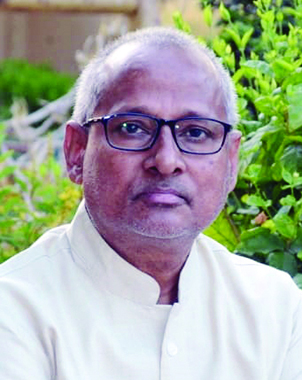
Manoj Dubey
(The content of this article reflects the views of writer and contributor, not necessarily those of the publisher and editor. All disputes are subject to the exclusive jurisdiction of competent courts and forums in Delhi/New Delhi only)


















Comments (8)
S
Informative, giving a thorough insight into trade and tariff.
S
A clear picture to understand tariff tension and co ordination of America and India.
N
A detailed discussion of tariffs and trade amidst cold shoulder relationship between US and India. The article discusses all in a beautiful way. It's to be seen how things take shape as the details of the trade deal unfold.
S
वाणिज्य मंत्री पियूष गोयल ने भारत-अमेरिका व्यापार समझौते को ऐतिहासिक और संतुलित समझौता बताया है जिससे भारतीय निर्यात,एम एस एम ई, किसान और युवाओं को बड़े अवसर मिलेंगे। 7 फरवरी को भारत और अमेरिका के बीच जो संयुक्त बयान जारी हुआ था उसके आधार पर समझौते के कानूनी मसौदे को कानूनी रूप देना अभी बाकी है। इसके बाद ही इस सम्बन्ध में कुछ कहा जा सकता है। लेखक ने विस्तार से सभी व्आयामों पर
A
Very informative discussion about trading and tarriff between India and US. Gives a clear picture of the relationship between the two countries.
A
Very informative discussion about trading and tarriff between India and US. Gives a clear picture of the relationship between the two countries.
S
There is detailed analysis of American tariff policy, American administration is behaving like a dictator. Deal with European union will reduce dependence on America.
Y
Very informative article where the actions of Mr. Donald Trump has been categorized in terms of trade and terriff. Trump has imposed the tax as 25 percent with an additional 25 percent for purchase of Russian crude, a total of 50 percent terriff on Indian goods. The article analysed the American and Indian economy and their interdependence in the excellent way. Greets the author for excellent contribution.