


When I look back just a few years, I vividly remember a time when our state did not produce a single potato. We were entirely dependent on neighboring states for our supply. This dependency worked for a while—until one day, those states began threatening us, saying they would no longer sell us potatoes. Eventually, they stopped sending them altogether.
Faced with this crisis, we didn’t sit idle. I immediately took steps to bring potatoes from Punjab and Uttar Pradesh and ensured they reached our people. Critics, especially members of the previous government that had ruled for 24 years without addressing this issue, mocked us. They said, “Look, you can’t even supply potatoes to the people.” But I refused to let their words discourage me.
At that time, our annual potato production stood at 46 lakh metric tons. I made it my mission to change that. Through planning, farmer support, and better agricultural practices, we made production to 1,96,000 metric tons. This was not just about producing more—it was about breaking free from dependency, securing our food supply, and empowering our farmers.
Before the last elections, in our manifesto, we made a clear commitment: for every farmer cultivating paddy, we would provide input assistance of Rs 800 in addition to the Minimum Support Price (MSP) of Rs 2,300.
True to our word, within just 48 days of forming the government, we deposited that ₹800 directly into the bank accounts of our farmers—along with the MSP. Importantly, we promised that this assistance wouldn’t be limited to the Kharif season. We extended it to the Rabi season as well.
This approach has encouraged Odisha’s farmers to increase their paddy production. When a farmer knows that the government stands beside him in both main seasons, his confidence grows, and his willingness to work hard multiplies.
In my career, I have been privileged to serve as Industry Minister, Urban Development Minister, and Public Enterprises Minister. But when the BJP government came to power in Odisha, many—including close colleagues—were surprised that I was given charge of Agriculture and Energy. Frankly, I wasn’t as surprised as they were.
The former Finance Minister, who hails from my own district, once asked me why I was entrusted with agriculture. I told him I’d answer after some time. A month later, when I exported my own farm produce to Dubai and the news reached the media, he understood. Yes, I am a politician—but I am also a farmer.
When I entered politics in 1989 and was first elected to the Legislative Assembly in 1995, my farming activities stopped. I was too busy, and agriculture seemed distant from my daily life. Then came the COVID pandemic. With laborers unavailable and movement restricted, I returned to my land. I began farming again—not out of compulsion, but out of passion.
Today, I farm organically. I do not use chemical fertilizers. And I have worked to promote organic farming across Odisha. One of my proudest examples is that the rice offered as bhog to Lord Jagannath in Puri is now entirely organic. Non-organic rice is no longer used for this sacred offering.
In just 14 months of our government, we have achieved something unprecedented: exporting our organic products not only to Dubai and the Middle East but also to London, France, Belgium, Ireland, and other countries.
We have gone directly to farmers and shown them the value of their produce. For example, if they were selling locally at Rs 20 per kilogram, we offered them Rs 55 per kilogram for export-quality produce. Even more importantly, we promised payment within 48 hours of sale. We didn’t just talk about it—we delivered.
Every farmer’s main challenge is not just production—it’s what happens after harvest. If a farmer produces crops but has no market, or if he cannot sell quickly, his cash flow suffers. Without a quick turnaround of income, he is forced into debt. This vicious cycle has, in the past, led to tragic farmer suicides.
But I am proud to say that in the past year, you haven’t heard of a single case of farmer suicide in Odisha. This is the result of timely payments, assured markets, and a government that genuinely cares.
Let me return to where I began—the potato crisis. After the neighboring states stopped supplying us, we sourced potatoes from Punjab and Uttar Pradesh. But we didn’t stop there. We gave potato seeds to our own farmers. The result? From 46 lakh metric tons, we increased production threefold to 1,96,000 metric tons.
This wasn’t just about meeting immediate demand. It was about teaching self-reliance and making Odisha capable of feeding itself.
My colleague Seshadri Chari Ji emphasized three focus areas—seller, storage, and market. I couldn’t agree more.
To investors across the country and beyond, I say this: come to Odisha. We urgently need to expand storage capacity—not just in our state but across India. Without proper storage, a large percentage of agricultural produce goes to waste. I have raised this matter with the central government as well, but even they cannot store beyond their existing capacity.
This is why we are working at the state level to expand both dry storage and cold storage. Proper storage ensures that farmers’ produce remains fresh, marketable, and profitable.
When friends asked why I was given both Agriculture and Energy portfolios, I had a light-hearted answer: my initials are K.V.—and that stands for “Krishi and Vidyut”! But on a serious note, these two departments are closely linked. Farmers need two main things—electricity at the right time and seeds at the right time. Without either, agriculture suffers.
I am aware that corruption exists in various supply chains, including seeds. This causes losses to farmers. We have taken steps to ensure transparency and efficiency so that the annadata—the food provider—gets the full support he deserves.
In just over a year, we have moved from being dependent on others for basic food items to becoming a state that not only feeds itself but also exports premium organic produce to the world. We have fulfilled our election promises, given timely assistance, promoted organic farming, expanded markets, and supported farmers in every possible way.
The journey is far from over. We must continue investing in storage, irrigation, power supply, and high-quality seeds. We must ensure that our farmers remain free from debt, are paid fairly, and are empowered to compete in global markets.
I firmly believe that the dignity of a state—and indeed a nation—is tied to the dignity of its farmers. And as long as I have the privilege to serve, I will ensure that Odisha’s farmers remain strong, self-reliant, and respected.
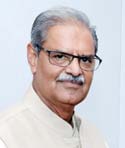
By K.V. Singh Deo
Deputy CM & Minister of Agriculture, Odisha
(The article is based on the speech delivered by the writer at Virgin Land Security Summit 2025, held in New Delhi.)














Leave Your Comment