


The Ministry of Home Affairs in India on May 4, 2020 appointed a Committee to review and recommend reforms to the three major codes of criminal laws that constitute the foundation of India’s legal system. Based on the recommendations, three bills were introduced during the monsoon session of the Parliament in August 2023, following which, they were referred to a 31-member parliamentary standing committee for review. After considering its recommendations, the government withdrew the bills and introduced their redrafted versions in the Parliament, and passed them in December 2023. These new laws received Presidential assent and came into effect on July 1, 2024, marking the end to the colonial era criminal laws. These are the laws framed by Indians for Indians. Lord Macaulay shaped India’s criminal laws during the British rule. He is often regarded as the chief architect of the codification of criminal laws in India. The new laws focus on justice rather than punishment, and are aimed at providing speedy justice, while strengthening the judicial and court management systems, emphasising ‘access to justice by all’. The criminal justice system in India after independence has not delivered the desired results because of certain inherent shortcomings, including substandard investigation and prosecution, large pendency of criminal cases, delayed court proceedings, delay in disposal of cases, low conviction rate, and a large number of undertrial prisoners. All these factors end up with denial of justice to common people. The new laws aim to overhaul the criminal justice system by providing clear definitions of various offences and punishments to deliver speedy justice.
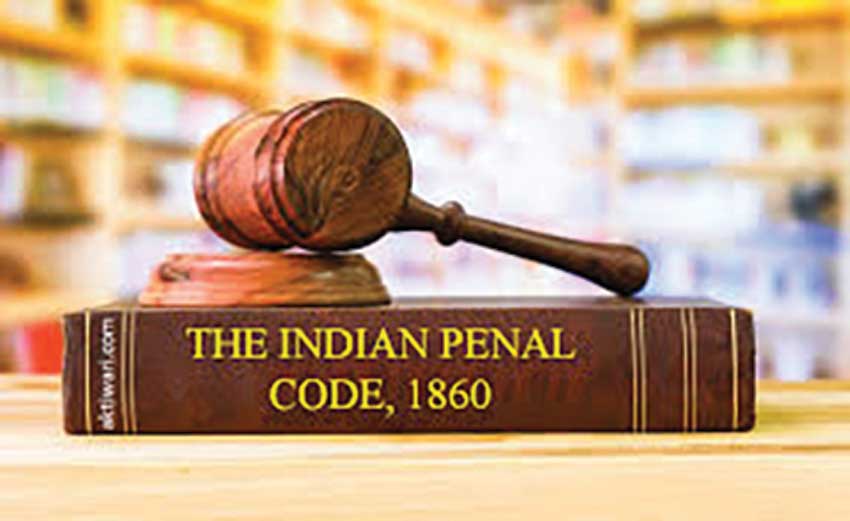
The Indian Penal Code (IPC), 1860, was passed by the British Parliament after the 1857 rebellion. It is the principal law on criminal offences. The offences covered include those affecting (1) human body such as assault and murder, (2) property such as extortion and theft, (3) public order such as unlawful assembly and rioting, (4) public health, decency, morality, and religion, (5) defamation and (6) offences against the states.
The Bhartiya Nyaya Sanhita (BNS) replaced the IPC, there are several similarities between BNS and IPC, both start with chapters that cater to general exceptions, punishments, and abetment. Both criminal laws continue with the Right to Private Defence. The BNS introduced a transformative approach to reporting crimes against women through electronic First Information Reports (e-FIRs), facilitating the fast reporting of offences requiring immediate attention. The digital platform allows swift reporting, overcoming traditional barriers, and reflects the essence of established legal principles emphasising timely reporting. This also addresses underreporting of crimes against women due to societal pressure. Public awareness campaigns can bridge the gap between technological innovations and societal understanding. The BNS introduces several new crimes to be penalized such as sexual acts done via employment of ‘deceitful means’, with penalties of up to imprisonment up to 10 years and a fine. A significant change comes in the criminal law with the recognition of murder on the grounds of caste, community, or race as a distinct offence. The crimes include such as robbery, extortion, kidnapping, vehicle theft, contract killing, land grabbing, cybercrimes, economic offenses etc. dealing with severe consequences. Also, Rajdroh (criticism of the government) will not be a criminal offence, however, Deshdroh (against the country) will remain a criminal offence.
The Code of Criminal Procedure (CrPC), 1973 was created for the first time in 1882 and amended in 1898, and then finally amended according to 41st law commission report in 1973, by the Indian Parliament and came into force from 1st April 1974. It was the main substantive criminal law, providing the machinery for investigation of the crime, apprehension of suspected criminals, collection of evidence, determination of guilt or innocence of the accused and punishing the guilty. It also addresses public nuisance, prevention of offences and maintenance of wives, children, and parents.
The Bhartiya Nagrik Suraksha Sanhita (BNSS) replaced the CrPC; the BNSS has introduced the use of technology at all stages, from crime scene to investigation to trial. It will introduce faster trial and transparency in investigation. The inclusion of technology and forensics in investigation is a significant move towards modernising the criminal justice system. Considering the risk of manipulation of evidence, the mandatory inclusion of audio-video recording in search and seizure proceedings is an important step in BNSS. Transparency in search and seizure proceedings will stop the fabrication of evidence and ensure the presence of independent witnesses in the proceedings. In order to prevent the misuse of provisions related to arrest by the police, the BNSS has introduced an additional obligation on the state government to designate a police officer who would be responsible for maintaining the information on all arrests and who arrested them. The clause requires such information to be displayed prominently in every police station and the district headquarters. The provisions have been put in place to reduce the overcrowding in prisons, the maximum period of detention for undertrials has been reduced for the first time offenders under certain circumstances, and the Jail Superintendent has been legally empowered to help the accused or the undertrials in applying for bail. A first-time offender will be released on bail if the person has served a third of the maximum prescribed sentence.
The Indian Evidence Act (IEA) was originally passed in India by the Imperial Legislative Council in 1872, during the British rule. It contains a set of rules and allied issues governing admissibility of evidence in the Indian courts of law, this act introduced a standard set of law applicable to all Indians.
The Bhartiya Sakshya Adhiniyam (BSA) replaced the IEA, the new criminal law aims to bring about changes in the manner evidence is processed in the country. A significant change is allowing ‘electronic and digital records’, encompassing a wide range of electronic records in its ambit, including server logs, emails, laptops, files stored in devices, location information, website content, messages etc. The oral evidence taken electronically is also allowed by the BSA. To protect rape victims better, their statements are recorded via audio-visual means to enhance transparency in investigations.
The Bar Council of India has made it mandatory to include the new criminal laws in the curriculum of universities and legal education centres from 2024-25. The NCERT is also planning to introduce the new laws at different levels of school education.
There was a growing consensus among legal experts, scholars, and policymakers regarding the need to reform these outdated laws to better reflect contemporary society and its values. These new laws will bring about a revolution in the justice system and incorporating extensive use of technology aims to deliver speedy justice and reduce the burden on the jails.
(The content of this article reflects the views of writers and contributors, not necessarily those of the publisher and editor. All disputes are subject to the exclusive jurisdiction of competent courts and forums in Delhi/New Delhi only)

By Manoj Dubey
Principal (Retd.)
Delhi Public Schools















Comments (2)
N
Well researched article by Mr. Dubey. Hope the government of the implements it in letter and spirit for the welfare of the people. The article also highlights the cold feet approach by various governments in revisiting the age old laws.
S
Well denied article , this is a historic judicial reform it