


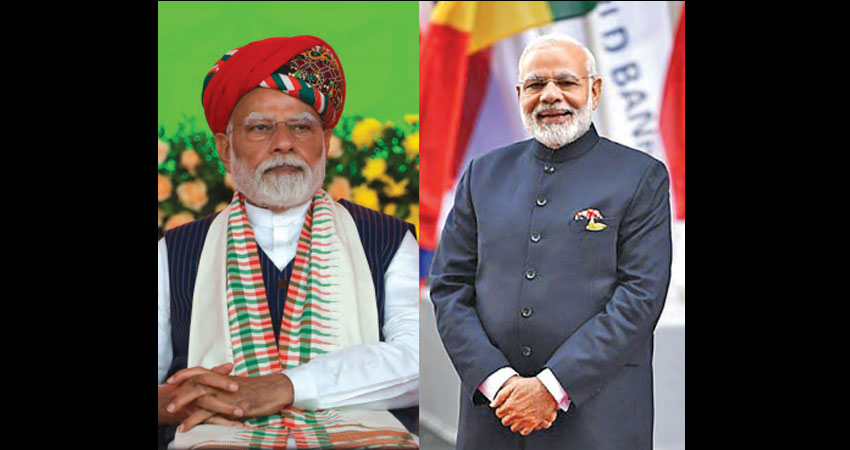
As PM Modi marks his seventy fifth birthday on 17 Sep 2025, for many leaders, such milestones may signal winding down of influence but for PM Modi this birthday feels more like an inflection point. It will be a moment to take stock of a remarkable political journey while charting out the road ahead for India in the current prevailing volatile global order. His life journey which is marked by discipline and adaptability tells the story of a personality who has not merely ridden the tide of change but bent it to his will. PM Modi’s journey, therefore, is too complex for a simplistic praise. His rise is punctuated by controversy and criticism, by moments where his decisions polarized the nation or tested its democratic fabric. It is the depth of his transformative impact and unique qualities that have allowed him to successfully navigate both domestic upheavals and global flux.
The Making of a Political Disruptor
Born in 1950 in a small town in northern Gujarat he grew up in a newly independent India where social mobility was rare and political capital even rarer. His early years with the Rashtriya Swayamsevak Sangh honed his ideological grounding and organizational discipline, embedding in him a sense of purpose and a taste for meticulous planning.
The first major inflection in his political career came in the year 2001, when BJP leadership in Gujarat, reeling from internal issues and the aftermath of a devastating earthquake, turned to him to stabilize the state. He immediately accepted stepping out of the shadows of party organization into the harsh light of executive responsibility. The risk was enormous because he had never contested an election and Gujarat’s politics were fraught. But within months his administrative decisiveness and his talent for communication had begun to rebuild confidence.
Then came the 2002 riots, a tragedy that cast a long shadow over his tenure and still colours perceptions of him abroad. For many it was a stain that could never be erased. For him it became the crucible from which a new persona emerged of a leader who would double down on governance and pivot towards a narrative of development and economic ambition. By his third term as chief minister, the “Gujarat model” had become shorthand for a state that built roads and ports faster, attracted industrial investment more aggressively and delivered growth well above the national average.
From Gandhinagar to New Delhi
By the year 2013, Mr Modi’s sights had set on Delhi. It was a gamble fraught with risk. The BJP was still dominated by veterans and Mr Modi’s polarizing image made some in the party, perhaps, feel uneasy at that time. But his organizational ally, Mr Amit Shah, helped craft a campaign that rewrote the rules of Indian politics. The year 2014 general election delivered not just a BJP victory but an outright mandate, the first in three decades. It was a personal triumph that reflected upon Mr Modi’s ability to blend aspirational messaging with grassroots mobilization.
As Prime Minister he brought the same energy and discipline that had defined his years in Gujarat. He centralized decision making, streamlined bureaucracies and launched high visibility initiatives, like, Make in India, Digital India, Swachh Bharat which sought to redefine India’s economic and social narrative. Critics started to point it as overreach and authoritarian tendencies but supporters hailed his decisiveness and clarity of vision. Either way, Mr Modi had significantly changed the texture of governance in India in a short time period.
Managing Global Flux
Perhaps Mr Modi’s most consequential achievement lies in foreign policy where he has redefined India’s role in a world where old certainties are crumbling. The global order he inherited in the year 2014 was one in flux. The United States was wrestling with questions of retrenchment and renewal, China was rising with a confidence bordering on aggression, Russia was testing the West’s resolve and multilateral institutions were struggling to stay relevant.
Mr Modi understood early that India’s strategic autonomy could no longer mean passive non alignment. Thus, he pursued what might be called “multi alignment”, which is taken as a pragmatic and interest driven engagement with all major powers. With the United States, he deepened defence cooperation and technology partnerships while keeping trade disputes manageable. With Russia, he maintained defence and energy ties even as Moscow drifted closer to Beijing. With China, he balanced engagement through platforms like BRICS and the SCO while maintaining firm resistance at the border. With middle powers like Japan, Australia, France and the Gulf states, he built relationships that expanded India’s economic and strategic options multi fold.
However, this balancing act has not been without frictions. The Trump administration’s protectionist tariffs, the Biden era push on digital and trade issues and the ongoing turbulence in US-China relations have repeatedly tested India’s resolve. Yet, Mr Modi has managed to keep India at the centre of multiple conversations, projecting it as both a reliable partner and at the same time an independent actor without any binding alliance.
The Personal Touch in Global Diplomacy
What sets Mr Modi apart in international relations is not merely policy but his personality too. He proactively invests in personal rapport with world leaders using cultural references, informal gestures and high visibility summits essentially to build trust. Whether it is hosting leaders in Ahmedabad, embracing diaspora rallies in New York and Sydney or projecting India as a digital powerhouse at Davos, Mr Modi understands the symbolic dimension of such diplomacy. These optics are not empty theatre but they are strategic tools that help translate relationships into tangible gains, like, the defence deals with France, energy partnerships with the Gulf and technology collaborations with the US and Japan.
Equally important is his ability to read the room in a rapidly changing global environment. Mr Modi has leveraged moments of crisis, be it the pandemic, the energy shock after the Ukraine war and the US-China tech rivalry to position India as a solution provider and a swing state in the global supply chains. His pitch has always been simple but very powerful clearly conveying that India is open, stable and ready to be a trusted partner.
Risks and Rewards
Mr Modi’s tenure has been defined by number of bold decisions that often carried significant political and economic risks. Demonetization in the year 2016 disrupted the informal economy but it reinforced his image as a leader willing to confront corruption. The Balakot airstrikes in the year 2019 after the Pulwama attack and recent Op Sindoor post Pahalgam killings definitely risked escalation with Pakistan but it surely consolidated his national security credentials. The abrogation of Article 370 in J&K rewrote the constitutional status of the region inviting criticism in many corners abroad but it undoubtedly deepened his domestic base.
However, notwithstanding the above, not all gambles actually paid off. The farm laws of the year 2020 intended to liberalize agricultural markets, somehow, triggered massive protests and thus, eventually it had to be repealed. The second wave of COVID-19 did present a tough time in the public health preparedness. Yet, even in these few setbacks, Mr Modi displayed a rare pragmatism by adjusting course when needed while at the same time maintaining a narrative of purpose and direction as thought of.
Mr Modi’s Unique Leadership Qualities
To understand why Mr Modi remains a towering figure at seventy five, one must look at the qualities that have actually sustained his ascent till now.
First is his ability to communicate with clarity and conviction. He simplifies complex policy ideas into language that resonates with ordinary citizens while projecting a coherent vision to global audiences.
Second is his relentless work ethics and discipline. Those who closely work with him will surely agree that he is a leader who sleeps little, prepares exhaustively and demands the same focus from his team 24/7. This stamina allows him to stay ahead in an era where information moves at a lightning speed.
Third is his strategic adaptability. Mr Modi is not fixated in his approach as he is willing to pivot when circumstances demand it, whether on trade, climate policy or domestic reforms. Fourth is his instinct for symbolism. From yoga diplomacy to the International Solar Alliance, Mr Modi understands that global leadership is as much about narrative as it is about numbers. Finally, his talent for building personal connections is very evident. In a world of transactional politics, Mr Modi’s ability to cultivate trust has often given India a distinct leverage that far exceeds its formal power.
Retrospect: The Modi Decade
Looking back, the Modi decade has been transformative. Domestically, India has seen accelerated infrastructure growth, digital penetration that rivals the West and a concerted push for manufacturing. Politically, BJP has become the dominant force with Modi as its unchallenged leader. Socially, the country is more polarized with debates on identity and secularism sharper than ever.
Internationally, India under Mr Modi has moved from the periphery to the centre of global strategy. It is courted by Washington, respected in Moscow, wooed by the Gulf and watched closely by Beijing. India’s voice in multilateral forums carries weight, not because of rhetoric alone but because of its growing economic heft and strategic relevance.
Prospect: Mr Modi Beyond Seventy-Five
What then of the future? Much has been made of the so called “seventy five rule” which is just an informal norm that suggests senior leaders may not assume new responsibility or appointment and step aside at that age. Yet, there is no formal bar and the political reality is that Mr Modi remains the party’s not only most potent vote getter but the nation’s most visible leader.
Mr Modi must continue to remain at the helm as his focus will always be on consolidating the gains of the past decade. Economically, this will mean deepening India’s integration into global supply chains, accelerating green energy transitions and leveraging technology for inclusive growth. Strategically, it means continuing to navigate the triangular dynamic of US- China and Russia while expanding ties with the Global South as well. Mr Modi’s stature ensures that he will always remain an asset for India.
Challenges Ahead
However, the road ahead is not without obstacles. Domestically managing economic disparities, social cohesion and institutional credibility will always be critical while at global level the turbulence of great power rivalry, climate stress and technological disruption will continue to test India’s resilience. While the US will continue to seek to balance partnership, China will remain both competitor and collaborator and Russia’s trajectory may remain uncertain. Therefore, as we look forward PM Modi’s ability to manage these complexities will depend not just on his personal skills but on how effectively he builds institutional capacity and second line leadership.
Conclusion: The Measure of a Statesman
As PM Modi turns seventy five, it is tempting to see his story as one of singular willpower and an unbroken ascent. The reality is more textured. His journey has been marked by calculated risks, hard won lessons and an evolving pragmatism that reflects both the man and the times. He may not have solved every problem and some may have deepened under his watch but he has undeniably altered the trajectory of India to include its sense of self, economic ambitions and its place in the world.
The retrospective is very clear, from a boy selling tea at a railway station to a leader courted by presidents and prime ministers, Mr Modi’s rise is unprecedented. The prospect is equally compelling as India under his stewardship or in the legacy of his policies continues to be seen navigating the global flux with clear confidence and purpose.
At 75, PM Mr Narendra Modi stands not just as a tall political leader but actually as a phenomenon, a case study in how personal conviction, strategic adaptability and relentless discipline can redefine the destiny of a nation. Whether in office or beyond it his imprint on India and the world which will endure well beyond the candles on this year’s cake.
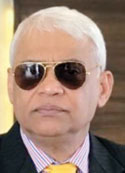
By Lt Gen Abhay Krishna, retd
(Lt Gen Abhay Krishna (retd), PVSM, UYSM, AVSM, SM(G), VSM, – is a former Army Commander of South Western, Eastern and Central Army Commands.)
(The content of this article reflects the views of writer/contributor, not necessarily those of the publisher and editor. All disputes are subject to the exclusive jurisdiction of competent courts and forums in Delhi / New Delhi only.)














Leave Your Comment