


On May 4, 2026, India’s political landscape witnessed a moment that may well be remembered as a structural turning point rather than just another electoral milestone. The sweeping advances made by the Bharatiya Janata Party (BJP) across eastern India—most notably in West Bengal—alongside its strong performance in Assam, gains in Kerala, and the National Democratic Alliance (NDA)’s success in Puducherry, together signal far more than electoral success. They represent the culmination of a decades-long ideological project and the consolidation of a new political geography in India.
At the heart of this transformation lies West Bengal—a state that, for generations, remained politically and culturally resistant to the BJP’s expansion. That resistance has now been decisively breached.
For much of post-independence India, West Bengal’s political identity was defined by ideological opposition to the very principles the BJP represents. From the dominance of the Left Front led by the Communist Party of India (Marxist) to the populist regionalism of the All India Trinamool Congress (TMC) under Mamata Banerjee, the BJP was long seen as an outsider—organizationally weak and culturally disconnected.
Yet, the 2026 verdict suggests a complete reversal. What began as a marginal presence in Bengal politics in the early 2000s gradually transformed into a formidable electoral machine. This was not an overnight surge but the result of sustained groundwork: booth-level mobilization, ideological penetration, and the gradual consolidation of a voter base that felt alienated from the state’s existing political order.
The BJP’s rise in Bengal must also be understood in the context of political fatigue. After years of TMC rule, allegations of corruption, governance deficits, and what critics termed “syndicate culture” created an undercurrent of dissatisfaction. The BJP successfully tapped into this sentiment, positioning itself as both an alternative and a disruptor.
One of the most striking metaphors to emerge from this electoral moment is the idea that the BJP now governs an uninterrupted political stretch from Gangotri in Uttarakhand—the origin of the Ganga—to Gangasagar, where the river meets the Bay of Bengal.
This is not merely geographic—it is deeply symbolic.
The Ganga occupies a central place in India’s civilizational consciousness, and the BJP has long drawn upon cultural motifs to frame its political narrative. The idea of governing the entire stretch of the river reinforces a sense of civilizational continuity aligned with political authority. It is a narrative that blends geography, culture, and power into a single, compelling image.
Equally significant is the historical connection. West Bengal is the birthplace of Shyama Prasad Mukherjee, the founder of the Bharatiya Jana Sangh, the ideological predecessor of the BJP. For the party, securing Bengal is not just an electoral gain—it is the completion of an ideological journey.
While West Bengal dominates the narrative, the BJP’s performance across the eastern and southern regions adds further depth to its success.
In Assam, the party has reinforced its position, demonstrating that its northeastern strategy—focused on infrastructure, identity politics, and governance—continues to yield results. Assam has, over the past decade, become a gateway for the BJP’s expansion into the Northeast, and its continued dominance there provides strategic depth to its eastern ambitions.
In Kerala, traditionally a bipolar contest between the Left and the Congress-led United Democratic Front, the BJP’s ability to secure assembly seats, even if limited, is politically significant. It signals the party’s persistence in making inroads into regions where it has historically struggled.
Similarly, the NDA’s victory in Puducherry, though small in scale, contributes to the broader narrative of national consolidation. Each of these gains, taken individually, may appear incremental. Taken together, they reflect a party steadily expanding its footprint beyond its traditional strongholds.
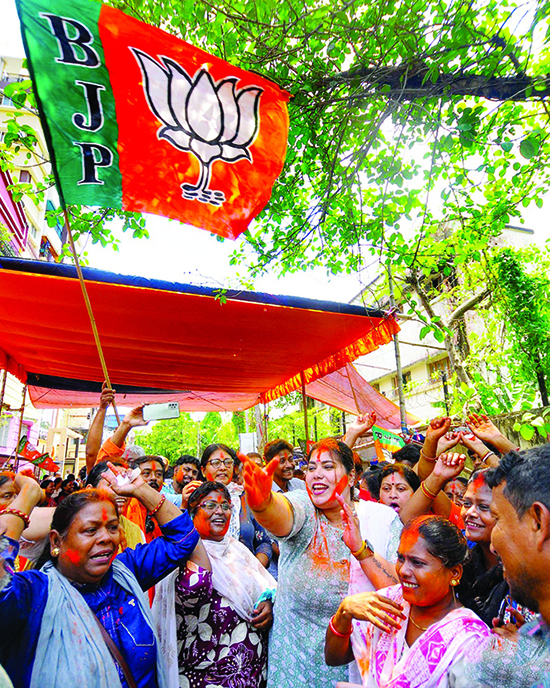
The BJP’s success in these elections can be attributed to a combination of structural, strategic, and ideological factors.
First, the party’s organizational strength remains unparalleled. Its cadre-based structure allows for deep penetration into local communities, ensuring that electoral campaigns are not just media-driven but ground-intensive. This micro-level engagement has been a critical factor in converting voter sentiment into electoral outcomes.
Second, the BJP has demonstrated an ability to localize its national narrative. While its broader ideological framework remains consistent, its messaging is often tailored to regional contexts—whether it is identity politics in Assam, development narratives in Uttarakhand, or cultural symbolism in Bengal.
Third, the fragmentation of opposition forces has played a crucial role. In many states, the lack of a cohesive opposition has allowed the BJP to consolidate votes that might otherwise have been split among multiple parties.
Finally, leadership continues to be a defining factor. The party’s central leadership, particularly under Narendra Modi, has maintained a strong electoral appeal that transcends regional boundaries. This centralization of political capital has enabled the BJP to contest elections in diverse regions with a unified narrative.
The implications of this electoral moment are profound and far-reaching.
At a structural level, it signals the continued nationalization of Indian politics. Regional strongholds that once resisted national parties are increasingly being integrated into a broader political framework dominated by a single party. This shift raises important questions about the future of regional parties and the nature of federal politics in India.
At an ideological level, the BJP’s success in Bengal represents the expansion of its core narrative into territories that were once considered ideologically incompatible. This suggests a reconfiguration of political identities, where traditional alignments are being replaced by new coalitions of voters.
At a strategic level, the party’s growing dominance provides it with greater leverage in shaping national policy. Control over multiple states enhances its ability to implement and coordinate policies across regions, strengthening its governance framework.
However, electoral success brings with it a new set of challenges.
Governing West Bengal will test the BJP in ways that campaigning never could. The state’s complex social fabric, economic challenges, and deeply entrenched political culture require careful navigation. Delivering on promises, maintaining social harmony, and managing local leadership dynamics will be critical.
Moreover, the expectations from voters are now significantly higher. Having positioned itself as an agent of change, the BJP will be judged not just on its rhetoric but on its ability to deliver tangible outcomes.
There is also the question of opposition resurgence. Political history suggests that dominant parties often face pushback once they transition from challengers to incumbents. How the BJP manages this transition in Bengal and beyond will determine the durability of its success.
The events of May 4, 2026, mark a defining moment in India’s political evolution. The BJP’s rise from a peripheral force in West Bengal to a dominant player encapsulates a broader story of transformation—one that is reshaping the contours of Indian democracy.
Yet, this is not the end of the story. It is, in many ways, the beginning of a new phase—one where electoral victories must translate into governance, and where political dominance must be sustained through performance.
From the icy heights of Gangotri to the tidal expanse of Gangasagar, the BJP’s journey is now etched not just in geography, but in the evolving narrative of India’s politics. The real test, however, lies ahead: not in conquering territory, but in governing it.
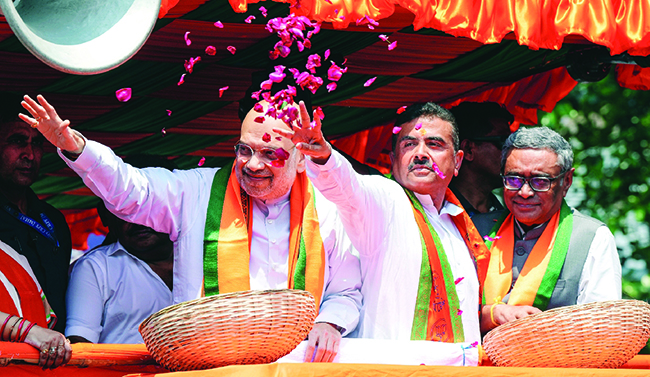
The Bharatiya Janata Party’s (BJP) rise in West Bengal marks one of the most consequential political shifts in recent Indian electoral history. For decades, the state’s political landscape had been shaped first by Left dominance and then by the formidable leadership of Mamata Banerjee. That the BJP could mount a serious challenge—let alone wrest control—speaks to a carefully calibrated strategy driven by central leadership, organisational depth, and ideological groundwork. At the heart of this transformation stood Amit Shah and a core team of leaders who combined electoral precision with grassroots mobilisation.
The BJP’s West Bengal campaign did not emerge overnight; it was the culmination of years of incremental expansion. The party’s leadership understood early that Bengal required a distinct political grammar—one that blended cultural assertion, welfare politics, and organisational penetration. Bharatiya Janata Party strategists, led by Shah, focused on booth-level management, identifying winnable constituencies, and systematically building a cadre in regions where the party had historically been absent. This was not merely an electoral contest; it was an attempt to reshape Bengal’s political narrative.
A key pillar of the BJP’s strategy was its ability to deploy a multi-layered leadership structure. While Shah oversaw the macro strategy, several national and regional leaders were assigned micro-responsibilities—ranging from constituency mapping to community outreach. This decentralised yet tightly coordinated approach ensured that the campaign remained agile. Leaders were tasked with cultivating local faces, understanding caste and community dynamics, and countering the Trinamool Congress (TMC) narrative at the grassroots. The BJP’s messaging was sharply tailored—balancing national themes like development and security with local issues such as alleged corruption, political violence, and governance deficits under the TMC.
Equally significant was the ideological and organisational backing of the Rashtriya Swayamsevak Sangh (RSS). Often described as the BJP’s ideological parent, the RSS played a critical role in expanding the party’s footprint in Bengal. For years, the RSS had quietly built a network of shakhas (local units) across the state, particularly in rural and semi-urban areas. This groundwork proved invaluable during the election. RSS volunteers acted as the connective tissue between the party and the electorate, facilitating door-to-door outreach, voter awareness campaigns, and mobilisation on polling day.
One of the most decisive aspects of the RSS’s involvement was its emphasis on voter turnout. In a state where electoral participation is often influenced by local dynamics and, at times, intimidation, ensuring that supporters reached polling booths became crucial. RSS cadres, along with BJP workers, organised transportation, coordinated communication, and maintained a visible presence in sensitive areas. This logistical support helped convert passive support into actual votes—a distinction that often determines electoral outcomes.
The BJP also leveraged a narrative of political change, positioning itself as the primary alternative to Mamata Banerjee’s leadership. By framing the election as a contest between continuity and transformation, the party sought to consolidate anti-incumbency sentiments. Allegations of corruption, the “cut money” issue, and concerns over law and order were amplified through a sustained campaign. At the same time, the BJP projected a vision of integration with the national growth story, promising infrastructure development, investment, and improved governance.
Media management and digital outreach further strengthened the BJP’s campaign. The party utilised social media platforms to disseminate targeted messages, counter opposition claims, and engage younger voters. This digital push complemented on-ground efforts, creating a multi-channel campaign that maximised reach and impact. Importantly, the BJP’s communication strategy was not merely reactive; it proactively set the agenda, forcing the TMC to respond on issues framed by the BJP.
However, the BJP’s success in Bengal cannot be attributed solely to strategy and organisation. It also reflects a broader shift in voter behaviour. Sections of the electorate, particularly in border districts and among certain communities, appeared receptive to the BJP’s messaging. The party’s ability to tap into these sentiments, while simultaneously expanding its base among traditional non-supporters, proved decisive.
In the final analysis, the BJP’s breakthrough in West Bengal represents a convergence of leadership, planning, and organisational synergy. Amit Shah’s strategic oversight, the coordinated efforts of party leaders, and the grassroots mobilisation driven by the Rashtriya Swayamsevak Sangh created a formidable electoral machine. While Mamata Banerjee remains a significant political force, the BJP’s rise has fundamentally altered the state’s political equilibrium. Bengal is no longer a one-party bastion; it is now a contested arena where organisation, narrative, and mobilisation will determine the future course of politics.

Nilabh Krishna
(The content of this article reflects the views of writer and contributor, not necessarily those of the publisher and editor. All disputes are subject to the exclusive jurisdiction of competent courts and forums in Delhi/New Delhi only)




















Leave Your Comment