


Stand-up comedy, once a medium for lighthearted entertainment, has increasingly become a platform for political commentary, often bordering on outright provocation. The recent incident involving comedian KunalKamra, whose studio in Mumbai was vandalized after his derogatory remarks against Maharashtra Deputy Chief Minister EknathShinde, Prime Minister NarendraModi, and Home Minister Amit Shah, raises a critical question: Are Indian comedians misusing the guise of "freedom of expression" to mock popular leaders without accountability? This growing trend of politically charged stand-up routines, under the pretext of satire, is not just problematic but also reflective of a deeper issue—an attempt to weaponizehumor to push a biased narrative.
In any democracy, freedom of expression is a fundamental right, but it comes with inherent responsibilities. While political satire has been a part of Indian culture for centuries, there is a stark difference between satire that critiques policies and personal attacks that demean individuals. Many stand-up comedians today, instead of offering constructive criticism, indulge in blatant insult comedy, targeting specific leaders who have a massive public following. This is not humor; it is calculated provocation designed to create controversy and garner attention. In doing so, they ignore the sentiments of millions who admire and support these leaders.
The pattern is evident: Certain comedians, particularly those with known ideological leanings, repeatedly single out political figures on one side of the spectrum while conveniently ignoring the flaws of those on the other. The way Kamra called Shinde a "gaddar" (traitor) is a direct insult rather than a satirical take on political shifts. Such statements do not add to the discourse but instead incite anger, polarize audiences, and diminish the credibility of comedy as an art form. His attacks on PM Modi and Amit Shah, too, reflect a pattern where popular, democratically elected leaders are subjected to disrespect in a way that would never be tolerated in other democracies.
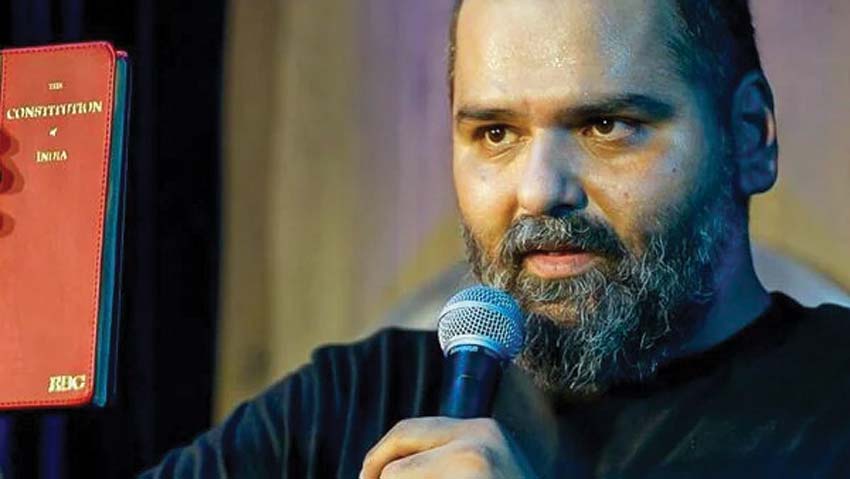
A crucial aspect to consider is the double standard applied when it comes to "freedom of expression." If a comedian makes derogatory remarks about opposition leaders or their supporters, there is an immediate outcry, often followed by legal repercussions and public condemnation. However, when the same is done against BJP leaders, it is conveniently brushed off as "harmless humor." This selective outrage raises doubts about the real intent behind such performances—whether it is genuine comedy or an attempt to shape public opinion under the guise of laughter.
Moreover, stand-up comedians often escape accountability by arguing that humor is subjective and should not be taken seriously. However, when humor crosses into the realm of incitement or disrespect, it ceases to be just "a joke." The legal system, too, is often slow to act, allowing such individuals to escape consequences by claiming artistic license. While political leaders, by virtue of their positions, are expected to face criticism, there is a marked difference between critique and character assassination.
This reckless exercise of free speech by comedians has another serious consequence—it creates an environment where political discourse is reduced to name-calling rather than meaningful debate. Political humor should ideally make audiences think and reflect on governance issues, not provoke them into retaliatory action. By resorting to cheap insults, comedians not only alienate a large section of the public but also undermine their own profession.
The backlash against Kamra, resulting in protests and legal complaints, is a reflection of the growing frustration among people who feel their leaders are unfairly targeted. While vandalism and violence are not justified responses, they indicate that comedians can no longer expect to hurl insults without consequences. If a comedian deliberately provokes, he must also be prepared to face public anger. The law must take a balanced approach—ensuring that humor does not turn into defamation while also preventing unnecessary censorship.
In conclusion, Indian comedians must introspect whether their role is to entertain or to instigate. If they wish to critique political figures, they must do so with responsibility, wit, and fairness. Otherwise, they risk losing credibility and turning stand-up comedy into a tool for divisiveness rather than a means of healthy criticism. Freedom of speech should never be an excuse for verbal attacks disguised as humor.
Uday India Bureau



















Leave Your Comment