


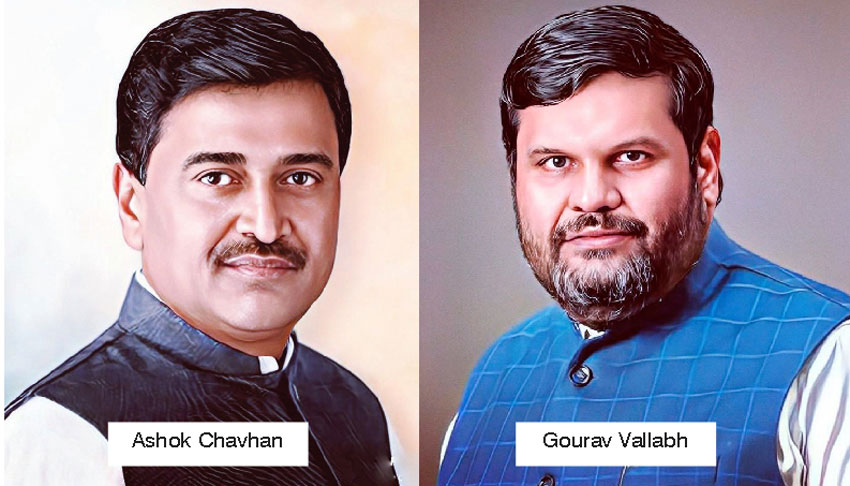
In recent years, the Indian National Congress, once the towering force in Indian politics, has been witnessing a steady stream of prominent leaders exiting its ranks. In the presence of BJP General Secretary Vinod Tawde, former Congress politician Gourav Vallabh recently joined the BJP in advance of the Lok Sabha elections, which are set to take place in seven phases starting on April 19.
Since 2020, a number of well-known leaders have quit Congress, including Jyotiraditya Scindia and Amarinder Singh. After former chief minister Ashok Chavan resigned and other leaders left the state organisation, the Maharashtra Congress struggled with internal discord. On January 14, former Union Minister Milind Deora also quit the Congress and became a member of the Shiv Sena, which is currently in power in Maharashtra.
Deora's resignation highlighted underlying conflicts inside the Maharashtra Congress and sparked concerns about the party's capacity to hold onto important leaders in the midst of the party's attempts to mobilise support ahead of the Lok Sabha elections.
Anil Antony, the son of former Kerala Chief Minister A K Antony, resigned from all party positions due to differences about his tweet against the BBC documentary on Prime Minister Narendra Modi, causing internal instability within the Congress. Congress spokesperson Jaiveer Shergill's departure from the party also demonstrated the party's growing disenchantment with its existing leadership and decision-making procedures. Shergill used the "dominance of sycophancy and self-serving interests" within the party to emphasise the gap between its ideology and the goals of today's young in India in a letter to Sonia Gandhi.

The grand old party was taken aback by Kapil Sibal's resignation from the Congress party in May 2022 and his subsequent choice to run for the Rajya Sabha as an Independent candidate backed by the Samajwadi Party (SP). His resignation brought to light the Congress's effort to manage internal discord and balance divergent viewpoints, especially as it negotiated its place in the Opposition against the BJP government. The political scene was rocked by veteran Congress leader Ghulam Nabi Azad's exit from the party and his harsh criticism of its internal operations.
Azad bemoaned the breakdown of democratic procedures within the party in a five-page letter to the then-president of the party, Sonia Gandhi, pointing out the absence of organisational elections and the predominance of a select coterie of inexperienced group in decision-making process of the party.
Internal conflicts and a perceived gap between the party's leadership and grassroots were cited by sources as reasons for the difficulties the Congress was facing in the face of the country's changing political landscape.
Everyone blames Rahul Gandhi for the situation Congress is in. Rightfully so, it seems. Rahul Gandhi is immature. He has been nicknamed Pappu by the Indian public and he has also proved many times that the public is right in judging him as a Pappu. Rahul has a reputation of not correcting behaviours for which he has been humiliated in the past and will continue to repeat those same mistakes time and again.

Rahul basically goes abroad to lower his own image in the eyes of everyone. There is hardly a foreign trip where he went to in his entire political career in which he came back with his status increased. His visit to the US in 2023 US was no different. Rahul went there and attacked India's democracy. Rahul even went and called the Muslim League a secular party which along with British and Congress had effected Partition of India on basis of religion. It was a big loss of face for Rahul, when the US Congress released a statement praising India's democratic values exactly within 48 hours after Rahul had made those vile comments.
All these activities of Rahul Gandhi has left no choice for the all the stalwarts of Congress. They have to leave the sinking ship and craft their own political future and this is what happening and this what we are discussing in this article.
This phenomenon has sparked widespread debate and speculation, with many attributing the departures to a combination of ideological erosion and the entrenched influence of the Nehru-Gandhi dynasty within the party. As Congress grapples with internal dissent and external challenges, it is imperative to examine the underlying factors driving this exodus and assess their implications for the party's future.

Historical Context
To understand the current state of Congress, it is essential to delve into its rich historical legacy. Founded in 1885, the Indian National Congress played a pivotal role in India's struggle for independence, spearheading movements against British colonial rule. Post-independence, Congress emerged as the dominant political force, shaping the trajectory of the newly independent nation under the leadership of stalwarts like Jawaharlal Nehru, Mahatma Gandhi, and Indira Gandhi.
However, the party's fortunes began to fluctuate in the post-liberalization era, as it faced challenges from emerging political players and ideological shifts in Indian society. Despite occasional electoral victories, Congress witnessed a gradual decline in its political clout, exacerbated by internal factionalism and leadership crises.
The Exodus of Congress Leaders
The exodus of Congress leaders in recent years can be attributed to a myriad of factors, including disillusionment with the party's leadership, ideological drift, and frustration with the lack of internal democracy. Several prominent leaders, including veterans with decades of experience, have chosen to part ways with Congress, citing various reasons for their departure.
One of the primary grievances voiced by departing leaders is the perception of a leadership vacuum within Congress, characterized by a lack of vision, direction, and effective communication. The centralization of power within the Nehru-Gandhi dynasty has been cited as a significant impediment to the emergence of new leadership and the rejuvenation of the party's organizational structure.
Moreover, Congress has been accused of failing to adapt to changing political dynamics and address the aspirations of India's diverse electorate. The party's inability to connect with grassroots workers and mobilize support at the grassroots level has eroded its electoral base and diminished its relevance in many states.
Furthermore, ideological ambiguity and a perceived drift towards opportunistic alliances have undermined Congress's credibility as a principled political alternative. The absence of a coherent ideological framework and the pursuit of short-term electoral gains at the expense of long-term strategic vision have alienated many party loyalists and eroded public trust.
Dynastic Dominance vs. Democratic Renewal
A recurring criticism leveled against Congress is the dominance of the Nehru-Gandhi dynasty, which has held sway over the party for generations. While the Nehru-Gandhi family enjoys a storied legacy within Congress, its continued prominence has sparked concerns about dynastic politics and the stifling of internal democracy.
Critics argue that the perpetuation of dynastic succession within Congress has impeded meritocracy and hindered the emergence of alternative leadership. The overreliance on a single family for leadership has created a sense of entitlement and complacency within the party hierarchy, stifling internal dissent and innovation.
Moreover, the dynastic model of leadership succession has been criticized for promoting sycophancy and patronage politics, as aspiring leaders vie for favor with the ruling family rather than building grassroots support and organizational strength.
However, defenders of the Nehru-Gandhi dynasty argue that its leadership provides continuity and stability to Congress, serving as a unifying force in times of crisis. They contend that the dynasty's enduring appeal among party loyalists and the broader electorate is a testament to its political acumen and connect with the masses.
Nonetheless, the debate over dynastic dominance within Congress underscores broader questions about the party's commitment to democratic principles and institutional renewal. As India's political landscape evolves, Congress faces the imperative of striking a balance between honoring its historical legacy and embracing the imperatives of democratic governance.
The Road Ahead
The exodus of Congress leaders and the debate over dynastic dominance represent critical challenges for the party as it seeks to reinvent itself and regain relevance in Indian politics. To navigate these challenges effectively, Congress must undertake a comprehensive process of introspection and organizational reform.
First and foremost, Congress needs to foster a culture of internal democracy and meritocracy, where leadership positions are earned based on competence and commitment rather than familial ties. This entails decentralizing power within the party and empowering grassroots workers to participate actively in decision-making processes.
Moreover, Congress must articulate a clear and compelling ideological vision that resonates with the aspirations of contemporary India. Whether it's social justice, inclusive growth, or democratic pluralism, the party needs to define its core values and priorities and communicate them effectively to the electorate.
Additionally, Congress must invest in building robust organizational structures and leveraging technology to mobilize support and connect with voters across diverse demographics. By revitalizing its grassroots machinery and embracing digital campaigning strategies, the party can broaden its appeal and compete more effectively in elections.
Furthermore, Congress must adopt a pragmatic approach to coalition politics and alliance-building, forging strategic partnerships with like-minded parties while retaining its distinct identity and autonomy. By eschewing opportunistic alliances and prioritizing long-term alliances based on shared values and objectives, Congress can enhance its credibility as a reliable political ally.
Ultimately, the future of Congress hinges on its ability to adapt to changing political realities, embrace internal democracy, and reconnect with the aspirations of the Indian electorate. While the challenges are formidable, the party's rich legacy and reservoir of talent provide a solid foundation for renewal and resurgence in the years to come.
Conclusion
The exodus of Congress leaders and the debate over dynastic dominance underscore the formidable challenges facing the party as it seeks to redefine its identity and regain political relevance. From ideological drift to leadership vacuum, Congress confronts a complex array of internal and external challenges that demand strategic vision and organizational agility.
As Congress embarks on the path of introspection and renewal, it must confront the uncomfortable truths about its past failures and embrace the imperatives of democratic governance and institutional reform. By fostering a culture of internal democracy, articulating a coherent ideological vision, and investing in organizational strength, Congress can reclaim its position as a credible political alternative and champion of India's democratic ideals. Only through bold and decisive action can Congress overcome the obstacles that lie ahead and emerge stronger and more resilient in the pursuit of its founding mission of serving the people of India.

By NILABH KRISHNA
(The content of this article reflects the views of writers and contributors, not necessarily those of the publisher and editor. All disputes are subject to the exclusive jurisdiction of competent courts and forums in Delhi/New Delhi only)














Leave Your Comment