


In a stunning revelation that exposes a significant military and diplomatic cover-up, exclusive documents and high-level confirmations accessed by CNN-News18 have detailed the extensive damage inflicted on the Pakistani Air Force (PAF) by India’s precision air strikes in May this year. The operation, codenamed ‘Operation Sindoor,’ severely crippled multiple PAF bases, destroying advanced fighter jets, a vital early-warning aircraft, and critical infrastructure, leaving Pakistan scrambling for urgent, covert international assistance for repairs.
The revelations fly directly in the face of Pakistan’s persistent public assertions that the Indian strike, launched on May 9-10 in retaliation for the Pahalgam terror attack, caused negligible damage and failed to destroy any of its aircraft.
According to the accessed information, the Indian strike targeted and hit critical nodes of Pakistan’s air defence network. The damage assessment includes:
Aircraft Losses: At least four F-16 fighter jets were destroyed or damaged, along with a Lockheed C-130 Hercules military transport aircraft. Most significantly, a highly advanced Swedish-made Saab 2000 Erieye Airborne Early Warning and Control (AWACS) aircraft was also hit.
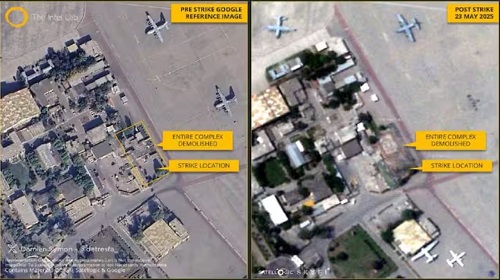
Infrastructure Damage: Several radar systems, command and control centres, and air defence installations were struck in targeted missile attacks across multiple airbases, with runways, hangars, and communication systems suffering severe damage.
The Bullseye at Bholari and Beyond
One of the most significant strikes occurred at the PAF Bholari Airbase. Intelligence confirms that a precision strike destroyed an F-16 parked inside a hardened hangar, resulting in the death of five PAF personnel, including a Squadron Leader and a Chief Technician. The same base saw its prized Erieye AWACS aircraft, a force multiplier critical for aerial surveillance and battle management, sustain significant damage.
The damage was widespread and strategic:
PAF Shahbaz Air Base (Jacobabad): Two F-16s were destroyed inside their hangars.
Nur Khan Airbase (Rawalpindi): A precision strike hit one F-16 and a C-130 aircraft.
Sargodha, Rahim Yar Khan, and Mushaf Airbase: These key bases saw their operational capabilities severely degraded with damage to runways, hangars, and communication systems.
The Scramble for Repairs and a Secret $470 Million Fund
The scale of the damage sent the Pakistani military establishment into a panic. High-level Pakistani defence sources confirmed that in late May, a secret emergency fund of $400–$470 million was urgently approved for repairs and essential upgrades.
Facing a monumental repair challenge, especially for sensitive American-origin equipment like the F-16s and C-130, Islamabad turned to its allies. However, its options were limited. The United States, wary of its advanced technology falling into Chinese hands, reportedly blocked China from assisting in the repairs.
This forced Pakistan to directly seek American help. During high-level meetings, Pakistan's Field Marshal Asim Munir personally requested assistance from US President Donald Trump and retired CENTCOM Chief, General Michael Kurilla. The US agreed, dispatching special engineering and technical teams from its bases in Al-Udeid (Doha), Al Dhafra (Abu Dhabi), and Bethesda (Maryland).
Covert US military activity on Pakistani soil was tracked through multiple flights of C-17 and C-130 aircraft landing at the Nur Khan Airbase between June and September. The US support was so critical that Pakistan, in a rare move, awarded General Kurilla its highest military honour in July 2025.




















Leave Your Comment