


India’s energy distribution system continues to demonstrate resilience and preparedness as the government takes proactive measures to ensure uninterrupted supply of liquefied petroleum gas (LPG) and natural gas to priority sectors. During a press briefing held on 13 March 2026, officials highlighted the scale of India’s LPG distribution network, the steps taken to maintain supplies, and the regulatory mechanisms in place to prevent hoarding and black marketing.
India today operates one of the largest LPG distribution systems in the world. According to the briefing, the country has 1,01,469 retail outlets and 25,605 LPG distributorships serving consumers across urban and rural areas. This extensive network supports a massive consumer base of 33.37 crore LPG users, ensuring that cooking fuel reaches households efficiently.
The government’s flagship welfare initiative, the Pradhan Mantri Ujjwala Yojana (PMUY), has played a key role in expanding access to clean cooking fuel. Under the scheme, 10.56 crore LPG connections have been provided to economically weaker households, significantly reducing dependence on traditional biomass fuels.
In addition, piped natural gas (PNG) infrastructure continues to expand, with more than 1.5 crore domestic PNG connections now serving households.
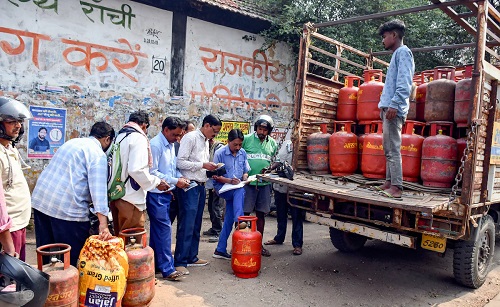
Authorities reported that there have been no “dry out” situations, meaning that LPG stocks have remained stable across the distribution chain. On average, around 50 lakh domestic LPG cylinders are delivered daily, highlighting the scale and efficiency of India’s fuel distribution system.
The government also confirmed that 100 percent supply is being maintained for domestic PNG users and for CNG used in transportation, ensuring that households and public transport systems continue to receive uninterrupted fuel supplies.
Under the Natural Gas Control Order dated 9 March 2026, the government has prioritized sectors based on their social and economic importance.
Domestic PNG users and CNG transport sector will receive 100 percent supply without any cuts.
Tea industries, manufacturing units, and other industrial consumers connected to the gas grid will receive about 80 percent of their previous six-month average supply.
Fertiliser plants will receive approximately 70 percent supply.
Refineries and petrochemical units will accept a reduction of about 35 percent to ensure that higher-priority sectors remain protected.
This prioritization approach ensures that essential services and household energy needs remain secure even during supply adjustments.
To maintain fair distribution and prevent misuse, the government is enforcing provisions under the Liquefied Petroleum Gas (Regulation of Supply and Distribution) Order, 2000.
Under Clause 13 of the order, authorized officials from the central or state government, as well as officers from government oil companies, have the power to:
Stop and search vehicles or vessels transporting petroleum products.
Enter and inspect premises suspected of storing LPG illegally.
Seize LPG stocks, cylinders, valves, pressure regulators, and seals if violations are suspected.
These powers enable authorities to act swiftly against hoarding, black marketing, or any other irregularities in the LPG supply chain.
The government has also emphasized the growing role of digital platforms in improving service delivery. Consumers can now book LPG cylinders through multiple convenient methods, including:
IVRS phone calls
SMS booking
WhatsApp services
Mobile applications of oil marketing companies
These digital systems have simplified the booking process and improved transparency and efficiency in the distribution system.
Overall, the measures highlighted during the press briefing underline the government’s focus on energy security, consumer protection, and efficient fuel distribution. By prioritizing essential sectors, expanding infrastructure, strengthening enforcement, and promoting digital access, authorities aim to ensure that LPG and natural gas remain accessible and reliable for millions of households across the country.
As demand continues to grow, such coordinated policy actions will remain crucial to maintaining stability in India’s energy supply chain while safeguarding the interests of consumers.


















Leave Your Comment