


The history of Naxalism in India dates back to the late 1960s as a radical left-wing movement inspired by Maoist ideology. It began in 1967 with the Naxalbari uprising in the small village of Naxalbari, where peasants revolted against oppressive landlords and demanded land rights. The movement was led by figures such as Charu Majumdar and Kanu Sanyal, who advocated armed struggle to overthrow the state.
During the 1970s, Naxalism spread across parts of West Bengal, Bihar, and Andhra Pradesh, but faced harsh repression from the government. The movement split into multiple groups due to ideological differences and leadership conflicts. However, it resurfaced in the 1980s and 1990s, mainly in tribal and forested areas, where issues such as land alienation, poverty, and exploitation continued.
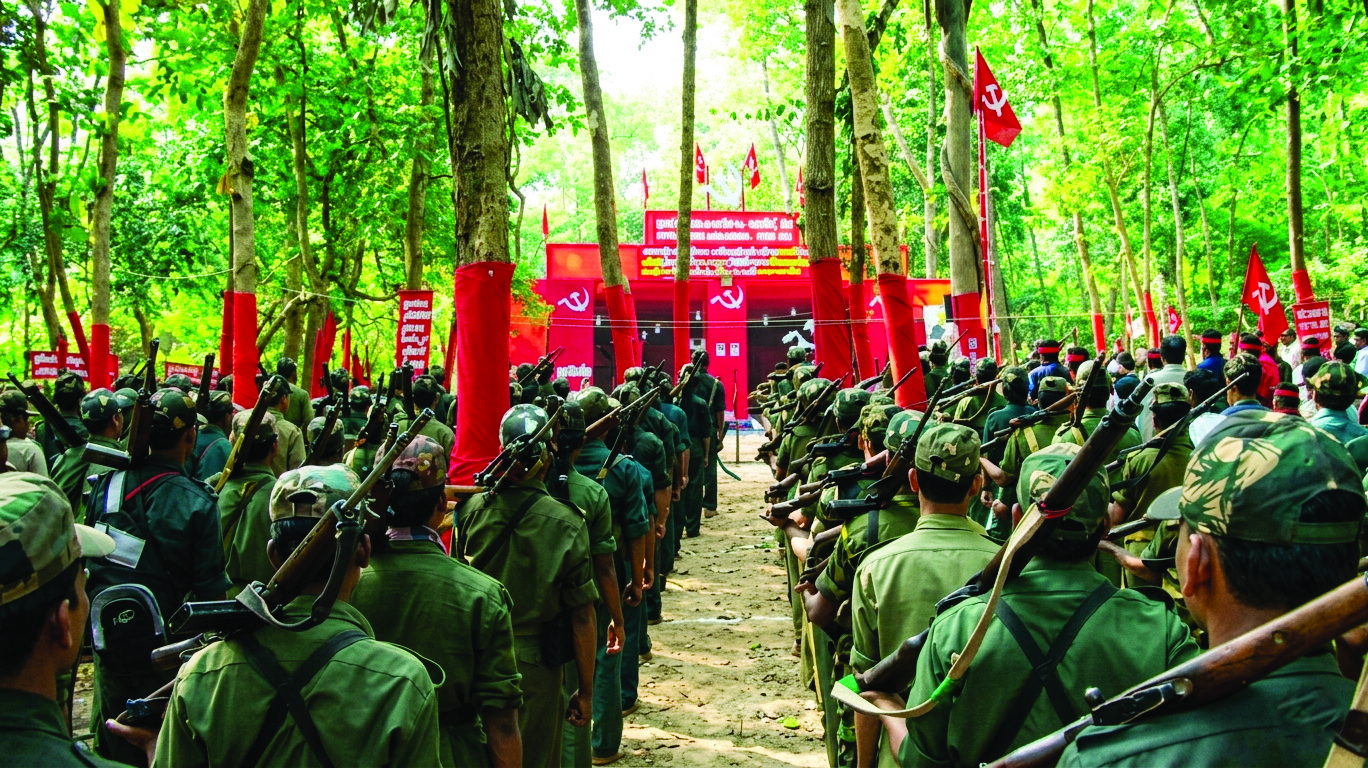
In 2004, major Naxalite groups merged to form the Communist Party of India (Maoist), heightening insurgency across the “Red Corridor,” which extends from central to eastern India. States such as Chhattisgarh, Jharkhand, Odisha, and parts of Maharashtra became key centres of activity. It was also referred to as the corridor from Pashupati to Tirupati.
Naxalism and Maoism are related but not identical. Naxalism is an Indian movement that began with the Naxalbari uprising in West Bengal, focusing on local issues such as land rights, peasants' exploitation, and tribal grievances. Maoism, on the other hand, is a broader ideological doctrine based on Mao Zedong's teachings, advocating armed revolution and guerrilla warfare to establish a communist state. Essentially, Naxalism is the Indian expression or application of Maoist ideology, shaped by India’s specific socio-economic conditions and regional inequalities.
There are individuals or groups based in cities who are allegedly linked—directly or indirectly—to Naxalite/Maoist ideology or organisations, especially the CPI (Maoist). They are believed to operate in urban spaces rather than in forest or rural insurgency zones and are known as ‘Urban Naxals’. They support or sympathise with Maoist ideology.
Land reforms in West Bengal are considered among the most successful in India. Initiated after 1977 under the Left Front government led by Jyoti Basu, the reforms focused on land redistribution and protecting tenant farmers. The flagship programme, Operation Barga, recorded sharecroppers (bargadars) and granted them legal rights, ensuring security of tenure and a fair share of produce. Large landholdings were identified, and surplus land was distributed among the landless. These reforms improved agricultural productivity, reduced rural inequality, and strengthened the socio-economic condition of peasants, making West Bengal a model for agrarian reform in India.
Naxalism has caused significant harm to India’s internal security, development, and social fabric. Operating mainly in underdeveloped regions like Chhattisgarh, Jharkhand, and Odisha, Naxalite groups such as the Communist Party of India (Maoist) have used violence, including attacks on security forces, infrastructure, and civilians. This has resulted in loss of lives, fear, and instability in affected areas. They frequently carry out ambushes, landmine blasts, and targeted killings of security personnel, government officials, and civilians suspected of being informers. These violent incidents have led to thousands of deaths over the years.
Property destruction is another major consequence. Naxalites often attack public infrastructure such as railway tracks, roads, schools, mobile towers, and government buildings to disrupt administration and development. They also loot weapons and destroy police stations, further weakening state authority. Private property, including vehicles and equipment used in development projects, is frequently damaged or burned. Such violence creates an atmosphere of fear and instability, forcing people to flee their homes and leading to displacement. Economic activities suffer, investments decline, and essential services are disrupted. Overall, Naxalism causes both human casualties and widespread destruction of assets, severely affecting development and normal life in affected regions.
Development activities are greatly hindered because roads, schools, and communication networks are frequently targeted, which discourages investment and good governance. The movement disrupts democratic processes by boycotting elections and intimidating voters, thereby weakening political institutions. Tribal populations, whom the movement claims to represent, often suffer the most due to displacement, coercion, and lack of access to basic services.
Additionally, Naxalism strains government resources, necessitating heavy expenditure on security operations rather than development. It also creates a cycle of violence and mistrust between the state and local communities. Overall, Naxalism hinders economic growth, undermines law and order, and poses a serious challenge to inclusive development and national integration in India.

Siddhartha Shankar Ray addressed Naxalism in the early 1970s with a strong law-and-order approach. As Chief Minister of West Bengal, he authorised intensive police and paramilitary operations to suppress the movement that surfaced after the Naxalbari uprising. Key Naxalite leaders were arrested or eliminated, and urban networks were broken down. His government enforced strict surveillance, curfews, and preventive detention measures. While these actions significantly weakened the movement initially, they also faced criticism for human rights violations and excessive force, leaving a controversial legacy. The national and state governments attempted to resolve the issue without much success.
Salwa Judum was launched in 2005 in Chhattisgarh as a state-supported militia movement to combat Naxalism. It mobilised local tribal youth as Special Police Officers (SPOs) to fight the Communist Party of India (Maoist). The initiative aimed to weaken Maoist influence by involving local communities. However, it became highly controversial due to allegations of human rights violations, forced displacement, and violence against civilians. This ill-advised attempt only ended up antagonising the tribal population. In 2011, the Supreme Court of India declared the use of SPOs unconstitutional, leading to its disbandment and criticism of its approach.
Manmohan Singh described Naxalism as the “single biggest internal security threat” facing India while addressing Parliament in 2006. He highlighted that the spread of left-wing extremism, led by groups like the Communist Party of India (Maoist), was deeply rooted in poverty, underdevelopment, and lack of governance in tribal and rural areas. He emphasised that a purely military solution would not suffice and called for a balanced strategy that combines strong security measures with inclusive development, land reforms, and improved implementation of welfare schemes to address the root causes fueling the insurgency.
The NDA government, led by Narendra Modi, adopted a multi-pronged strategy over the past decade to curb Naxalism, combining security, development, and governance reforms. On the security front, operations have been intensified against the Communist Party of India (Maoist) through better coordination between central and state forces. The government strengthened forces such as the Central Reserve Police Force and deployed specialised units, including CoBRA battalions. Improved intelligence gathering, modern equipment, and the establishment of fortified police stations have significantly reduced Maoist influence.
Development initiatives have been a key focus in affected states like Chhattisgarh, Jharkhand, and Odisha. Schemes such as the Aspirational Districts Program aim to uplift backward districts by enhancing health, education, infrastructure, and financial inclusion. Infrastructure projects, including road connectivity and mobile towers, have lessened isolation in tribal regions.
The government has also emphasised surrender and rehabilitation policies, encouraging Naxal cadres to join the mainstream by providing financial aid, training, and employment opportunities. Strengthening local governance through Panchayati Raj institutions and ensuring better implementation of welfare schemes have helped address root causes such as poverty and alienation. As a result, incidents of violence and the geographical spread of Naxalism have declined significantly, reflecting the impact of this comprehensive approach. In 2013, its presence was in 106 districts; it was reduced to 73 in 2018 and 38 in 2024. Home Minister Shah promised to end Naxalism by 31st March 2026, and all agencies made determined efforts consistent with the strategy to meet the deadline. On 31st March 2026, Shah informed Parliament of the elimination of decades-old left-wing extremism from the country, a matter of pride for all Indians. The government’s declaration of a ‘Naxal-free India’ marks the end of a troubled chapter in central India. A different, but equally challenging, phase now begins for a new sunrise in the Red Corridor.
It might be hard to imagine today, but just twenty years ago, this movement controlled large parts of central and eastern India. About a quarter of the country’s districts had experienced Maoism in some form, especially in the tribal heartland.
The government responded with both security operations and development initiatives. Adhar and Ayushman cards have been issued, and new schools, including Kendriya Vidyalayas and Jawahar Navodaya Vidyalayas, as well as skill development centres, have been established in the affected areas. The government's welfare schemes started reaching the deep tribal regions. The home minister rightly praised the government’s efforts to expand infrastructure in regions once considered impenetrable.
The next phase in the Red Corridor requires a transformative vision. Authorities should avoid heavy-handed operations and instead focus on strengthening law and order. To prevent Naxalism from re-emerging, both the central and state governments must adopt a consistent, balanced, and people-focused approach, especially in vulnerable regions like Chhattisgarh, Jharkhand, and Odisha.
Inclusive development is crucial. Governments must effectively carry out land reforms, recognise forest rights, and implement welfare programs so that tribal and marginalised communities benefit directly. Providing quality education, healthcare, employment opportunities, and infrastructure such as roads, electricity, and digital connectivity can help reduce grievances that lead to extremism.
Strengthening governance at the grassroots level is crucial. Empowering Panchayati Raj institutions, ensuring transparency, and fighting corruption will foster trust between the state and local communities. Special emphasis should be placed on implementing the Forest Rights Act and safeguarding tribal land from exploitation. Security measures should continue but be applied carefully. Intelligence-based operations against groups like the Communist Party of India (Maoist) must be balanced with respect for human rights to prevent alienating local populations.
The rehabilitation policies should be expanded to encourage surrender and reintegration of former Naxalites through skill training and livelihood assistance.
Finally, fostering dialogue, community participation, and awareness programmes can help counter extremist ideology. A sustained commitment to justice, development, and good governance is essential to prevent the resurgence of Naxalism in India. ‘Urban Naxal’ networks in a post-Naxal era need to be managed through a balanced, lawful, and intelligence-driven approach. The government of India rightly deserves recognition for reaching this milestone, and soon the Naxal-affected region will be integrated into the mainstream.

Manoj Dubey
(The content of this article reflects the views of writer and contributor, not necessarily those of the publisher and editor. All disputes are subject to the exclusive jurisdiction of competent courts and forums in Delhi/New Delhi only)





















Comments (7)
S
Good
Good
Good
N
This article by Mr. Manoj Dubey examines the decline of Naxalism in India, attributing the shift from a widespread "Red Corridor" to a significantly weakened insurgency to more effective security strategies and targeted rural development. It also highlights the successful land reforms in West Bengal as a pivotal factor in diminishing the agrarian unrest that originally fueled the Maoist movement. Overall wonderful reading. Keep it up!
S
After all Naxalism is totally eliminated from the country. Author has described in detail the causes and side effects of this movement. Now entire area is peaceful and government is focusing on rehabilitation.
S
भारत में 31 मार्च 2026 तक सुरक्षाबलों के लगातार आपरेशन, आक्रामक नीति और विकास कार्यों के दम पर नक्सलवाद का अंत किया गया है।रेड कोरिडोर अब अपने खात्मे तक पहुंच चुका है। मुख्य धारा में लौटने वाले नक्सलियों को विशेष राहत दी गई है जबकि प्रमुख नक्सली कमांडर मारे गए हैं या गिरफ्तार हो चुके हैं। इस संदर्भ में लेखक का विस्तृत विवरण सराहनीय है।
Y
Naxalism started from a village Naxalbari against the atrocities of the land lords. It spread from west bengal to many states and caused security threats to the nation as Dr. Manmohan Singh PM described it as single biggest internal security threat to the nation. The NDA government had taken it as a challange giving the free hand to security forces for mission mode action made a target to finish it by 31st March 2026 and they completed it in time. Mr Shah has done a commendable job to syncronize the security forces. The country is now free from maoism. The auther has categorically gone in specific details, congrats to Auther.