


India prides itself on its rich tapestry of diversity, encompassing various religions, castes, languages, and cultures. Sanatana, Buddhism, Jainism and Sikhism originated in India. Zoroastrianism has roots in ancient Persia, Christianity developed in Judea (Jerusalem), and Islam originated in Mecca and Medina. All the religions except Sanatana are Monotheistic. According to 2011 census there are 80% Hindus, 14% Muslims, 2% Christians, 2% Sikhs and 1% Jains and Buddhists (appx figures) in the country. In India, minority means Muslims, though they are the majority community of minorities. There is a ministry for minority community in the central government which is normally headed by a Muslim. Christianity and Islam have not originated here, it is believed that either their followers have come from outside or got converted here. Muslims are not as prosperous as other communities and this needs to be analysed, understood, and resolved.
The historical narrative of Islam in India dates back to early 8th century when Muhammad bin Quasim, an Arab military commander, defeated and decapitated Raja Dahir in the battle of Aror and captured the Sindh province. He established the Islamic province of Sindh and became its governor, a beginning of Islam in India which continued for centuries with subsequent invasions by Gaznavi, Ghori, Slaves, Khiljis, Tughlaqs, Sayyids, Lodis and Mughals. They came from outside and ruled over the parts of Indian territories, converted Hindus to Islam, destroyed the places of worship and massacred Hindus in large numbers. All the attempts were made to destroy the Indian culture to establish Islam. Muslim league was formed in 1906 to protect the rights of Muslims. In the 1945-46 Central Assembly and Provincial Assembly elections, 86% of total Muslim votes went to the Muslim league which wanted to get a separate nation exclusively for the Muslims. This demand was accepted by the British government and the Indian National Congress, and thus the Islamic Republic of Pakistan was formed on 15th August 1947. And India continued to be the country for all the faiths. The population of Muslims was about 10 crores at the time of partition. About 6.5 crores were rendered non-Indian in a manner that was most unmerciful and unceremonious. About 3.5 crores stayed back after rejecting the idea of Pakistan and expressing their faith in a non-theocratic India politically or economically was fructuous. In 1951, Muslims constituted 9.8% of India’s population of 36 crores.
It is believed that after the partition in 1947, most of the Muslim leaders were prepared to hand over many temples-turned-mosques to Hindus. An ideal course for the Congress leadership would have been to reclaim at least Ayodhya, Kashi, and Mathura to restore the wounded pride of Hindus and strike a balance. Instead, Jawaharlal Nehru even opposed the revival of Somnath temple. As an appeasement policy, the Congress followed the 1940 resolution of the Muslim league demanding preferential treatment for Muslims not going to Pakistan. Egged on the Congress’ pro-Muslim policies, a vast section of Muslims has not only denied the true history but has trampled upon the rights of the majority after 1947. This resulted in failure to enact a Uniform Civil Code (UCC) but an abject surrender on the part of the nation to the most communal sentiments of the Muslims, from the Hindu code bills, to Shah Bano case and even to CAA protests. This fostered the separatists’ thoughts in Indian Muslims instead of bringing them to the mainstream, and in turn, created hatred in the minds of the section of ultra-nationalists Hindus against the pan-Islamism in the minority community. Significantly, the insensitivity of the minority community leadership towards Hindu feelings on the issue of temples-turned-mosques has further fuelled anti Muslim hatred even in common Hindus, which is now manifesting in demands to reclaim such places. Surprisingly, not a single popular Muslim leader has apologised to the majority community for the atrocities committed on them by the Muslim invaders during medieval period. On the contrary, some of the Muslim leaders deify Aurangzeb and other iconoclasts. It would have been better for Indian minority community and its leaders, had they taken the inspiration from the public apology offered by Pope John Paul 2 to the Jews in 2000 CE for atrocities committed on them by the Roman Catholics over past 2000 years. Post independence approach towards Muslims, has been marred by political calculations and appeasement policies.
The UPA government headed by Manmohan Singh in 2005, set up a very high level seven member Sachar committee headed by former Delhi High Court Chief Justice Rajinder Sachar to study social, economic, and educational condition of Muslims in India. The committee submitted its report in 20 months and concluded that the conditions facing Indian Muslims were below that of Scheduled castes and Scheduled tribes. This is a clear neglect they endured over decades, from 1947 to 2005. The Congress was in power for over 40 years and almost nothing was done for the Muslims. They have been used as vote bank for the Congress, Manmohan Singh said in 2006 that Muslims have the first claim on nation’s resources. Some regional parties like the SP, TMC, RJD etc used Muslims as vote banks. In 1990, Mulayam Singh Yadav, the Chief Minister of UP ordered firing on Kar Sevaks going to Ayodhya, killing 17 people, just to please the Muslims. These parties have often exploited minority sentiments for gains, exacerbating divisions rather than foster inclusivity.
True empowerment of Muslim, requires departure from tokenism towards substantive measures in education, skill development, social welfare, and economic opportunities. The political parties must stop vote bank politics and work for their upliftment. Government initiatives must transcend religious lines, ensuring equitable distribution of resources and opportunities.
India’s remarkable strides in various fields has left behind many developed countries, such as climate change, leadership in Science and Technology, International Yoga Day, cutting edge diplomacy, digitization program covering government services, export of defence equipment, Space technology etc. underscore its potential for inclusive growth. We are the 5th largest economy of the world and will be 3rd soon. As the country charts its future course, its imperative that minorities are active participants in this wonderful growth trajectory, and not mere by standers. The nation is passing through elections. The voters are urged to come out in large numbers and support the party committed to fulfilling their promises and advancing the collective welfare of all the citizens irrespective of religion or caste.
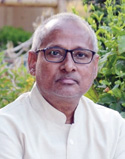
By Manoj Dubey
Principal (Retd.)
Delhi Public Schools
(The content of this article reflects the views of writers and contributors, not necessarily those of the publisher and editor. All disputes are subject to the exclusive jurisdiction of competent courts and forums in Delhi/New Delhi only)














Leave Your Comment