


As India marks the tenth anniversary of the PradhanMantri Mudra Yojana (PMMY), launched on April 8, 2015, it stands as a testament to the country’s evolving approach toward inclusive economic development. This flagship scheme, which was envisioned to bridge the gap between institutional credit and the underserved micro and small enterprises (MSEs), has grown into a transformative movement empowering millions. Over the past decade, more than 52 crore loans amounting to Rs 32.61 lakh crore have been sanctioned, a remarkable feat that signals not just numerical success but the empowerment of a new economic class. In essence, the MUDRA scheme is not merely a credit program—it is an instrument of economic democracy and a pillar in the making of a truly self-reliant India.
One of the most significant impacts of the MUDRA Yojana lies in its ability to bring financial empowerment to the most vulnerable and underrepresented sections of Indian society. By extending loans to non-corporate, non-farm small businesses—often run by women, Dalits, backward communities, and rural entrepreneurs—the scheme is dismantling long-standing barriers to opportunity. The majority of these enterprises operate in the informal sector, which, despite being the backbone of India’s economy, has historically been excluded from formal financial systems. By integrating these enterprises into the institutional credit fold, PMMY has not only legitimized their economic activities but has also created a pathway for their sustainable growth.
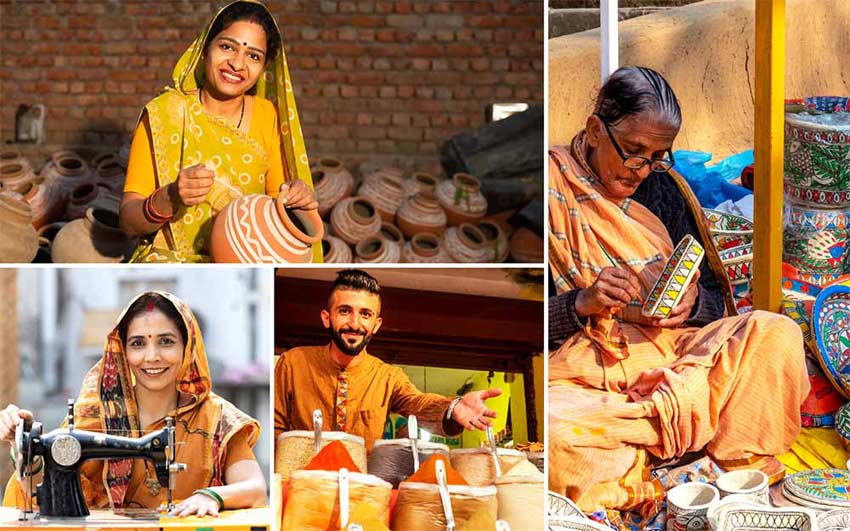
A defining feature of the scheme is its three-tier loan structure—Shishu (up to ₹50,000), Kishore (₹50,001 to ₹5 lakh), and Tarun (₹5 lakh to ₹10 lakh)—which addresses the diverse needs of entrepreneurs at various stages of their business lifecycle. This stratification ensures that even those with zero credit history can access funding, giving rise to first-generation entrepreneurs who would otherwise be unable to dream of starting a business. Over 68% of the loans under PMMY have been sanctioned to women, indicating the program’s role in gender empowerment and financial inclusion. Furthermore, the emphasis on collateral-free lending has removed a major psychological and procedural hurdle, especially for the economically weaker sections.
The ripple effect of this financial inclusion extends far beyond individual enterprises. As more micro-units thrive, they generate employment, stimulate local demand, and contribute to the decentralization of economic activity. By strengthening rural and semi-urban economies, MUDRA loans are instrumental in reducing regional disparities and urban migration. In effect, this scheme is catalyzing a bottom-up model of development that is crucial for a diverse and populous country like India.
In the broader context of Atmanirbhar Bharat (Self-Reliant India), the MUDRA scheme plays a critical role. It equips citizens with the means to be economically self-sufficient, thereby reducing dependence on government doles or subsidies. The creation of a culture of entrepreneurship at the grassroots level fosters resilience and innovation, traits that are indispensable for a nation aspiring to be a global economic powerhouse. As India navigates global uncertainties and supply chain disruptions, its strength will increasingly depend on its ability to leverage domestic enterprise, especially those that can operate with agility and serve localized needs.
Moreover, by fostering a more robust entrepreneurial ecosystem, the MUDRA scheme indirectly boosts other government initiatives like Digital India, Skill India, and Make in India. As small businesses expand, their demand for skilled labor, digital tools, and domestic raw materials grows, thereby strengthening the larger economic fabric of the country. This interlinkage of schemes points to a well-calibrated vision where empowerment is not an isolated act but part of a comprehensive nation-building effort.
In conclusion, the PradhanMantri Mudra Yojana is much more than a government scheme—it is a socio-economic revolution in motion. It is unlocking the latent potential of India’s most enterprising citizens and enabling them to become stakeholders in the country’s growth story. As the scheme enters its second decade, its potential to reshape the future of India and fortify the dream of a truly self-reliant nation is not just immense but inevitable.
Uday India Bureau




















Leave Your Comment