


In 2019, Article 370 of the Constitution of India, which gave special status to Jammu and Kashmir (J&K), was abrogated, and the state was reconstituted into union territories of J&K and Ladakh. The union territory (UT) of J&K has unicameral legislative assembly. A three-member delimitation commission was formed for J&K and its recommendations came into force from May 2022. The new assembly will have total 114 seats, out of which 24 are designated for the area under POK, while from the remaining effective 90 seats, 43 are in Jammu and 47 in Kashmir division. From the 90 seats, 7 are reserved for scheduled castes and 9 for scheduled tribes. The J&K reorganization act was revised in July 2023, granting powers to the Lieutenant Governor to nominate 5 members to the assembly, from Kashmiri Pandits, women, and POK displaced community. With this new arrangement the J&K legislative assembly will expand to 95 members, increasing the majority threshold to 48 seats to form the government. The UT, with a population of about 1.25 crores, has five Lok Sabha and four Rajya Sabha seats. In the last five years the UT has seen significant improvements in peace and developmental activities. Investment projects worth Rs 25 thousand crores are under execution. With the increased footfall of domestic and foreign visitors, the tourism is scaling new heights in J&K. Reservations have been introduced for various communities, including OBCs, Gurjars, Bakarwalls, and Pahadis. Strike calls imposed by the separatists and militants in Kashmir have lost traction as the common people have begun to reap the dividends of peace and development. J&K has been traditionally ruled by Abdullas, Muftis, and the Congress.
After a decade long hiatus, the first elections since the abrogation of Articles 370 and 35A as well as the delimitation process, were held in three phases from 18th September to 1st October 2024. The security situation has seen a notable improvement since the last assembly elections in 2014, leading to peaceful voting process with a strong turnout of 64%. This time J&K witnessed multi cornered contest between the BJP, PDP, and the alliance between Congress, National Conference (NC), and CPIM along with other regional parties and the independent candidates. The key issues among the voters included unemployment, lack of development, high electricity bills and detention of the loved ones. The NC remains strong in the Muslim majority Kashmir region, the PDP lost ground after 2014 alliance with the BJP. In Hindu majority Jammu region, the BJP remains popular and Congress has been marginalized in both the regions. The BJP, lacking a strong base in Kashmir region, did not contest all the seats but supported some independent candidates. The Congress in its manifesto- ‘Haath Badlega Halaat’ promised a slew of measures for farmers, women and youth including insurance of all crops against natural calamities, forming minority commission, MSP of Rs 72 per kg for apple, filling one lakh vacant government posts, unemployment allowance to qualified youths etc. The NC promised ‘Dignity, Identity and Development’, seeking restoration of Article 370 and Indo Pak dialogue on Kashmir, introducing laws to protect jobs and land, and a number of freebies. The BJP in its ‘Sankalp Patra’ promised Rs 10,000 per year under Kisan Samman Nidhi, reduction of electricity rates for agriculture by 50%, generation of five lakh employment opportunities for youths, 1000 additional seats in medical colleges, Rs 18000 per year to the senior most woman in the family, metro service in Jammu and Kashmir, transforming the UT from terrorist hotspot to tourist hotspot etc.
The votes were counted on the 8th October, and the results were largely on the expected lines. The coalition of NC, Congress and CPIM won 49 seats, a clear majority in the house of 90 seats. The BJP was second with 29 seats, all in the Jammu region, and the PDP had to settle with 3 seats only. NC won 42 seats with 23.4% votes, BJP 29 with 25.6%, and the Congress 6 with 12% votes. Omer Abdulla, set to become the Chief Minister, is expected to focus on peace and prosperity of J&K and ensure that the developmental work initiated by the central government is carried forward. All attempts should be made to rehabilitate Kashmiri Pandits in coordination with the central government. The BJP, despite winning the largest share of votes will need to work on building trust with the people of Kashmir, while continuing its development efforts in coordination with the governments.
Haryana was carved out after linguistic reorganization of Punjab on 1st November 1966. It surrounds Delhi from three sides, consequently, a large area of state is included in the economically important National Capital Region (NCR). The state has robust economy because of agriculture and industry, and is known for world class athletes. Haryana, with a population of about three crores, has unicameral assembly of 90 seats, while the state has 10 Lok Sabha and 5 Rajya Sabha seats. The Lal trio in Haryana politics refers to three influential political leaders (Bansi Lal, Devi Lal, and Bhajan Lal) who have had a significant impact on the state’s political landscape. They all started their politics in Congress, became turncoats, often founding, merging, splitting, and switching parties. They introduced their children to politics, their sons, daughters, and grandchildren became MLAs, MPs, and ministers and even Chief Minister. Today, their families remain entrenched in Haryana politics, with about 13 active politicians from these dynasties.
Proliferation of dynasties creates conflict of interest, keeps people poorer, state resources are misused for self-promotion, and prevent the rise of talented non-dynasts.
In recent years, Bhupinder Singh Hooda, a prominent Congress Jat leader of Rohtak and adjoining areas, was elected to Lok Sabha four times. He also defeated veteran Devi Lal in the electoral battle. He served as the Chief Minister from 2005 to 2014. In the 2014 election, the BJP came to power and Manohar Lal Khattar led the government; in 2019, BJP retained the power with Khattar as CM. A few months before the next elections, he was replaced by Naib Singh Saini, a popular OBC leader of state but did not get enough time to prove himself. Khattar is a Punjabi and was known for his honest leadership. The elections to constitute the next assembly were held on 1st October 2024.
The five-year tenure of the BJP government faced criticism over unemployment, agrarian distress, governance issues, and strong anti-incumbency. The popular slogan was Jawan, Kisan, and Pehalwan (Soldiers, Farmers, Wrestlers). Opposition parties were against the Agniveer scheme, in support of farmers’ and wrestlers’ movements. The BJP and the Congress both promised welfare schemes and freebies to the people of Haryana in their manifestos.
The counting of votes was done on 8th October and the results were announced the same evening. It was a great surprise for the political pundits and psephologists when the BJP emerged victorious, gaining 48 seats with 39.94% votes, a clear majority in the house of 90 members and Congress got 37 seats only with 39.09% vote share. Farmers’ movement leader Gurnam Singh Chaduni lost his deposit and got only 1170 votes, indicating that the movement was not having the public support. All the exit polls predicted a massive victory for the Congress. This has happened for the first time in 58 years of the state’s history that a political party has been elected for three consecutive terms. The BJP’s victory is attributed to its successful management of anti-incumbency by changing the Chief Minister and replacing many sitting MLAs with new faces, a well united and organized campaign, and effective booth planning and execution. Also, there was no corruption charge on the 10-year-old government. Their strategy to have first a Punjabi and then an OBC Chief Minister also paid off. The BJP displayed the ability to navigate its challenges effectively. The election marks a turning point in Haryana’s political landscape, with BJP now firmly in control. It is hoped that the new government will fulfill its promises and continue state’s developmental progress.
On the other hand, the Congress was a divided house from the beginning. Internal factionalism, groups led by Hooda, Shelja, and Surjewala were trying for the allocation of seats to their candidates. The entire election management was guided by Hooda only. The lack of harmony led to divided and ineffective campaign, which weakened the party’s outreach, a clear reflection of the inefficiency of the senior leadership. Also, the seat sharing with AAP could have been beneficial to both the parties. This resulted in a monumental setback for the overconfident Congress. The Congress must not be in denial mode and introspect. There is not much difference between the vote share of Congress and BJP. To blame the EVMs or the Election Commission for their defeat is not a prudent move.
All the political parties should refrain from promising freebies because this puts pressure on the taxpayers and slows down the developmental work. And finally, no attempts should be made to divide the society on the lines of caste and religion for electoral gains.
(The content of this article reflects the views of writers and contributors, not necessarily those of the publisher and editor. All disputes are subject to the exclusive jurisdiction of competent courts and forums in Delhi/New Delhi only)
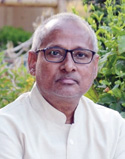
By Manoj Dubey
|Principal (Retd.)
|Delhi Public Schools














Comments (1)
N
Wonderful article. Well articulated. Hope the ruling dispensation works for delivery.