


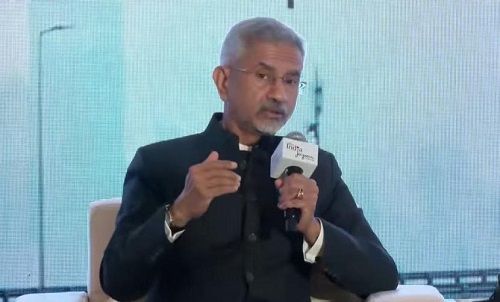
External Affairs Minister Dr. S. Jaishankar has emphasized the growing significance of semiconductor collaboration between India and Japan, underscoring its potential to reshape global dynamics. Speaking at the Inaugural Session Conversation of the India-Japan Forum, Dr. Jaishankar highlighted how both nations, along with Taiwan, are paving the way for a transformative partnership in the semiconductor sector.
Semiconductors: A Geopolitical Game-Changer
Dr. Jaishankar remarked that semiconductors are a critical component in balancing geopolitical equations over the next decade. He stressed the importance of India's openness to international collaborations, particularly in high-tech sectors like semiconductors. This trilateral partnership with Japan and Taiwan aligns with India's broader strategy to emerge as a global semiconductor hub while ensuring supply chain resilience in a geopolitically sensitive industry.
Strengthening India-Japan Ties
The External Affairs Minister lauded the robust relationship between India and Japan but acknowledged that strong bilateral goodwill does not automatically translate into effective collaboration. "The challenge lies in converting goodwill into actionable plans," he said, emphasizing the need for focused initiatives to strengthen bilateral cooperation across various sectors.
Dr. Jaishankar also touched on the growing trend of international travel among Indians, noting the issuance of 13 to 15 million passports annually, with an annual growth rate of 10-15%. However, he pointed out that despite the overall surge in outbound tourism, Japan has yet to see a significant increase in Indian tourists. He noted that regions such as Southeast Asia, the Gulf, and Europe continue to attract the majority of Indian travelers.
The China Factor in India-Japan Relations
Addressing India's relationship with China, Dr. Jaishankar stressed the importance of further discussions to rebuild bilateral ties. He noted that both India and Japan share the unique perspective of being China's neighbors. While India's relationship with China had been stable and economically vibrant for many years, the 2020 border standoff along the Line of Actual Control (LAC) marked a turning point. The escalation disrupted the peaceful status quo and led to casualties on both sides, straining bilateral ties.
Dr. Jaishankar highlighted the extensive efforts India has made to address the situation, taking 4.5 years to negotiate the disengagement of military forces along the LAC. However, he stressed that de-escalation remains a work in progress, as a significant military presence persists in the region.
India’s Global Outlook
The Minister also emphasized India’s increasing openness to the world, including facilitating international education exchanges. He noted that India encourages its students to pursue studies abroad while welcoming foreign students to Indian campuses, fostering global collaboration in education.
Conclusion
Dr. Jaishankar’s remarks at the India-Japan Forum underscore the strategic importance of partnerships in critical industries like semiconductors while highlighting India’s evolving role on the global stage. The trilateral cooperation between India, Japan, and Taiwan represents not just an economic opportunity but a strategic alignment in an era of shifting geopolitical dynamics. At the same time, the challenges in India's relationship with China and its aspirations for stronger ties with Japan reflect a nuanced approach to diplomacy and international collaboration.





















Leave Your Comment