


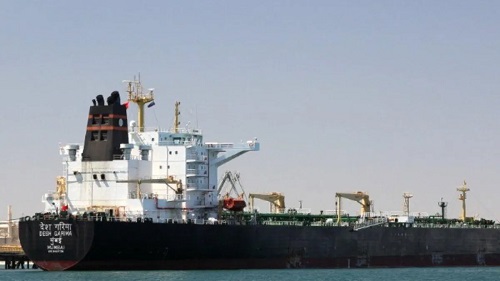
Amid escalating hostilities between the United States and Iran, the Indian crude oil tanker Desh Garima has safely entered Indian waters after successfully transiting the strategically vital Strait of Hormuz. The vessel, carrying a substantial cargo of crude oil, is currently anchored a few nautical miles off the coast of Mumbai, bringing relief to stakeholders concerned about global energy supply disruptions.
The tanker, which departed from the Hormuz region on April 18, continued its voyage despite reportedly coming under fire from Iran’s Islamic Revolutionary Guard Corps while navigating the narrow and geopolitically sensitive waterway. Flying the Indian flag, Desh Garima has 31 Indian crew members on board, all of whom are reported safe.
The safe arrival of Desh Garima marks a significant milestone as it becomes the tenth India-flagged vessel to have successfully crossed the Strait of Hormuz since early March. This underscores the resilience of maritime operations even as tensions in West Asia continue to rise, threatening one of the world’s most critical oil transit chokepoints.
India has reiterated its firm stance on ensuring the safety of its merchant vessels and seafarers. It has urged Iran to guarantee safe passage for Indian ships through the Strait. Historically, India and Iran have maintained stable diplomatic ties, with Tehran often extending cooperation during periods of global oil volatility and geopolitical uncertainty.
The incident involving Desh Garima follows earlier confrontations where the IRGC allegedly opened fire on two Indian vessels—the VLCC Sanmar Herald and the bulk carrier Jag Arnav—as they attempted to cross the Strait of Hormuz. Both ships were forced to retreat, although no injuries were reported among crew members.
India lodged a strong protest following these incidents, marking a rare escalation in maritime tensions involving Indian-flagged vessels. These developments come in the backdrop of a broader conflict triggered by attacks on Iran by the United States and Israel on February 28, further intensifying instability in the region.
The Strait of Hormuz remains a critical artery for global oil supply, with a significant percentage of the world’s crude passing through it daily. Any disruption in this region has immediate ramifications on global energy markets, often leading to spikes in fuel prices and supply chain uncertainties.
In this context, the safe passage of Desh Garima not only ensures continuity in India’s energy imports but also highlights the pressing need for diplomatic efforts to safeguard international shipping lanes. As tensions persist, the focus remains on de-escalation and ensuring that commercial maritime operations remain insulated from geopolitical conflicts.




















Leave Your Comment