


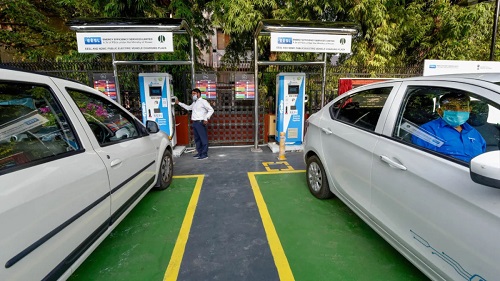
The Delhi Government has released the draft of its new Electric Vehicle (EV) policy in the public domain, inviting suggestions and feedback from citizens, industry stakeholders, and experts before finalisation. The move reflects a participatory approach to policymaking as the capital looks to accelerate its transition toward cleaner and more sustainable mobility.
Officials said the policy will be refined after incorporating public input, ensuring that it aligns with both environmental goals and the practical needs of consumers and businesses. At its core, the policy aims to significantly reduce vehicular pollution—one of the biggest contributors to poor air quality in Delhi—by encouraging the adoption of electric vehicles across multiple categories.
The draft policy proposes a wide range of subsidies and incentives, ranging from ₹10,000 to ₹1 lakh, depending on the type of vehicle. These benefits will apply to electric two-wheelers, auto-rickshaws, goods carriers, and other segments, making EV ownership more financially attractive.
In addition to purchase incentives, the government has also proposed tax exemptions, scrappage benefits, and direct benefit transfers to simplify the process for buyers.
Two-Wheelers:
The policy outlines a phased reduction in incentives for electric two-wheelers. In the first year, buyers may receive ₹10,000 per kWh, capped at ₹30,000. This incentive reduces to ₹6,600 per kWh (up to ₹20,000) in the second year and ₹3,300 per kWh (up to ₹10,000) in the third year. A scrappage incentive of ₹10,000 is also proposed for replacing older BS IV or earlier vehicles.
Three-Wheelers:
Electric auto-rickshaws in the L5M category are set to receive a purchase incentive of ₹50,000 in the first year, ₹40,000 in the second year, and ₹30,000 in the third year. Additionally, a scrappage benefit of ₹25,000 is proposed for replacing older CNG or BS IV three-wheelers.
Goods Vehicles:
Electric four-wheeler goods vehicles in the N1 category will also receive substantial support. The proposed incentive stands at ₹1 lakh in the first year, ₹75,000 in the second year, and ₹50,000 in the third year. A scrappage incentive of ₹50,000 will be available for replacing older BS IV vehicles.
Unlike other segments, private electric cars will not receive a direct purchase subsidy under the draft policy. However, the government has proposed a scrappage incentive of ₹1 lakh for those replacing older BS IV or earlier vehicles. This benefit will apply to cars priced up to ₹30 lakh and will be limited to the first 1 lakh applicants.
To further ease the transition to electric mobility, the policy proposes full exemption on road tax and registration fees for most EV categories. Subsidies will be transferred directly to beneficiaries, ensuring transparency and efficiency.
However, the benefits will be limited to residents of Delhi and vehicles registered within the city, ensuring that the incentives directly contribute to reducing local pollution levels.
The draft EV policy marks another significant step in Delhi’s ongoing battle against air pollution. By combining financial incentives with regulatory support, the government aims to make electric vehicles a mainstream choice for commuters and businesses alike.
As the consultation process unfolds, the final version of the policy is expected to balance environmental priorities with economic feasibility, potentially setting a benchmark for other states to follow in India’s transition to green mobility.



















Leave Your Comment