


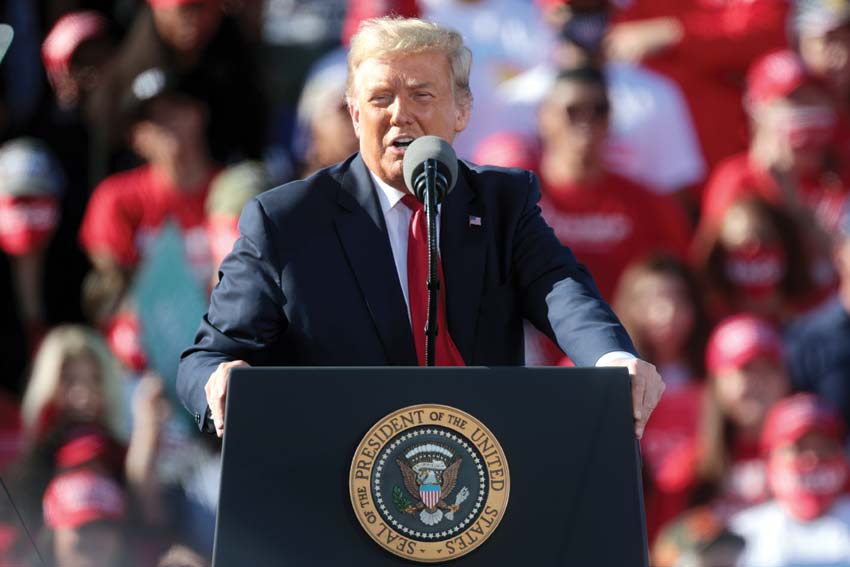
With the second term for former U.S. President Donald Trump, India faces a complex diplomatic landscape marked by potential gains and hurdles. Trump’s distinctive approach to international relations, characterised by assertive negotiations, a focus on bilateral trade, and a selective approach to multilateralism, presents India with both unique opportunities and significant challenges. As New Delhi aims to strengthen its position as a global player, Trump’s return to the White House could influence India’s trajectory in key areas such as defence, trade, technology, and regional security. However, certain aspects of Trump’s policy platform, including immigration, climate change, and economic nationalism, could hinder sectors of the Indian economy that are increasingly dependent on collaboration with the United States. A second Trump term would likely solidify U.S.-India defence cooperation, with Trump likely continuing his administration’s efforts to boost India's defence capabilities as a strategic counterbalance to China. For India, a second Trump term could mean increased access to cutting-edge U.S. defence technology and military hardware, further strengthening its position against regional adversaries. Additionally, joint military exercises and intelligence sharing could continue to deepen, enhancing India’s role in maintaining stability in the Indo-Pacific region. Trump’s confrontational stance on China would also allow India to reinforce its position against Beijing's growing influence, especially in the contested border regions and the South China Sea.
While Trump’s emphasis on defence cooperation aligns well with India's strategic interests, his approach to trade has been less favourable. Trump’s "America First" policy has often translated into tariffs and trade restrictions, aimed at reducing the U.S. trade deficit and protecting domestic industries. This could complicate India-U.S. trade relations, as India seeks to expand exports of its pharmaceuticals, textiles, and IT services to the U.S. market. One of Trump’s most controversial policies has been his stance on immigration, including restrictions on the H-1B visa programme, which allows skilled workers from countries like India to work in the United States. This programme is crucial for India's technology sector, as it enables a flow of skilled Indian professionals to Silicon Valley and other tech hubs. Indian tech companies and professionals would likely face increased challenges in obtaining U.S. work permits under a second Trump administration, potentially impacting India's booming tech industry and limiting India’s soft power in the technology domain. On the technology front, however, Trump’s prioritisation of cybersecurity and digital infrastructure development could present an opportunity for collaboration. India’s commitment to tackling climate change could face hurdles under Trump, who has shown skepticism towards climate agreements and environmental regulations. His decision to withdraw from the Paris Agreement during his first term reflected a broader resistance to climate change initiatives. For India, which has committed to ambitious renewable energy targets, Trump’s policies could complicate efforts to secure American investment in clean energy technology. However, India could use this as an opportunity to enhance its domestic renewable energy capacity and develop partnerships with other nations, positioning itself as a leader in sustainable development. In navigating the challenges of a Trump-led U.S., India may need to adopt a pragmatic approach that balances cooperation with caution. Leveraging Trump’s desire for strategic partnerships, India could deepen its defence and security ties with the U.S. while working on reducing dependencies in sectors vulnerable to Trump’s policies. This approach could include strengthening trade and security alliances with other global players, enhancing self-reliance in key industries, and diversifying its foreign partnerships.

By Deepak Kumar Rath














Leave Your Comment