


The Green Credit Rules, 2023, notified on October 12, 2023, represent a significant commitment by India towards sustainable practices. Officially announced by the Ministry of Environment, Forest and Climate Change (MoEFCC), these rules aim to redefine the country's environmental landscape.
Let's explore the intricacies of the Green Credit Rules, unveiling their impact on our environment and future, and highlighting India's commitment to a sustainable tomorrow. In India, the issuance of green credits is currently managed by the Indian Council of Forestry Research and Education (ICFRE). ICFRE plays a central role in the Green Credit Programme.
Understanding Green Credit
India has set ambitious goals to control carbon emissions intensity, aiming for a 45% reduction as per the Paris Agreement. Aligned with this vision, the country has developed a comprehensive strategy to achieve net-zero emissions by 2070, emphasising environmentally friendly practices. Central to this movement is LiFE (Lifestyle for Environment), a campaign motivating the public to adopt eco-friendly behaviours and actions.
In response to these initiatives, India introduced the Green Credit Programme, officially notified by the MoEFCC in October. This programme establishes a market-based incentive system to encourage diverse environment-positive actions. The Green Credit System incentivises individuals, organisations, and industries to undertake positive environmental measures, extending beyond carbon emissions reduction to encompass improvements in air and water quality, increased biodiversity, and more.
Key objectives of Green Credit Rules 2023
The rules aim to launch a Green Credit (GC) programme on a national level to leverage a competitive market-based approach for GC and incentivise voluntary environmental actions by stakeholders. The GC programme is meant to complement the proposed Carbon Credit Trading Scheme (CCTS) introduced by the Energy Conservation (Amendment) Act, 2022.
Framework of the Green Credit Rules 2023
The framework of the Green Credits Rules aims to improve sustainable practices across the nation and is accessible to all. Imagine it like a stock exchange, but instead of shares, you trade credits earned for verified environmental contributions. Planting trees, reducing air pollution, managing waste – all these actions generate "Green Credits" that can be bought and sold on a dedicated platform.
This opens doors for everyone. Individuals register their green initiatives, from backyard composting to community clean-ups, earning credits recognized by the system. Businesses can offset their environmental footprint by buying these credits, creating a market for sustainability. The result? Cleaner air, healthier water, and a greener economy where every positive action gets its due.
The Green Credit Rules are a bold step towards a greener future. Challenges remain, but the potential is immense. It's a future where every individual, every organization, can contribute, building a sustainable tomorrow not just for India but for the world.
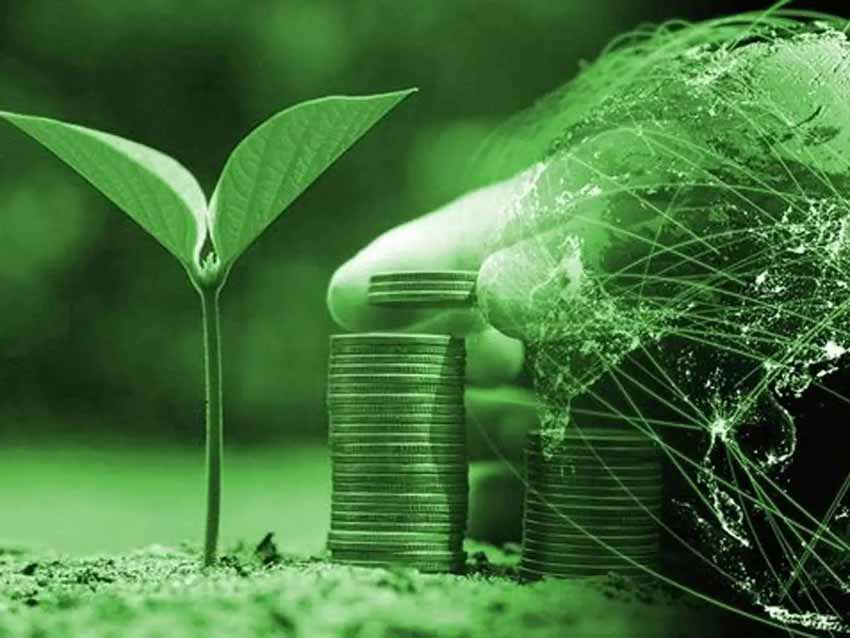
Eligibility criteria for Green Credit
The beauty of the Green Credit programme is its inclusivity. Anyone can participate, from individuals and communities to businesses and industries. There are no rigid eligibility criteria, making it accessible to all who are passionate about environmental conservation. Several activities are eligible for Green Credits, categorised into eight key areas:
= Tree plantation: Planting trees to combat deforestation and increase green cover.
= Water management: Implementing water conservation techniques like rainwater harvesting.
= Sustainable agriculture: Adopting eco-friendly farming practices.
= Waste management: Promoting waste reduction, recycling, and composting.
= Air pollution reduction: Initiatives that improve air quality.
= Mangrove conservation and restoration: Protecting and reviving mangrove ecosystems.
= Eco-mark labelling: Obtaining the eco-mark certification for products that meet stringent environmental standards.
= Sustainable building and infrastructure: Constructing green buildings and infrastructure that minimise environmental impact.
While the Green Credit Rules present a forward-looking approach, challenges include potential conflicts with the Carbon Credit Trading Scheme (CCTS). Issues such as tenure fixation, benefit calculation, and dual accreditation authorities (ICFRE and CCTS) need careful consideration. Additionally, there is a need for awareness campaigns to address registration and verification challenges and potential market disparities.
Conclusion
In contrast to carbon markets, the Green Credit System extends benefits to individuals and communities, fostering environmentally positive actions. Despite challenges, the Green Credits Rule 2023 signifies a pivotal step towards reshaping financial systems for a sustainable future. Increased awareness and a collective commitment will be crucial to overcoming implementation hurdles, making the Green Credits Rule 2023 a commendable stride in the right direction.
About Advait Infratech: In India, Advait Infratech stands at the forefront of green energy innovation, offering a suite of professional services in clean tech. With an unwavering commitment to sustainability, Advait collaborates seamlessly with industry peers, diligently working towards global access to affordable green energy while empowering communities through their professional expertise.
By Rutvi Sheth is Director,
Advait Greenergy indiawaterportal.org
(The content of this article reflects the views of writers and contributors, not necessarily those of the publisher and editor. All disputes are subject to the exclusive jurisdiction of competent courts and forums in Delhi/New Delhi only)
















Leave Your Comment