


When Narendra Modi stormed to power in 2014 with a full majority in the Lok Sabha—something India had not seen in three decades—it marked the beginning of a new era in Indian politics. Projecting himself as a reformer with a strong grip on governance, Modi promised to bring “Achhe Din” to a country then bogged down by corruption scandals, economic slowdown, and a crisis of leadership. Eleven years later, as he continues to remain at the centre of Indian political discourse, Modi's tenure is marked by both sweeping transformations and persistent fault lines.
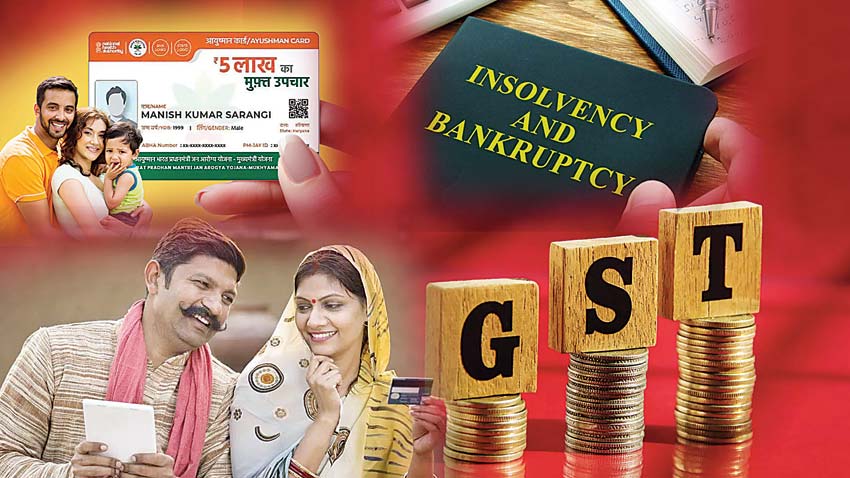
One of the biggest achievements of the Modi government has been in the domain of economic reform and infrastructure development. The introduction of the Goods and Services Tax (GST) in 2017, touted as the biggest tax reform since Independence, aimed to create a unified national market. The Insolvency and Bankruptcy Code (IBC) helped tackle the menace of bad loans plaguing Indian banks and brought discipline into corporate lending. Simultaneously, the government ramped up investment in infrastructure, with significant projects such as the Bharatmala and Sagarmala schemes, expansion of metro rail networks, and record highway construction. Under the Digital India initiative, platforms like UPI revolutionized payments, with India becoming a global leader in digital transactions.
Welfare and social security schemes have been another cornerstone of Modi's governance model. The Pradhan Mantri Jan Dhan Yojana brought over 50 crore people into the formal banking system, many of whom were accessing financial services for the first time. The Ujjwala Yojana gave more than 9 crore women access to clean cooking fuel, altering household health conditions significantly. The Ayushman Bharat scheme, often dubbed the world’s largest government-funded health insurance program, aimed to provide financial security during medical emergencies to nearly 50 crore beneficiaries. From tap water in rural homes under the Jal Jeevan Mission to affordable housing through the PM Awas Yojana, the Modi government aggressively pursued a pro-poor agenda with an eye on long-term welfare delivery.
In the agrarian sector, the Modi administration launched ambitious initiatives like PM-KISAN, which offers direct income support to over 11 crore farmers. Other schemes such as the Soil Health Card, Fasal Bima Yojana, and e-NAM were meant to digitize and de-risk farming. However, the government's attempt to reform agriculture through three contentious farm laws met with massive protests, especially from Punjab and Haryana, eventually forcing a repeal in 2021. The episode raised serious questions about the government’s communication strategy and consensus-building approach.
National security and India’s global posture have seen a marked shift under Modi’s leadership. The surgical strikes across the Line of Control in 2016 and the Balakot airstrikes in 2019 projected a new doctrine of strategic assertiveness. Internally, the abrogation of Article 370 in Jammu and Kashmir in 2019 was a dramatic political move that changed the constitutional relationship between the region and the Union. The Modi government has also prioritized defence indigenization, pushing for more homegrown weapons systems under the ‘Atmanirbhar Bharat’ initiative.
On the foreign policy front, Modi has reimagined India's role in the world. The "Neighbourhood First" and "Act East" policies aimed at fostering regional cooperation. India’s role in the Quad, hosting of the G20 summit, and leadership in initiatives like the International Solar Alliance have all boosted its image as a rising global power. India’s proactive diplomacy during the COVID-19 pandemic through "Vaccine Maitri" enhanced its soft power, even as domestic handling of the crisis remained contested.
Cultural nationalism and civilizational pride have become dominant themes in Modi's India. The groundbreaking ceremony and ongoing construction of the Ram Mandir in Ayodhya, the renovation of Kashi Vishwanath Corridor, and the Mahakal Lok project reflect a renewed focus on Hindu heritage. Meanwhile, the National Education Policy 2020 sought to integrate Indian knowledge systems, Sanskrit, and regional languages more deeply into the curriculum.
However, Modi’s 11-year tenure has also come with significant challenges. Chief among them is unemployment. Despite the promise of “Skill India” and “Startup India,” job creation has not kept pace with the growing workforce. Youth unemployment remains in double digits, and much of the growth has come from capital-intensive sectors rather than labor-intensive industries. The COVID-19 pandemic further exacerbated the problem, with millions losing jobs during extended lockdowns.
The government's handling of the pandemic, particularly during the deadly second wave in 2021, drew widespread criticism. Images of overwhelmed hospitals, oxygen shortages, and mass cremations painted a grim picture. While the vaccine rollout was eventually hailed as a success, the early handling revealed gaps in public health infrastructure and administrative preparedness.
Institutional autonomy and democratic health have also come under scrutiny during the Modi years. Critics allege that institutions like the Election Commission, judiciary, and investigative agencies have increasingly come under executive influence. The use of the Enforcement Directorate (ED), Central Bureau of Investigation (CBI), and Income Tax Department against political opponents has raised concerns about vendetta politics. India’s ranking in global press freedom indices has fallen sharply, with several journalists facing arrests, raids, and sedition charges.
Religious polarization has become a thorny issue. The Citizenship Amendment Act (CAA) and the proposal for a National Register of Citizens (NRC) led to nationwide protests in late 2019 and early 2020. Allegations of rising intolerance, hate crimes, and targeting of minorities have been frequent talking points among critics, although the government maintains it is committed to inclusive development and equal treatment under law. Modi’s slogan of “Sabka Saath, Sabka Vikas, Sabka Vishwas” has often been juxtaposed against ground realities that seem more divided.
Centre-state relations have been tested repeatedly. Non-BJP ruled states have accused the Centre of high-handedness, particularly during the pandemic and in GST compensation matters. The role of governors in states like West Bengal and Tamil Nadu has triggered debates about federal overreach. Disputes over language, resource allocation, and the politicization of federal institutions have further strained relations between the Union and various states.
The economic landscape, while stable in macro terms, has witnessed rising inflation in recent years. Global disruptions like the Russia-Ukraine war and local factors such as fuel taxes and supply chain bottlenecks have led to increased living costs. While the government has taken steps to insulate the poor through free ration schemes and subsidies, the middle class has felt the pinch.
In conclusion, eleven years of the Modi government have brought about transformative changes in governance, welfare delivery, national security, and foreign policy. Modi has redefined leadership with his centralization of power, assertive decision-making, and mass outreach. His government’s achievements in digital inclusion, welfare schemes, and infrastructure development are undeniable. Yet, it is also a regime that has sparked concerns over democratic freedoms, unemployment, and social cohesion. As India eyes its centenary in 2047, the legacy of Modi’s 11-year rule will likely serve as both a blueprint for ambitious governance and a cautionary tale for balancing power with pluralism.
11 Years of Modi Governance: A Decade of Seva, Sushashan, and Garib Kalyan
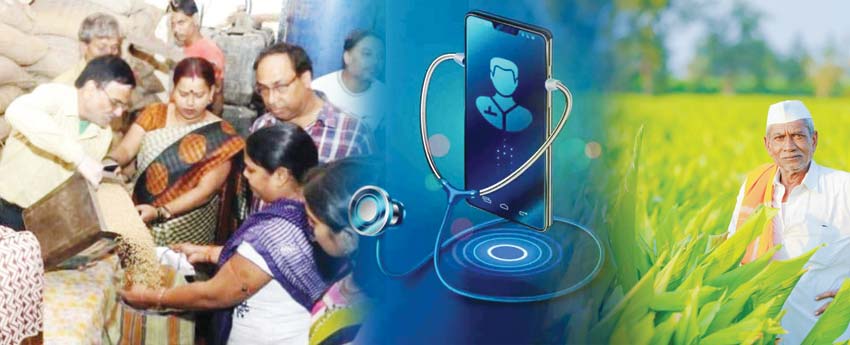
In the eleven years since Prime Minister Narendra Modi assumed office in 2014, India has undergone a sweeping transformation marked by decisive governance, inclusive development, and people-centric policymaking. Anchored in the triad of Seva (service), Sushashan (good governance), and Garib Kalyan (welfare of the poor), the NDA government has redefined the relationship between the citizen and the state, ensuring that development is not just a promise, but a deliverable—with speed, scale, and sensitivity.
From the very outset, the Modi government’s focus has been on empowering the most marginalized. The Jan Dhan Yojana, a landmark in financial inclusion, opened over 50 crore bank accounts, enabling millions to join the formal economy for the first time. This initiative not only gave the poor a sense of financial identity but also formed the backbone of the government’s Direct Benefit Transfer (DBT) architecture, curbing middlemen and leakages.
Health, one of the most neglected sectors for decades, saw a revolutionary shift with Ayushman Bharat. Touted as the world’s largest health assurance scheme, it provides free treatment up to ₹5 lakh to over 50 crore Indians. For those living in rural and semi-urban India, this meant the difference between crippling debt and dignified healthcare.
The Modi government has also prioritized housing with unprecedented vigor. Under Pradhan Mantri Awas Yojana (PMAY), over 4 crore houses have been built, offering a concrete roof and a sense of dignity to the poor. Complementing this, schemes like Ujjwala Yojana have transformed kitchens by distributing over 9 crore free LPG connections to women from BPL families—a step that is not only about ease but also about safety and women’s health.

Agriculture, often the Achilles' heel of Indian policymaking, received a fresh push under PM-KISAN, with assured annual income support of ₹6,000 to farmers. With over ₹2.8 lakh crore disbursed directly into farmers’ accounts, the scheme has brought stability and predictability to rural incomes. Add to this the massive investment in rural infrastructure, including roads, irrigation, and electricity, and a clear picture emerges — of a government committed to rural upliftment not just in word, but in action.
Urban India, too, has not been left behind. Smart Cities Mission, AMRUT, and Swachh Bharat Abhiyan have reshaped urban governance. The once-distant dream of cleanliness became a national movement, with over 11 crore toilets constructed, drastically reducing open defecation and improving public health.
Digitisation has been another defining feature of Modi’s governance model. From Digital India to the creation of platforms like DigiLocker, e-RUPI, UMANG, and PM Gati Shakti, technology is being leveraged to bridge gaps, enhance transparency, and eliminate corruption. The success of platforms like UPI has revolutionized digital payments, making India a global leader in fintech innovation.
The Modi government’s sensitivity in times of crisis further cemented its connect with the common citizen. During the COVID-19 pandemic, free ration under the PM Garib Kalyan Anna Yojana ensured that over 80 crore people didn’t go hungry for two years — a feat unparalleled in global history.
At its core, what distinguishes Modi’s governance is the emotional investment in the lives of ordinary citizens. Unlike top-down welfare programs of the past, these initiatives reflect a bottoms-up approach: empower the last person in the queue, and the nation rises as a whole.
Eleven years on, the verdict from the ground is clear: Modi’s model of governance is not just about policy — it is about empathy, efficiency, and empowerment. Whether it is rural women with new kitchens, small farmers with income support, or digital-savvy youth launching startups from Tier-2 towns — the impact is palpable.
India, under Modi, is not merely growing. It is transforming — one citizen at a time.

By NILABH KRISHNA
(The content of this article reflects the views of writers and contributors, not necessarily those of the publisher and editor. All disputes are subject to the exclusive jurisdiction of competent courts and forums in Delhi/New Delhi only)


















Leave Your Comment