


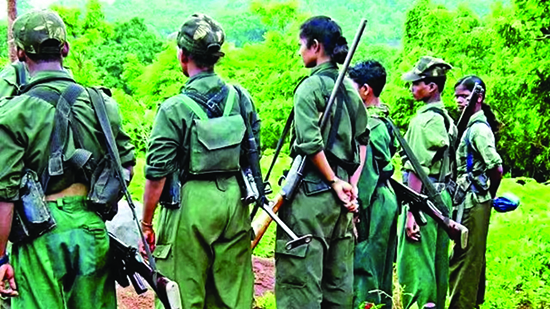
For decades, India’s tryst with Left-Wing Extremism—commonly known as Naxalism—has stood as one of the most complex internal security challenges since Independence. What began as a localized agrarian uprising in the late 1960s gradually transformed into a full-fledged insurgency that spread across vast swathes of central and eastern India. Today, however, India finds itself at a निर्णायक मोड़—a decisive moment—where the once-feared “Red Corridor” has significantly shrunk, violence has sharply declined, and the Indian state appears closer than ever to realizing the vision of a Maoist-free Bharat. Yet, even as the जंगल falls silent, a quieter but persistent ideological current continues to flow through urban spaces, keeping the embers of radicalism alive.
The origins of Naxalism lie in the Naxalbari uprising of 1967 in West Bengal, where radical communist leaders like Charu Mazumdar and Kanu Sanyal sought to ignite a peasant revolution inspired by Maoist doctrine. What started as a movement against feudal exploitation soon evolved into a broader insurgency that capitalized on deep-rooted socio-economic inequalities, particularly in tribal and underdeveloped regions. Over time, the movement spread through a contiguous belt stretching from Andhra Pradesh to Bihar, encompassing parts of Chhattisgarh, Jharkhand, Odisha, and Maharashtra. These areas, marked by poor governance, lack of infrastructure, and historical neglect, provided fertile ground for Maoist expansion. By the early 2000s, Naxalism had entrenched itself as a parallel authority in several districts, complete with its own systems of taxation, justice, and coercion.
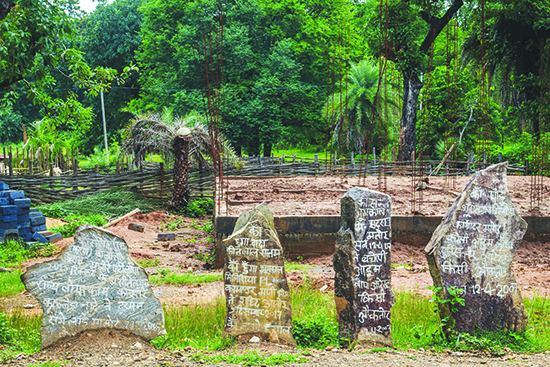
Before 2014, India’s response to this growing threat was often characterized by inconsistency and lack of strategic coherence. Successive governments, particularly under Congress-led regimes, struggled to formulate a unified doctrine that could effectively address both the security and developmental dimensions of the problem. While security operations were periodically launched, they often lacked the intelligence precision and inter-state coordination required to deliver lasting results. At the same time, large parts of the affected regions remained disconnected from the basic structures of governance. Roads were scarce, schools were underfunded, healthcare was minimal, and economic opportunities were virtually non-existent. This governance vacuum allowed Maoists to present themselves as defenders of the marginalized, even as they perpetuated cycles of violence and extortion.
Compounding this challenge was a certain degree of ideological ambiguity within sections of the political and intellectual establishment. Maoist violence was, at times, rationalized as an expression of social injustice, blurring the moral distinction between legitimate grievance and armed rebellion. This ambiguity not only weakened the state’s resolve but also enabled the emergence of urban networks that sympathized with, and in some cases allegedly supported, the insurgency. These networks, often operating within academia, media, and civil society, played a crucial role in shaping narratives, mobilizing opinion, and providing intellectual cover to extremist ideologies. As a result, the Indian state found itself confronting not just an armed insurgency in the जंगल, but also an ideological challenge in its cities.
The year 2014 marked a significant turning point in India’s approach to Naxalism. Under the leadership of Prime Minister Narendra Modi, the government adopted a far more integrated and assertive strategy that combined hard security measures with deep-rooted developmental interventions. Recognizing that Naxalism was not merely a law-and-order issue but a manifestation of governance deficits, the new approach sought to simultaneously dismantle the insurgent infrastructure and address the underlying causes that sustained it.
On the security front, the shift was both immediate and impactful. Operations became far more intelligence-driven, leveraging modern technology such as drones, satellite imagery, and real-time communication systems to enhance precision and minimize collateral damage. The Central Armed Police Forces were strengthened, better equipped, and deployed with greater strategic clarity. Specialized units like the CoBRA battalions intensified their presence in high-risk areas, while inter-state coordination ensured that Maoist cadres could no longer exploit administrative boundaries to evade action. Infrastructure development, particularly the construction of roads in remote regions, further enhanced the mobility and effectiveness of security forces. Gradually, the balance of power began to tilt decisively in favor of the state, with key Maoist leaders neutralized, recruitment declining, and surrenders increasing.
However, what truly distinguished the Modi government’s approach was its emphasis on development as a tool of counter-insurgency. Understanding that the legitimacy of the state ultimately rests on its ability to deliver, the government launched a series of initiatives aimed at integrating Maoist-affected regions into the national mainstream. Villages that had long remained isolated were connected through all-weather roads, bringing them within reach of markets, schools, and healthcare facilities. Financial inclusion programs such as the Jan Dhan Yojana brought millions into the banking system, while Direct Benefit Transfers ensured that welfare schemes reached beneficiaries without leakage or corruption. Electrification and digital connectivity transformed the daily lives of people, breaking the information monopoly that Maoists had once enjoyed. Educational initiatives, including residential schools for tribal students, created new pathways for youth, offering them alternatives to the lure of insurgency.
In parallel, the government’s surrender and rehabilitation policy played a crucial role in weakening the insurgency from within. By offering financial incentives, vocational training, and social reintegration, it provided a viable exit route for those willing to abandon violence. Thousands of cadres laid down their arms, not only reducing the operational strength of Maoist groups but also reinforcing the message that the state was willing to forgive and reintegrate.
The cumulative impact of these measures has been remarkable. The geographical spread of Naxalism has contracted significantly, with the number of severely affected districts dropping sharply. Incidents of violence have declined by a substantial margin, and civilian as well as security force casualties have seen a corresponding reduction. Regions that were once synonymous with insurgency are now witnessing a gradual return to normalcy, with governance structures taking firm root.
Yet, even as India moves closer to eliminating the physical footprint of Maoism, the ideological dimension of the challenge remains. The phenomenon often described as “Urban Naxalism” continues to persist, operating in a far more subtle and complex domain. Unlike their counterparts in the जंगल, these actors do not wield guns; instead, they engage in the battle of ideas. Through academic discourse, media narratives, and activism, they seek to question the legitimacy of state action, frame insurgent violence as resistance, and perpetuate a sense of grievance and alienation. While dissent is an essential component of any democracy, the line between legitimate critique and ideological subversion often becomes blurred, creating a nuanced challenge for the state.
Addressing this urban dimension requires a careful balancing act. India must safeguard its democratic freedoms while ensuring that its institutions are not misused to undermine national security. Legal enforcement, therefore, must be complemented by intellectual engagement—by promoting narratives that reinforce faith in democratic processes, inclusive development, and constitutional values. The battle, in this sense, is no longer just territorial; it is civilizational.
India’s journey from a nation grappling with widespread Maoist insurgency to one on the brink of overcoming it stands as a testament to strategic clarity and political will. The Modi government’s approach has demonstrated that lasting peace cannot be achieved through force alone; it requires a combination of security, development, and trust-building. The dawn of a Maoist-free Bharat is indeed within sight. But ensuring that this dawn evolves into a stable and enduring day will depend on how effectively India confronts the lingering ideological shadows within its urban landscape.
The guns may be falling silent in the जंगल, but the war of ideas is far from over.
Union Home Minister Amit Shah has openly declared in Parliament recently, that India is now free from Naxalism. Just a year ago, within this very Parliament, he had pledged that by March 31, 2026, he would liberate India from the Naxals—and he has fulfilled that promise. Home Minister Amit Shah’s speech was truly magnificent, replete with significant facts, historical contexts, and details of the efforts undertaken by this government over the past decade.
For decades, regressive Maoist ideology has had an adverse impact on the development of various regions. Left-Wing Extremism has devastated the futures of countless young people. There was a time when the "Red Corridor" appeared to stretch across the country's map like a thick red line—extending from the Nepal border all the way to the hills of Andhra and Odisha. The guns of the Communist Party of India (Maoist) were challenging democracy, and claims were made of running a parallel administration within the forests. In fact, as recently as 2009, the then-Prime Minister had even stated that "Maoists are the biggest internal security challenge."
Over the last decade, this government has worked towards eradicating this threat from its very roots, while simultaneously ensuring that the benefits of development reach those regions that have been affected by Naxalism.
In India, Naxalism has not merely been a security challenge; it has also remained a complex ideological and political issue. For decades, a debate has persisted regarding whether certain political forces within the country—either directly or indirectly—have lent ideological legitimacy to this violent ideology. In recent years, questions raised by the conduct and methods of Rahul Gandhi and the Congress party have once again brought this debate to the forefront.
Several instances have emerged in Rahul Gandhi’s public life in recent times where his presence or association was observed alongside individuals and organizations whose ideology is widely perceived to be linked to Left-Wing Extremism. For instance, in 2018, while in Hyderabad, he met with Gummadi Vittal Rao—alias Gadar—who has long been regarded as a pro-Naxal cultural icon. Furthermore, during the *Bharat Jodo Yatra*, questions were raised regarding the participation of certain organizations that security agencies have consistently identified as Naxal "frontal organizations." You may recall how various non-governmental organizations (NGOs) and certain intellectuals—such as Harsh Mander, who is known for his close ties to the Open Society Foundation—played a pivotal role in waging an information war against the CAA and inciting anti-government rallies. This is the very same Harsh Mander who served as a member of the National Advisory Council (NAC)—an unconstitutional body—during the tenure of the UPA government led by Sonia Gandhi.
On October 11, 2022, Salil Shetty—Vice President of Soros's NGO, the Open Society Foundations—and the Congress party's "Prince," Rahul Gandhi, participated in the *Bharat Jodo Yatra*, an initiative organized by the party to garner public support against the Modi government. Even today, Sandeep Singh—the secretary to Rahul Gandhi and Priyanka Gandhi—was once a staunch Naxalite. He served as the President of AISA at JNU and was known to have celebrated Diwali following the killing of 70 CRPF personnel in Bastar. It is even alleged that the very conspiracy for that attack was hatched within his hostel room. If associating with such individuals—and thereby providing them patronage—is not to be termed as nurturing Naxalism, then what else could it be called?
The issue here is not merely about individual meetings, but rather concerns the broader political climate in which such ideologies appear to receive tacit acceptance. It was Rahul Gandhi himself who, following the killing of the dreaded Naxalite commander Hidma, shared slogans on his Twitter handle—originally raised during a protest at India Gate—that proclaimed: "How many Hidmas will you kill? A Hidma will emerge from every household!" Thus, this ceases to be a mere political expression; it becomes a matter of grave concern from the perspective of national security as well.
Moreover, the allegation that the Congress party, during its tenure in power, accorded a place to leftist ideologies within its policy-making framework is by no means a new one. In particular, the National Advisory Council (NAC—chaired by Sonia Gandhi at the time) included several members with a distinct leftist ideological background. In the name of balancing development and security, these so-called intellectuals and activists promoted policies that effectively diluted the state's authority in Naxal-affected regions.
It is undeniably true that the roots of Naxalism lie not solely in ideology, but also in socio-economic inequalities. However, the problem becomes significantly more complex when political parties—instead of addressing these underlying issues—grant narrative space to violent groups through ideological sympathy. The pertinent question is: Did the Congress party truly maintain this delicate balance, or did it, in pursuit of its own political interests, inadvertently create a dangerous ideological space?
Today, as the nation confronts formidable challenges on the internal security front, this debate assumes even greater significance. While the right to dissent is a cornerstone of democracy, does extending ideological support to violence fall within the legitimate scope of that right? Should political leadership not exercise greater responsibility regarding the messages they convey and the associations they maintain?
Ultimately, this issue transcends any single leader or political party; it pertains to the broader political culture that determines the trajectory of the nation. In electoral contests, the electorate bases its decisions not merely on development agendas and campaign promises, but also on issues of national security and ideological clarity. In this context, it will be intriguing to observe how this ongoing debate shapes the political discourse in the times to come.
NILABH KRISHNA
(The content of this article reflects the views of writer and contributor, not necessarily those of the publisher and editor. All disputes are subject to the exclusive jurisdiction of competent courts and forums in Delhi/New Delhi only)




















Leave Your Comment