


Let’s cut through the corporate jargon – in today’s cutthroat market, “innovate or die” isn’t dramatic, it’s just reality. Companies clinging to rigid, top-down structures? They’re basically handing their lunch to competitors who get that creativity can’t be micromanaged.
"Psychological safety is the oxygen for creativity. Without it, ideas suffocate before they even see the light of day," says Prof David Weir, Chief Patron of Academy of Policy and Research and Professor of Intercultural Management at York Business School in York St John University. Leaders must actively demonstrate vulnerability, admit their own mistakes, and encourage open dialogue to build this trust. This fosters genuine innovation in business culture.
"You can’t just slap ‘innovation’ on a PowerPoint and call it a strategy," says Hiren Raval, CEO of C3S Business School in Barcelona. "Real creativity needs oxygen – messy brainstorming, failed experiments, and leaders who don’t panic when things get uncomfortable."
‘’At C3S Business School, we tear up the traditional playbook’’ says Ankit Raval, head of institutional partnership, C3S Business School. ‘’Because tomorrow’s CEOs won’t compete on efficiency alone – they’ll win by building teams that think differently.’’
"Our students don’t just study innovation," adds Raval. "They live it – through hackathons, startup incubators, and yes, occasionally failing spectacularly in our sandbox."
.The bedrock of any truly creative organization is psychological safety. This means creating an environment where employees feel safe to take risks, express dissenting opinions, and share bold, unconventional ideas without fear of ridicule, punishment, or professional repercussions. Without this fundamental trust, creativity remains stifled, trapped behind a wall of apprehension. This is the first and most critical step in any business innovation strategy.
"The future of business belongs to the imaginative, and fostering that imagination within your teams is the ultimate competitive advantage," says Bela Desai, head of business at C3S Business School, one of the top business schools in Europe.
In a psychologically safe workplace environment, mistakes are treated as valuable learning opportunities rather than causes for punishment. Feedback remains constructive by focusing on ideas rather than personal criticism, while diverse opinions are actively welcomed as sources of innovation rather than viewed as dissent. Most importantly, such environments foster open communication where employees feel genuinely comfortable voicing concerns and challenging ideas without fear of negative consequences.
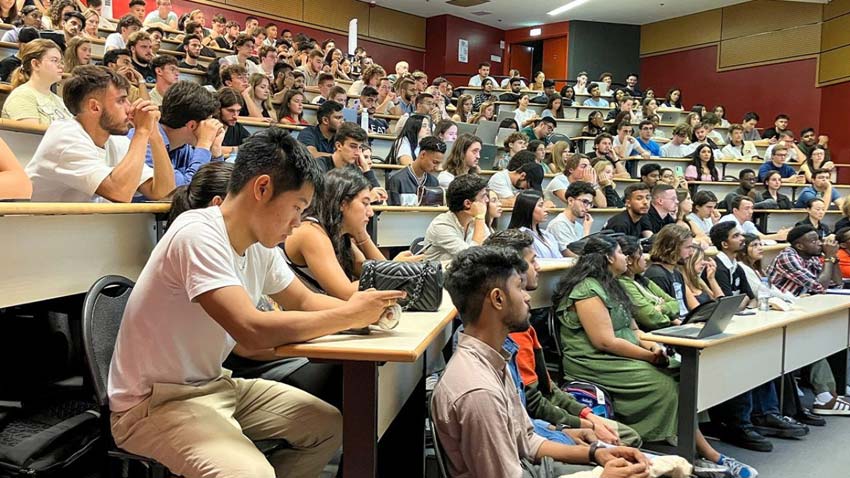
Cultivating psychological safety requires conscious effort from leadership. It involves setting clear expectations, modeling desired behaviors, and consistently reinforcing that all ideas, no matter how nascent, are welcome for discussion. This is a core tenet taught in an MBA program in Europe that focuses on modern leadership. A Business School in Spain that prioritizes this creates truly innovative thinkers.
Creativity is rarely a flash of genius; more often, it's the result of iterative exploration, trial-and-error, and learning from what doesn't work. Businesses that truly want to encourage creativity must embed experimentation into their DNA, making it a celebrated part of their business innovation strategy.
"Innovation is a messy process, not a neat linear path. It demands a willingness to experiment, to prototype, and to learn from every iteration, even the ones that fail," says Dr. Shaik Akbar Basha, director of London College of Business, a London-based B School located in Barking. This mindset shift is crucial for fostering innovation in business culture.
Companies like Google, with its famous "20% time" policy (though its implementation varies), have long understood the power of allowing employees dedicated time for personal projects and experimentation. This isn't about undirected play; it's about providing resources and a safe space for ideas to be tested, refined, or discarded.
Key elements of an experimentation-friendly culture include allocating resources—such as time, budget, and tools—for exploratory projects, promoting rapid prototyping to test ideas quickly and at low cost, learning from failure by treating unsuccessful experiments as valuable insights rather than personal shortcomings, and celebrating iteration by recognizing the effort behind continuous improvement, not just final successes.
"Learning to lead with culture, not just command, is the key to unlocking an organization's full creative potential," says Dr. Francisco Rosique Gill, a senior visiting faculty at C3S Business School.
This approach acknowledges that creativity thrives on freedom to explore, and that breakthroughs often emerge from unexpected places. An MBA program in Europe will emphasize these practical approaches to fostering innovation.
Innovation rarely happens in a vacuum. The most groundbreaking ideas often emerge from the intersection of diverse perspectives, skill sets, and experiences. Building collaborative environments and fostering cross-functional teams is a powerful business innovation strategy for encouraging true creativity.
"When you bring together individuals from different disciplines, with varied ways of thinking, you create a fertile ground for unexpected connections and novel solutions," says Dr. Maria Fernanda Dugarte, dean and director of Institutional Affairs at C3S Business School in Barcelona, one of the leading business schools in Europe. This cross-pollination of ideas is essential for rich innovation in business culture.
Breaking down silos between departments (e.g., marketing, engineering, finance) allows for a more holistic understanding of problems and a wider range of potential solutions. Collaborative tools, shared workspaces (physical or virtual), and structured brainstorming sessions can facilitate this interaction.
Key aspects of collaborative environments include forming diverse teams with varied backgrounds, expertise, and cultural perspectives to drive innovation, aligning members around shared goals to foster collective ownership of outcomes, maintaining open communication channels for transparent and frequent exchange of ideas, and facilitating structured brainstorming sessions that ensure inclusivity and constructive idea development.
An MBA program in Europe often emphasizes group projects and interdisciplinary studies to simulate these real-world collaborative dynamics. This prepares future leaders to build teams that are greater than the sum of their parts. A Business School in Spain that promotes this collaborative spirit is truly fostering creativity.
In the relentless pace of modern business, it's easy to fall into the trap of demanding immediate results, leaving little room for the unstructured thinking that creativity requires. However, true innovation in business culture cannot be rushed or micromanaged; it needs dedicated time and mental space to flourish. This is a critical element of any effective business innovation strategy.
"Creativity is not a tap you can simply turn on and off. It requires periods of deep thought, incubation, and even seemingly unproductive 'downtime' for ideas to coalesce," says Prof (Dr) John Cokley, a veteran academician and researcher in business of journalism, entrepreneurship and innovation, who has taught at multiple Australian universities including the University of Queensland and Griffith University.
Companies that recognize the importance of fostering innovation often implement policies such as dedicated 'innovation time,' allowing employees to spend a portion of their workweek on self-directed projects or idea exploration. They also adopt flexible work arrangements, granting autonomy over schedules and environments to enhance creativity, while reducing bureaucracy to minimize administrative burdens and free up time. Additionally, these organizations encourage breaks and reflection, acknowledging that moments of rest can often lead to breakthroughs.
Micromanagement, conversely, is the enemy of creativity. When employees are constantly told how to do things, rather than what problem to solve, their intrinsic motivation to innovate is stifled. Leaders must provide clear objectives but grant autonomy in the execution. This is a vital lesson for any MBA program in Europe. A Business School in Spain that teaches this balance is preparing truly effective leaders.
While autonomy and freedom are crucial for creativity, they shouldn't equate to aimless wandering. The most impactful innovation in business culture often emerges when creative efforts are aligned with a clear, compelling purpose or mission. This provides direction and motivation without limiting imagination. This is a powerful business innovation strategy.
"A strong sense of purpose acts as a guiding star for creative endeavors, channeling energy towards meaningful outcomes without stifling exploration," says Dr Aida Mehrad, head of academics at C3S Business School in Barcelona, one of the top business schools in Europe. When employees understand why their work matters and how their creative contributions align with the organization's broader vision, they are more engaged and inspired.
This involves clearly articulating the company's vision by communicating its mission and long-term goals in an inspiring manner, while strategically defining challenges rather than prescribing solutions to encourage creative problem-solving. It also requires connecting daily work to meaningful impact by demonstrating how employees' contributions create customer value, societal benefit, or organizational success. Finally, it means empowering teams with ownership—allowing them to take initiative in tackling problems and developing innovative solutions on their own terms.
Purpose-driven work fosters intrinsic motivation, which is a far more powerful driver of creativity than external incentives alone. An MBA program in Europe will often delve into the psychology of motivation and organizational culture.
Finally, to sustain a culture of creativity, businesses must actively recognize and reward innovative thinking and successful solutions. This goes beyond monetary bonuses; it involves celebrating efforts, acknowledging contributions, and providing opportunities for growth. This is a fundamental aspect of any business innovation strategy.
"Recognition is a potent motivator. When creative thinking is celebrated, it sends a clear message that originality is valued and encouraged throughout the organization," says Prof Philip Mayer, a London-based faculty at Regent's University London. This reinforcement is crucial for embedding innovation in business culture.
"Our curriculum emphasizes the importance of organizational culture as a driver of innovation, a key lesson for any aspiring leader," says Professor Mani Tahriri of C3S Business School.
Effective recognition and reward methods include public acknowledgment through company meetings or internal communications to highlight innovative contributions, career development opportunities such as training or mentorship for creative leaders, and monetary incentives like bonuses or innovation awards. Additionally, granting increased autonomy and trust to consistent innovators reinforces their value, while recognizing the lessons from unsuccessful ideas fosters a culture that celebrates learning alongside achievement.
"Our Business School in Spain provides the ideal environment to learn how to build organizations that are inherently creative and adaptable," says Dr. Fernando Velasquez Villalba, a senior faculty at C3 Business School, Spain.
"The ability to foster an environment where employees feel safe to share bold ideas is a hallmark of a truly innovative leader," says Dr P. R Datta, executive chair, CBER UK.
The key is to create a system where the pursuit of new ideas, even those that don't immediately pan out, is seen as a valuable contribution. This encourages a continuous cycle of creativity and experimentation. An MBA program in Europe will often cover compensation and reward systems in detail. A Business School in Spain understands the importance of these incentives.
"At C3S Business School, we teach students how to build organizations where innovation in business culture is not an exception, but the norm," says Prof Marc Sanso, head of academics of Aspire Business School in Spain.
For leaders and aspiring innovators, understanding and implementing these principles is paramount. A world-class education from a Business School in Spain like C3S Business School provides the frameworks, tools, and mindset to lead this transformation.
"Our programs are designed to equip students with the leadership skills needed to build and nurture innovative cultures within their organizations," says Dr Dababrata Chowdhury, a senior faculty at the University of Canterbury Christchurch in the UK.
"The emphasis on purpose-driven work ensures that creative efforts are always aligned with strategic objectives," says Prof Asraful Khan, a faculty at Arden University, London.
Whether you're looking to enhance your leadership capabilities through an MBA program in Europe or gain foundational knowledge from other programs, C3S Business School, one of the top business schools in Europe, offers the insights to drive true creativity.
"True innovation emerges from an environment where ideas are nurtured, not dictated," says Dr P. R. Datta, executive chair of Centre for Business & Economic Research (CBER) based in London.
"The ability to inspire and unleash creativity within a workforce is a hallmark of truly effective leadership," says Dr Rajat Baisya, a global management consultant and former dean of IIT Delhi and CEO of Emami Group.
"The freedom to experiment, even to fail, is crucial for fostering genuine creativity within teams," says Prof Michael Taylor, Registrar of the London College of Business based in London.
"Recognizing and rewarding creative efforts is essential for reinforcing a culture that values originality and continuous improvement," says Prof David M J Graves, who specialises in Private and Public Corporate Governance issues, National and International Financial Crime, and all fraud related offences.
"The insights gained from studying innovation in business culture are invaluable for any aspiring leader," says Dr Kalyan Sahoo, the former Vice Chancellor of Arni University and who currently teaches at IIM Indore.
In conclusion, fostering true creativity in a business is not about issuing commands; it's about cultivating a thriving culture. It requires a deliberate and sustained effort to build psychological safety, encourage experimentation, foster collaboration, provide space for innovation, align efforts with purpose, and genuinely recognize and reward original thinking. This cultural shift is the ultimate business innovation strategy for long-term success.
"The organizations that will thrive in the coming decades are those that prioritize a culture where creativity is not just tolerated, but actively championed," says Pretam Pandey, chief of operations at C3S Business School. This is the essence of sustainable innovation in business culture.

By Sarat C. Das
(The content of this article reflects the views of writers and contributors, not necessarily those of the publisher and editor. All disputes are subject to the exclusive jurisdiction of competent courts and forums in Delhi/New Delhi only)

















Leave Your Comment