


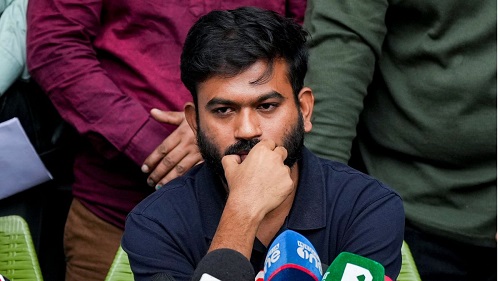
CJP founder Abhijit Dipke was granted bail on Saturday in connection with his detention and subsequent arrest ahead of the organisation’s “Lehra Do Tiranga” protest in New Delhi. According to Delhi Police, his release is subject to conditions imposed by the court and the execution of a peace bond backed by a surety of ₹50,000. Dipke had been arrested earlier in the day for allegedly violating a peace bond furnished on October 10.
Abhijit Dipke, founder of the CJP, was granted bail on Saturday after being arrested in connection with an alleged violation of a peace bond, Delhi Police said. His release will follow the signing of a peace bond in accordance with the conditions laid down by the court, with a surety bond of ₹50,000 required for bail.
Dipke’s arrest came amid preparations for the CJP’s “Lehra Do Tiranga” protest scheduled to take place at Connaught Place in the national capital. He was detained on Friday shortly after stepping out of his residence in Delhi’s Jhandewalan area to participate in the planned demonstration.
Delhi Police subsequently arrested him on Saturday morning, alleging that he had violated a peace bond furnished by him on October 10. The alleged violation formed the basis of the action against him.
The grant of bail marks a development in the case, although his release remains subject to compliance with the court’s conditions. The requirement of a peace bond and surety forms part of the conditions attached to his bail.
The episode has unfolded against the backdrop of the CJP’s proposed demonstration in the capital. Dipke’s detention shortly before the march and his subsequent arrest brought the organisation’s protest plans into focus.
However, the available information does not establish the full circumstances surrounding the alleged breach of the peace bond or the court’s detailed reasoning for granting bail. The allegation against Dipke remains an allegation, and the terms imposed by the court will govern his release.
With bail granted, the immediate legal development is his conditional release rather than the conclusion of the proceedings concerning the alleged violation.






















Leave Your Comment