


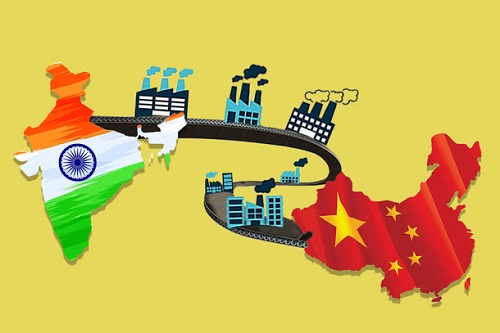
Since the Covid-19 pandemic disrupted global supply chains, India has strategically positioned itself as an alternative manufacturing hub to China. Policymakers projected the country as the “next factory floor of the world,” encouraging multinational corporations to diversify production bases and reduce overdependence on Chinese manufacturing ecosystems. This ambition has been supported through schemes such as Production Linked Incentives (PLI), semiconductor incentives, industrial corridor development, and the expansion of electronics manufacturing clusters. The results have been visible: India’s electronics exports increased dramatically from $8.6 billion in 2015 to nearly $47 billion in 2025, while the Ministry of Electronics and Information Technology (MeitY) expects exports to touch $120 billion by the end of 2026.
However, recent developments in China’s export control regime reveal the structural vulnerabilities embedded within India’s manufacturing aspirations. China’s State Council Decrees 834 and 835, which restrict exports of critical technologies, machinery, rare-earth elements, and advanced manufacturing inputs, have generated concern across India’s electronics and automobile industries. These restrictions underline a central contradiction in India’s industrial strategy: while India seeks to emerge as a global manufacturing power independent of China, its factories continue to depend heavily on Chinese supply chains.
Modern industrial production, particularly in sectors such as smartphones, electric vehicles, semiconductors, and telecommunications equipment, requires sophisticated machinery, precision tools, and specialised raw materials. China currently dominates many of these intermediate supply chains. In India’s automotive sector alone, approximately 26 per cent of component imports in FY25 originated from China, especially in high-value electronic systems and advanced components. Consequently, any disruption in Chinese exports threatens to delay factory expansion, increase production costs, and discourage foreign investment.
The timing of China’s export curbs is particularly significant. India is simultaneously confronting geopolitical and economic uncertainties, including the consequences of the Iran conflict on energy markets and the possibility of an El Niño-induced agricultural slowdown. Under such circumstances, supply chain disruptions may create inflationary pressures and weaken industrial competitiveness. Industry leaders have already initiated discussions with Chinese suppliers to assess the impact of the new regulations, while domestic firms have approached MeitY seeking policy intervention and strategic support.
In response, the Indian government has announced sector-specific investment promotion plans to reduce dependence on “certain geographies” in critical supply chains. Union Commerce and Industry Minister Piyush Goyal has emphasised diversification and domestic capability building as key priorities. Additionally, the government’s Rs 33,660-crore Bharat Audyogik Vikas Yojna (Bhavya), which aims to operationalise 50 industrial parks over the next three years, reflects a broader commitment to industrial infrastructure development.
Nevertheless, infrastructure expansion alone may not resolve India’s strategic dependency. Long-term manufacturing resilience requires domestic technological capacity, research and development ecosystems, skilled labour, and indigenous production of capital goods. India’s challenge is therefore not merely to attract factories, but to develop self-sustaining industrial depth. China’s export restrictions have exposed that global manufacturing leadership depends not only on assembly capabilities, but also on control over technology, components, and supply-chain architecture. For India, the next phase of industrial transformation will depend on how effectively it addresses this structural dependency while sustaining economic growth and investor confidence.




















Leave Your Comment