


The strategic partnership between China and Pakistan has emerged as a significant challenge to regional stability in South Asia. Rooted in shared geopolitical objectives, this alliance poses a direct threat to India's security and peace in the subcontinent. Recent developments, such as Pakistan's pursuit of hypersonic missile technology from China to counter India's acquisition of the S-400 air defense system, highlight the escalating security concerns. The evolving military collaboration between these two nations exacerbates tensions, raising fears of a destabilizing arms race in an already volatile region.
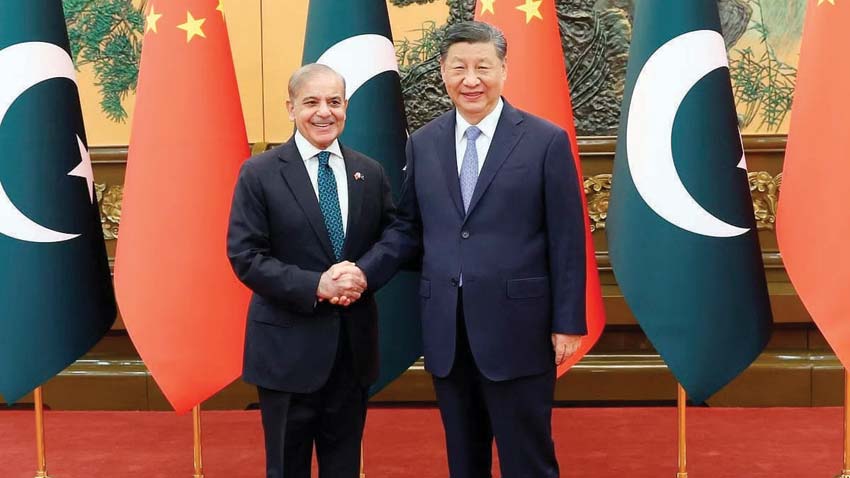
China and Pakistan share a deep strategic partnership encompassing economic, political, and military dimensions. At the heart of this relationship lies the China-Pakistan Economic Corridor (CPEC), a flagship initiative under China’s Belt and Road Initiative (BRI). CPEC enhances Pakistan's infrastructure and grants China direct access to the Arabian Sea, consolidating their partnership. Militarily, China is Pakistan’s largest arms supplier, providing advanced weaponry, including fighter jets, submarines, and missile systems. This alliance is further cemented by their shared hostility toward India. While Pakistan views China as a counterbalance to India's superior military and economic might, China leverages its partnership with Pakistan to exert influence in South Asia and contain India’s growing stature as a regional power.
India's acquisition of the Russian S-400 air defense system has been a game-changer in the region. This advanced system can detect, track, and neutralize aerial threats, including enemy aircraft and ballistic missiles, over a range of 400 kilometers. Its deployment has significantly enhanced India’s defensive capabilities, creating a multi-layered air defense network that shifts the balance of power in the region. Unsurprisingly, this development has caused alarm in both Pakistan and China. In response, Pakistan has intensified its efforts to acquire hypersonic missile technology from China. These missiles, which can travel at speeds exceeding Mach 5 and maneuver unpredictably, represent the next frontier in modern warfare, capable of bypassing even the most sophisticated air defense systems.
India's advancements in hypersonic missile technology further compound Pakistan's insecurities. The successful testing of long-range hypersonic missiles adds an offensive dimension to India’s defense strategy, reinforcing its strategic deterrence. This progress drives Pakistan to deepen its military collaboration with China, resulting in a destabilizing arms race. The proliferation of hypersonic technology, especially to a country with a history of harboring militant groups, raises significant concerns about potential misuse and accidental escalation.
The China-Pakistan alliance poses a broader challenge to South Asia's stability. Their growing military cooperation, marked by joint exercises and intelligence sharing, undermines efforts to maintain a strategic balance in the region. The continuous arms race driven by this partnership not only heightens the risk of military miscalculations but also diverts critical resources from developmental priorities. Furthermore, China’s transfer of advanced military technology, such as hypersonic missiles, to Pakistan introduces a dangerous element of unpredictability in regional conflicts.
India faces a precarious two-front security dilemma due to China’s aggressive posture along the Line of Actual Control (LAC) in Ladakh and Pakistan’s continued hostility along the Line of Control (LoC). The economic dimensions of the China-Pakistan nexus also have strategic implications. The development of Gwadar Port under CPEC strengthens China's naval presence in the Indian Ocean, challenging India’s maritime interests. Moreover, CPEC projects in disputed territories, such as Pakistan-occupied Kashmir, directly challenge India’s sovereignty and escalate geopolitical tensions.
To address the threats posed by the China-Pakistan nexus, India must adopt a comprehensive strategy. Strengthening its defense capabilities is paramount, with continued investment in cuttingedge technologies like hypersonic missiles, stealth aircraft, and robust air defense systems. Collaborative efforts with global defense partners can further bolster India’s military preparedness. Diplomatically, India must deepen its ties with key allies such as the United States, Japan, and Australia through forums like the Quad. Expanding partnerships with ASEAN nations and African countries can help counterbalance China’s growing influence in the region.
Economic and technological advancements are equally crucial for India. Initiatives like Make in India and the semiconductor mission will enhance self-reliance and reduce dependence on foreign technologies, allowing India to outpace its adversaries in critical sectors. Simultaneously, proactive security measures, including enhanced surveillance, intelligence-sharing mechanisms, and counterterrorism operations, are necessary to preempt threats from the China-Pakistan axis. Cybersecurity must also be prioritized to counter the hybrid warfare tactics increasingly employed by adversaries.
The China-Pakistan nexus represents a grave threat to peace and stability in South Asia, with India bearing the brunt of its challenges. Pakistan’s pursuit of hypersonic missile technology and China’s aggressive policies contribute to an environment of heightened tensions and mistrust. However, India’s robust defense capabilities, strategic alliances, and diplomatic outreach offer a path to mitigate these threats. Ensuring stability in South Asia will require sustained efforts to curb the militarization driven by the China-Pakistan partnership while fostering dialogue to resolve longstanding disputes. Only then can the region move toward lasting peace and prosperity.
Uday India Bureau















Leave Your Comment