


When the cover story of this issue highlights “11 Years of NDA,” it might seem odd to focus on a bridge. However, a deeper reflection reveals a more profound truth: post-independence Indian leadership forgot making of bridges and built walls—divide-and-rule tactics based on language, regionalism, caste, and creed. These divisions fostered separation and isolation, providing fertile ground for anti-India forces to exploit and promote extremism. Such barriers created safe havens for these elements and posed immense challenges for our security forces. Understanding this context is crucial to grasping the larger picture of national unity and security. In 2012 then prime minister Manmohan Singh said,
” India's internal security remains a major challenge and the threat from Maoist rebels requires constant attention” whole country was under attack, bullets and blasts could reach the parliament and Taj hotel.
Over the past decade, development has forged not only physical but also emotional bridges across India. The government's unwavering focus on enhancing mobility and connectivity—through groundbreaking projects like strategic tunnels and world-class bridges—has transformed the nation's landscape, economy, and security outlook.
From the Atal Tunnel in Himachal Pradesh—the world’s longest highway tunnel above 10,000 feet—to the Atal Setu, the longest sea bridge connecting Mumbai and Navi Mumbai, India is breaking barriers and conquering once-inaccessible terrains. These engineering feats are more than marvels; they are vital lifelines that connect border regions year-round, shrink travel times, stimulate tourism, and enable rapid military movement in sensitive zones. This era of infrastructure development signifies India’s stride towards a more connected, resilient, and secure future.
Chenab Bridge: India’s Engineering Masterstroke Over the Himalayas
In the rugged mountains of Jammu & Kashmir, where the mighty Chenab River carves through steep gorges and volatile terrain, where the winds whisper ancient stories and the landscape stands as a testament to time, every path leads to an adventure waiting to unfold. It is the resilience of the people who call it home, India has built a modern engineering marvel—the Chenab Bridge. Standing taller than the Eiffel Tower and hailed as the world’s highest railway bridge, this structure is more than just steel and concrete. It is a symbol of resilience, national integration, and technological prowess. The chief minister of Jammu and Kashmir Umar Abdulla hailed the move despite being member of I.N.D.I alliance.
“British dreamt it, you made it reality': Omar Abdullah hails PM Modi at Chenab bridge inauguration” India TV portal.
The people like humble professor Madhvi Latha who worked relentlessly for 17 years to provide guidance for rock anchor design and slope stability, elements crucial for a structure of this scale. She appreciated the Indian Railways and Afcons for their execution of what many called an impossible task. " All glory belongs to Indian Railways,"
A Vision Beyond Limits
The Chenab Bridge is a critical component of the Udhampur–Srinagar–Baramulla Rail Link (USBRL), a flagship railway project aimed at bringing the Kashmir Valley into the mainstream of India's rail network.
Towering 359 meters above the riverbed, the Chenab Bridge is an engineering marvel that dwarfs even the iconic Eiffel Tower. Stretching 1,315 meters, with a breathtaking 467-meter steel arch, it stands as a testament to human ingenuity, pushing the boundaries of construction in unforgiving terrain.
Designed to endure the harshest conditions, the bridge seamlessly blends advanced civil engineering with military-grade resilience. It can withstand winds of up to 266 km/h, seismic shocks reaching magnitude eight, and even blast impacts—ensuring unwavering stability in the face of nature’s fury.

Challenges That Shaped Its Greatness
Constructing the Chenab Bridge was no ordinary feat. The Himalayan geology presented fragile rock structures, unpredictable weather, and steep cliffs. Engineers had to innovate at every step—deploying incremental launching, cable crane systems, GPS-guided alignment, and automatic health monitoring technologies. Over 30,000 metric tons of steel were used, with special weather-resistant material to ensure durability in extreme temperatures.
The bridge’s foundations required deep drilling into difficult terrain, and the arch was built using aerial construction methods—a rare and highly complex engineering process.
Operational Safety, Tactical Security, Strategic Returns.
In addition to civil utility, the Chenab Bridge serves as a strategic military asset. It enables rapid troop movement, logistics supply, and emergency mobility in a region close to international borders.
First railway bridge designed to be blast-resistant, is also equipped with drone surveillance and real-time monitoring systems to ensure long-term structural health and security.
A project reflecting, India’s Spirit, People’s Pride
The project was executed by Konkan Railway Corporation Limited in partnership with Afcons Infrastructure, with inputs from global experts in bridge design and safety. Thousands of engineers, labourers, and specialists contributed over two decades to realize this national dream.
Its completion is not just an engineering milestone—it is a testament to India’s growing capabilities in infrastructure and innovation.
What Chenab bridge Means for Kashmir and India?
Over and above its awe-inspiring size, structural excellence the Chenab Bridge represents connectivity and confidence. For the people of Jammu & Kashmir, it brings better access to education, healthcare, and markets. For India, it is a strategic gateway to integrate its most sensitive and beautiful region with the rest of the country—socially, economically, and emotionally.
It will draw thousands of visitors eager to see the world's highest rail bridge nestled in the Himalayas.
It is also poised to become a tourist attraction, as happening with statue of unity.
Development of Kashmir should not be a one-way traffic.
Nation has invested huge resources in developing Kashmir but what nation got is violence, corruption and exodus of Kashmiri Pandits, attack on Amaranth Yatra, suppression of Human rights of Dalits, stone pelting on armed forces and huge gathering during cremation of the terrorists, people charged with anti-national activities have won without doing campaign. Financial and administrative power was used by the political elites. It is alleged:
1. Favour One Region Over Others
2. Selective Settlement and Land Allotment
3. Control of Institutions
If these allegations are true then the leadership has to ensure that non-Kashmiri tax payers whose money has led to, these miracles taking shape, should not be deprived from participating in the growth of Kashmir. Demography of Kashmir should be brought back to the good old days.
Designing a full-proof and sustainable plan to settle Kashmiri Pandits and other Indians in Kashmir.
While the Chenab Bridge has physically linked Srinagar to the rest of the nation, the true challenge lies in bridging the emotional divide between communities. Achieving genuine equity demands more than policies—it requires a thoughtful, phased, and multi-dimensional approach that fosters understanding, inclusion, and shared progress. Only through sensitivity and sustained efforts can the spirit of unity be realized in both words and action.
Former governor of J&K Jagmohan did a good job to build Kashmir in his first tenure. He has written in details on this issue. Present government has shown the wisdom and will to take up this cause.
Kashmir Reconnection & Rehabilitation Plan (KRRP)
The plan should be built on Sound Legal Framework & Constitutional Backing.Post-370 framework allows Indian citizens to settle, buy land, and work in Jammu & Kashmir. Still people are not taking interest out of fear for their safety therefore new domicile policies should be robust, transparent, and constitutionally valid to avoid legal roadblocks.
Build advance civic infrastructure before full-scale resettlement with Secure housing,
Return of Kashmiri Pandits is a challenging he culean task which needs long term policy:
Security Protocols
Terrorist outfit and their handlers sitting in neighbouring country will attempt to destabilis the process with Pahl Gam like violences therefore the nation has to:
Cultural & Psychological Healing
Incentivized Economic Participation.
To overcome insecurity and apprehensions the government should:
Education-Led Social Integration
Media & Narrative Strategy
Conclusion
Needless to say, that Chenab bridge has provided a trigger to launch this mega project and train passing through it will act as a Pushpak Viman (vehicle) to bring peace prosperity and the spirit of kashmiriyat reflecting the best ethos of Hinduism, Buddhism and Sufism.
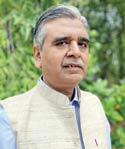
By Rakesh Kumar
(The content of this article reflects the views of writers and contributors, not necessarily those of the publisher and editor. All disputes are subject to the exclusive jurisdiction of competent courts and forums in Delhi/New Delhi only)














Comments (2)
G
Fantastic narrative and easier to understand the growth of Chenb bridge connecting Kashmir to India by Rakesh kumar
R
Very well written article.....it does require lot of research, understanding of the Indian culture & politics.....great article I have gove through after a long time......