



Nilabh Krishna
Climate change is no longer a distant environmental concern discussed in international conferences or academic journals. It has become an everyday reality that is reshaping the way people live, farm, consume and survive. Across the globe, weather patterns are becoming increasingly erratic. Heatwaves are lasting longer, glaciers are retreating faster, forests are burning more frequently, and rainfall is becoming both more intense and more unpredictable. India, home to nearly one-fifth of the world's population but possessing only around four per cent of global freshwater resources, stands at the frontline of this crisis. The country is simultaneously witnessing devastating floods and crippling droughts, sometimes within the same state and within weeks of each other. This paradox has exposed one uncomfortable truth: India's water crisis is no longer merely a question of scarcity; it is increasingly becoming a crisis of water management.
The challenge before policymakers is therefore not only to increase the availability of water but also to improve the country's capacity to capture, conserve and recharge every drop that nature provides. In this context, the time has come for India to formulate a comprehensive national policy focused on creating thousands of additional check dams across rivers, streams, seasonal rivulets and watershed regions. Such a policy could become one of the most effective and affordable climate adaptation strategies available to the country. While large dams have played an important role in India's development story, the future demands a decentralised water conservation revolution where check dams become the backbone of local water security.
Climate change has fundamentally altered the hydrological cycle. Instead of receiving moderate rainfall spread across several weeks, many regions now experience short bursts of extremely heavy rain. Urban areas witness flash floods, while rural landscapes lose enormous quantities of precious freshwater through surface runoff. Rivers swell dangerously for a few days before returning to critically low levels. Vast volumes of rainwater eventually flow into the sea without replenishing groundwater reserves or benefiting agriculture. This represents a tremendous waste of a resource that India can no longer afford to lose.
Scientific studies indicate that the Indian monsoon is becoming increasingly variable due to rising global temperatures. While annual rainfall may not always decline significantly, its distribution has become highly uneven. Some districts receive rainfall far above normal, whereas neighbouring regions experience prolonged dry spells. Farmers who have traditionally relied upon predictable monsoon cycles now find themselves trapped between floods and droughts. Crop failures are becoming more frequent, agricultural incomes are becoming unstable, and rural migration continues to increase.
India's groundwater situation presents an equally alarming picture. The country extracts more groundwater than any other nation in the world. Millions of tube wells support agriculture, industries and domestic consumption. However, groundwater recharge has failed to keep pace with extraction. In numerous districts across Punjab, Haryana, Rajasthan, Gujarat, Karnataka, Tamil Nadu and parts of Uttar Pradesh, groundwater levels have fallen steadily over the past several decades. Wells that once produced abundant water now run dry, forcing farmers to drill deeper borewells at enormous financial cost. This creates a vicious cycle of rising energy consumption, declining water tables and increasing indebtedness.
The consequences extend beyond agriculture. Drinking water shortages are becoming increasingly common in villages and cities alike. During summer months, tankers become the primary source of water in many urban settlements. Women and children in rural India often spend hours collecting water from distant sources. Industrial production also suffers when reliable water supplies become unavailable. As climate change intensifies, these challenges are likely to become even more severe unless proactive measures are taken.
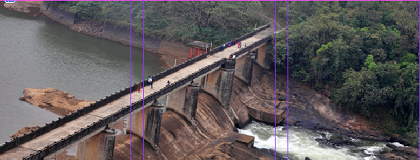
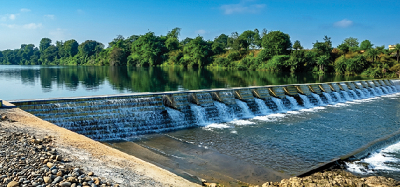
It is here that check dams offer a remarkably practical solution. A check dam is a relatively small barrier constructed across seasonal streams, drainage channels or small rivers to slow the flow of water. Unlike massive reservoirs that require extensive land acquisition and years of construction, check dams are comparatively inexpensive, environmentally sustainable and quicker to build. Their principal objective is not to create enormous storage reservoirs but to retain rainwater long enough for it to infiltrate the ground, recharge aquifers and support local ecosystems.
The strength of check dams lies in their simplicity. By slowing the speed of flowing water, they reduce soil erosion, prevent excessive runoff and increase groundwater recharge. Water stored behind the structure gradually percolates into surrounding aquifers, raising groundwater levels over large areas. Farmers benefit from improved well yields, vegetation flourishes, biodiversity increases and streams often continue flowing for longer durations after the monsoon has ended. These cumulative benefits make check dams among the most effective forms of decentralised water conservation.
India has already witnessed several successful examples demonstrating the transformative power of such interventions. In Gujarat, watershed management programmes involving thousands of check dams have contributed significantly to improving groundwater availability in drought-prone regions. Villages that once depended upon tanker water have become agriculturally productive after local water bodies were restored. Similar initiatives in Rajasthan have revived dried-up rivers, enhanced agricultural productivity and reduced rural distress. Across Maharashtra, Telangana, Karnataka and Madhya Pradesh, numerous community-led water conservation projects have shown that decentralised storage structures can dramatically improve water security even in arid landscapes.
One of the most celebrated examples emerged from Rajasthan, where the revival of traditional water harvesting systems demonstrated how local participation combined with scientific planning could transform degraded watersheds. Rivers that had remained dry for years began flowing again after the construction of numerous small water-retention structures. Groundwater levels rose substantially, agricultural production increased and migration declined. Such experiences illustrate that water conservation is not solely an engineering challenge; it is equally a question of community participation and ecological restoration.
Climate resilience depends upon increasing the capacity of landscapes to absorb shocks. Check dams contribute directly to this objective. During periods of intense rainfall, they moderate flood peaks by slowing runoff. During dry periods, recharged groundwater sustains agriculture, drinking water supplies and ecological systems. Instead of allowing water to rush rapidly downstream and disappear into the sea, check dams encourage the landscape itself to function as a natural reservoir.
The economic argument for expanding check dams is equally compelling. Large dams require enormous financial investments, prolonged environmental clearances and extensive rehabilitation of displaced communities. Although major reservoirs remain important for irrigation, hydropower and flood control, they cannot address every local water challenge. Thousands of villages situated away from major canal networks require decentralised solutions tailored to local geography. Check dams provide exactly such flexibility. Their construction costs are relatively modest, maintenance can often be undertaken by local communities, and benefits become visible within a relatively short period.
Agriculture, which accounts for the overwhelming share of India's freshwater use, stands to gain enormously from widespread groundwater recharge. Reliable access to irrigation enables farmers to diversify crops, improve yields and reduce dependence upon uncertain rainfall. Multiple cropping becomes feasible, horticulture expands, livestock receives better water availability and rural incomes increase. Water conservation therefore directly contributes to national food security as well as poverty reduction.
Environmental gains are equally significant. Groundwater recharge supports wetlands, forests and grasslands that depend upon subsurface water. Improved soil moisture enhances vegetation cover, reduces desertification and strengthens biodiversity. Healthy ecosystems, in turn, contribute to carbon sequestration and climate mitigation. Thus, check dams serve both adaptation and mitigation objectives simultaneously.
Urban India should also recognise the value of decentralised water conservation. Cities increasingly depend upon distant reservoirs that face mounting pressure from population growth and climate variability. Urban expansion has replaced permeable landscapes with concrete surfaces that prevent groundwater recharge while increasing flood risks. Integrating check dams and watershed restoration in peri-urban regions could strengthen municipal water security, reduce flood damage and replenish depleted aquifers. Urban planning can no longer remain disconnected from watershed management.
India has launched several commendable initiatives aimed at improving water governance, including watershed development programmes, rainwater harvesting campaigns, the Jal Shakti Abhiyan and the Jal Jeevan Mission. These initiatives have expanded awareness and improved rural drinking water access. However, the scale of the climate challenge demands an even more integrated national strategy focused specifically on decentralised water storage infrastructure. A dedicated National Check Dam Mission could unify fragmented efforts across ministries, states and local governments while providing scientific planning, financial support and technical guidance.
Such a mission should prioritise watershed-based planning rather than isolated construction targets. Every check dam must be designed according to local geology, rainfall patterns, stream characteristics and groundwater conditions. Poorly planned structures can fail or deliver limited benefits. Therefore, scientific mapping using satellite imagery, Geographic Information Systems, remote sensing and hydrological modelling should guide site selection. Modern technology now enables highly accurate identification of locations where check dams would produce maximum recharge benefits.
Community participation must remain central to any successful programme. Experience consistently shows that water conservation structures perform best when local communities are involved in planning, construction, maintenance and monitoring. Panchayats, farmer producer organisations, watershed committees and civil society institutions should become active partners rather than passive beneficiaries. Traditional knowledge accumulated over generations regarding drainage patterns, soil conditions and seasonal water flows should complement scientific expertise.
Employment generation represents another major advantage. Large-scale construction of check dams could create substantial rural employment through labour-intensive works, particularly when integrated with programmes such as the Mahatma Gandhi National Rural Employment Guarantee Scheme where appropriate. Instead of treating employment generation and climate adaptation as separate objectives, India can achieve both simultaneously through ecological restoration.
The private sector can also contribute meaningfully. Corporate Social Responsibility initiatives have already supported water conservation projects in several states. Public-private partnerships could finance watershed restoration while ensuring scientific implementation and community ownership. Universities and research institutions should evaluate project outcomes, develop improved designs and monitor groundwater impacts over time.
Internationally, water conservation is increasingly recognised as a strategic climate adaptation priority. Nations vulnerable to climate variability are investing in nature-based solutions that enhance resilience while protecting ecosystems. India, with its vast geographical diversity and centuries-old tradition of rainwater harvesting, possesses unique advantages in this domain. Ancient stepwells, tanks, johads, ahars, pynes and numerous indigenous water systems testify that decentralised water conservation has deep historical roots in the subcontinent. Modern policy should build upon this heritage rather than relying exclusively upon large engineering interventions.
Climate finance offers another opportunity. Global funding mechanisms increasingly support adaptation projects that strengthen resilience against climate impacts. A scientifically designed national programme focused on groundwater recharge and watershed restoration could attract international climate finance while generating measurable environmental and developmental outcomes.
Of course, check dams are not a universal solution. They cannot replace major reservoirs where large-scale irrigation or hydropower generation is required. Nor can they compensate for unsustainable groundwater extraction or inefficient irrigation practices. Water conservation must be accompanied by demand-side reforms including micro-irrigation, crop diversification, wastewater recycling and improved urban water management. Nevertheless, without strengthening groundwater recharge through decentralised storage, these complementary measures will remain insufficient.
Policy coherence is therefore essential. Ministries responsible for water resources, agriculture, rural development, environment, forests, climate change and urban affairs should coordinate under a common national framework. Data sharing between central and state agencies must improve. Hydrological monitoring should become continuous rather than episodic. Every district should prepare climate-resilient water budgets that integrate rainfall projections, groundwater availability and conservation infrastructure.
India's aspiration to become a developed nation by 2047 cannot be realised without achieving water security. Economic growth, industrial expansion, agricultural prosperity, public health and environmental sustainability all depend fundamentally upon reliable water availability. Climate change threatens each of these objectives simultaneously. Consequently, water conservation should no longer be viewed merely as an environmental concern but as a strategic national priority linked directly to economic resilience, food security and national development.
The climate crisis has fundamentally altered the relationship between rainfall and water availability. The challenge before India is not simply to pray for more rain but to ensure that every rainfall event becomes an opportunity for long-term water security. Every monsoon that allows billions of litres of freshwater to escape unused into the sea represents a lost opportunity that future generations can ill afford.
The coming decades will test the resilience of nations not only through military strength or economic power but also through their capacity to manage natural resources wisely. Countries that successfully conserve water will possess a decisive strategic advantage in an era of climate uncertainty. India has both the technological capability and the civilisational experience to lead such a transformation.
A comprehensive national policy promoting the construction of scientifically planned check dams across vulnerable watersheds would represent far more than another infrastructure programme. It would constitute an investment in climate resilience, rural prosperity, ecological restoration and national security. By capturing rain where it falls, recharging groundwater where it is needed and empowering communities to manage their own water resources, India can transform one of its greatest vulnerabilities into one of its greatest strengths. In the age of climate change, the smallest barriers across seasonal streams may well become the strongest barriers against water insecurity.
(The content of this article reflects the views of writer and contributor, not necessarily those of the publisher and editor. All disputes are subject to the exclusive jurisdiction of competent courts and forums in Delhi/New Delhi only)




















Leave Your Comment