


The wonder boy of Indian politics - who defied all political odds, turned every established norm of politics upside down and bested the best in political battles – has finally got his first taste of defeat in life. And how!! Nothing exemplifies the extent and scale of the defeat more than the fact that the man who never lost an election in his entire 27-year long political career was defeated by an ordinary BJP karyakarta by a margin of over 16, 000 votes in Kantabanji. That he managed to retain Hinjli, his ‘home’ seat, by a small margin was small consolation for the man who had never lost an election since the day he stepped into politics.
Even on the morning of counting day, everyone thought BJD supremo Naveen Patnaik was all set to win his sixth straight elections, though with a vastly reduced majority, and become the longest serving Chief Minister in the country in the next two and a half months. Neither political pundits nor pollsters foresaw what was coming, least of all the BJP which came out trumps in the end. While everyone agreed that the BJP will improve its tally both in the Lok Sabha and the Assembly, no one gave the party even an outside chance of getting a majority in the Assembly on its own. Nor did anyone imagine in their wildest dreams that the BJD would draw a blank in the Lok Sabha election with the BJP winning 20 out of the 21 seats in the state and the Congress one. The talk was focused more on how the BJP had got its Plan B ready to cobble together a majority by engineering defections in the ruling party in case it was able to muster 55-60 seats in the Assembly. In the end, there was no need for a Plan B as the BJP defied all projections and managed to win 78 seats, four more than the majority mark in the 147-seat Assembly, while the BJD was reduced to just 51, a loss of a whopping 62 seats compared to the last elections in 2019.
What went wrong for the BJD?
So, what exactly went wrong for the party that was the favourite to win a sixth consecutive term in office? It is difficult to put a finger on a single factor and say it was the reason for the defeat. There were several factors at work that combined to fell the mighty regional party that had resisted – and come out trumps against – the Modi storm twice in succession: in 2014 and again in 2019. The biggest of them has to be a sense of complacency in those who planned the campaign strategy. Smug in their misplaced belief that the name of the supremo and the ‘conch’ symbol were enough to sway the voters yet again, they simply took the people for granted. They underestimated the BJP and thought it was no match its leadership, a well-oiled party machine that has mastered the art of election management at the booth level, a proven track record in government and lakhs of loyal voters beholden to the ‘Mai Baap’ government of Naveen Patnaik for the plethora of welfare schemes it had launched during its long and uninterrupted reign. But they had not reckoned with the anger building up within the electorate about the widespread corruption that bedeviled the delivery of the freebies, the arrogance of the local BJD leaders and workers and government officials who had assumed that the sun would never set in the empire. As far as freebies are concerned, it was a case of diminishing returns. The not so veiled threats issued by the party in the closing stages of the campaign that the schemes its government had introduced would be withdrawn if the people voted for any party other than the BJD actually boomeranged on it with the voters rejecting the threat as a sign of arrogance.

The Pandian Factor
But there is near unanimity among commentators and common men alike that the biggest reason for the defeat of the BJD this time was a certain VK Pandian. The IAS officer turned politician had acquired a larger than life image and straddled the state all alone, often overshadowing the man he claimed to be serving: Naveen Patnaik. His hand was seen in everything from selection of party candidates to planning of election and media strategy, deployment of resources and even the Chief Minister’s election itinerary. Naveen, the biggest vote catcher of the party by a distance, appeared only occasionally while his Man Friday held sway right through the long, month and half long campaign, addressing an average of three election meetings a day. And when Naveen did appear in public for electioneering, he looked frail, unsteady, forgetful and completely dependent on Pandian for everything – even for something as elementary as holding a mike while speaking. As for Pandian, he did not allow any other leader on the dais while he spoke. Even the candidates, with hands folded in supplication, sat as mute spectators as the One-Man-Army canvassed for votes for them. Of the 40 ‘star campaigners’ of the party, the people saw only two during the entire campaign: VK Pandian and Naveen Patnaik, in that order. Everyone else was ‘missing in action’.
Anyone who cared to see could see that the omnipresence of Pandian was eating into the prospects of the party big time. Hired crowds and manufactured cheers could not hide the fact that the people saw him as an ‘usurper’, who was plotting to take power in the state by manipulating an aging patriarch and browbeating party leaders as well as government officials. Resentment turned into positive anger as the BJP cleverly pitched its entire election campaign on the theme of ‘Odia Asmita’, a thinly-veiled dig at the Tamil origins of Pandian. And every BJP leader, from Prime Minister Narendra Modi downwards, harped at every election rally on the point that a Tamil man was maneuvering to wrest power in Odisha using Naveen as a prop. They held him responsible for everything from the missing keys of the Ratna Bhandar in the Lord Jagannath temple to the falling health of Naveen Patnaik. And it worked wonders. While Naveen’s popularity remained largely undiminished, it was the alleged shenanigans of his hand-picked deputy that singed him and his party in the end. Whoever decided the campaign theme for the BJP deserves plaudits for reading the pulse of the people accurately.
It wasn’t as if BJD leaders and workers on the ground did not know that Pandian was turning out to be the ‘Trojan Horse’ for the party. In fact, many candidates cooked up all kinds of excuses and subterfuges to ensure that he did not come campaigning to their constituencies, fearing that he would cut into their votes. But with access to the party supremo long blocked – allegedly by Pandian – there was no way they could apprise their leader about the ground slipping away from under their feet and press him for a course correction. In the event, they chose to cut their losses and concentrate on winning their constituencies instead.
Pandian’s conduct since the election has only buttressed the worst fears about him. The man who shadowed Naveen whenever appeared in public is nowhere to be seen even a fortnight after the election results were announced; not even when his boss held a series of meetings with party leaders to take stock of the situation after the loss and plan a course of action for the future. His interaction with the public during the period has been limited to a solitary video, released from an undisclosed destination, announcing his ‘withdrawal’ from ‘active politics’. Notwithstanding the announcement, however, observers refuse to write him off as yet. Most people still believe he would make a surreptitious comeback at some point of time once the dust settles. There are two reasons for such conjecture. First, Naveen Patnaik put up a spirited defence of his trusted lieutenant shortly after the results even as young leaders broke free to shout slogans against Pandian and some others. Second, he is still in intimate touch with his boss, if reports are to be believed.
The Way Ahead for the BJP government
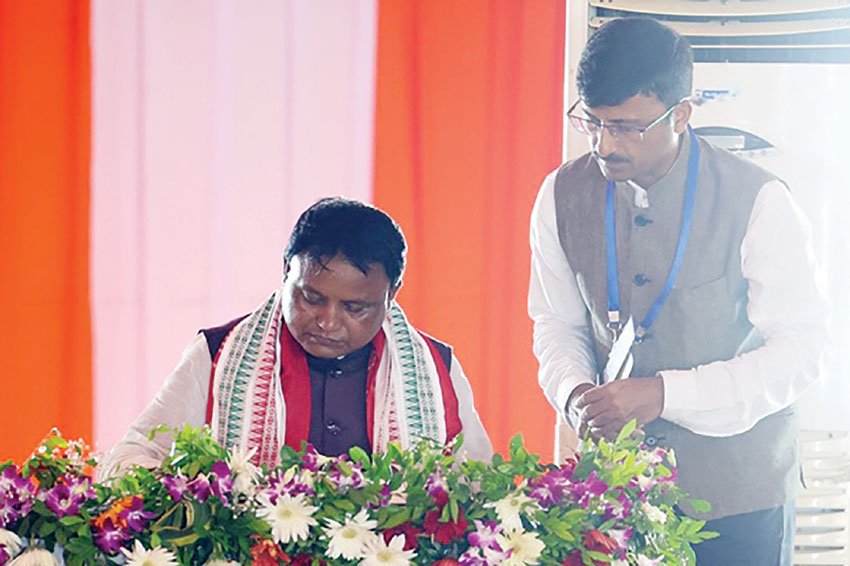
Having unexpectedly won the election, the BJP took a whole week to decide on its Chief Minister. As in Rajasthan, Madhya Pradesh and Chhattisgarh last year, the BJP central leadership took everyone by complete surprise by naming a rank outsider as the Chief Minister: Mohan Charan Majhi, four-time MLA from Keonjhar (ST) Assembly constituency and the opposition chief whip in the last Assembly. While it is true that his name had entered the list of potential CMs in the last two days, no one really gave him even an outside chance of making it in the end.
Majhi, with no experience whatsoever as a minister, has been saddled with two deputy CMs, only one of whom – Kanak Vardhan Singhdeo – has been a minister before. The other, Pravati Parida, is a first time MLA. No one else in the council of ministers has previous experience as a minister. The one name which was considered a near certainly – Jaynarayan Mishra, the five-time MLA from Sambalpur, was conspicuously missing from the list of ministers. Majhi thus is also saddled with a council of ministers with very little experience. But with the right kind of leadership, he can turn this apparent handicap – the lack of ministerial experience – into an advantage by bringing in fresh blood and a new vigour.
The most immediate challenge for the new Chief Minister is dispelling the widely prevalent impression in the minds of the people that he has very little freedom to act on hos own and it is the central leadership of the party that is taking all major decisions. This impression deepened further when he took three full days after the swearing in ceremony to allocate the portfolios to his ministers, fueling speculation that the ministers as well as their portfolios were decided not by him, but by the central leadership. The other immediate challenge is to allay the apprehensions in the minds of many people that having come to power on its own, the BJP might unleash its Hindutva brand of politics in a state known for his eclectic traditions and communal harmony.
Among more mundane matters, the next challenge will be to address the disgruntlement among those who missed out on a ministerial berth, Jaynarayan Mishra being the most prominent of them. But he still has six ministerial positions to fill up – the maximum is 22 – and can rope in some of the more troublesome MLAs as ministers.
But it is the governance challenge that will really test Majhi. Having inherited a system where the bureaucrats called all the shots while the elected representatives, including ministers, tweedled their thumbs, the first task before the new Chief Minister is to undo the skewed bureaucrat-minister equation and restore the supremacy of the elected representatives.
The Majhi government has to take a call on whether to abandon, continue with or tinker with the many welfare schemes launched by the Naveen Patnaik government. It is important for the new government not to throw the baby with the bathwater in an act of one-upmanship. Loopholes, if any, should be done away with, but there should be no political score-settling. And to its credit, it has begun well by announcing that Mission Shakti, the massive women’s empowerment programme launched by the previous government, would continue with even greater vigour. But there is no clarity yet on whether another flagship scheme – the Biju Swasthya Kalyan Yojana (BSKY), the comprehensive healthcare coverage scheme – would be continued with or replaced with the Ayusman Bharat scheme. The sooner the Majhi government takes a call on these schemes, the better.
Like every new government. the Majhi dispensation also deserves its ‘honeymoon period’. And Majhi as well as his ministers have made all the right noises in the first few days. Given the all-pervasive inexperience in the council of ministers, it would be a bumpy ride for the new government for sure, at least for the first few months. The new CM has to bring all his political skills to ensure that the vehicle doesn’t turn turtle midway through the journey.
Conclusion:
Odisha has always bucked the national trend and this election was no different. In 2004, when the ‘India Shining’ campaign sunk the NDA 1.0 government headed by Atal Bihari Vajpayee, the BJD-BJP alliance stormed back to power in Odisha with a thumping majority. In 2014, when the Modi wave was at its peak in the rest of the country, Naveen Patnaik not only won a massive majority in the Assembly (117 out of 147), but also walked away with 20 of the 21 Lok Sabha seats, leaving just one for the BJP’s Jual Oram in Sundargarh. More or less the same thing happened in the post-Pulwama elections in 2019. Though the BJP managed to improve its Lok Sabha tally considerably by winning eight seats, it fell flat in the Assembly polls, winning just 23. And this time, when the Modi magic has waned discernibly in the rest of the country, his party has won an incredible 20 Lok Sabha seats and - wonder of wonders – secured a majority in the Assembly as well. And it was the Modi factor that tilted the scales in his party’s favour because the BJP did not even present a Chief Ministerial face. It was a straight Modi Vs. Naveen fight this time, which the former won hands down.
In view of past voting patterns in the state, the BJP has to be extremely wary of the voters of Odisha. If it fails to keep its promises and deliver the goods or starts its Hindutva politics in the state, it won’t take much time for the tide to turn against it. Cautious optimism is what it needs to strike deep roots in the Land of Jagannath.
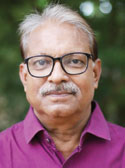
By Sandeep Sahu
(The content of this article reflects the views of writers and contributors, not necessarily those of the publisher and editor. All disputes are subject to the exclusive jurisdiction of competent courts and forums in Delhi/New Delhi only)



















Leave Your Comment