


On August 23, at 6:04 p.m., the Vikram lander from the Indian Space Research Organisation (ISRO) made a successful soft landing on the south pole of the moon. The success of this mission is vital to both the exploration of the moon and India's position as a space power. While in South Africa for the BRICS summit, Prime Minister Narendra Modi raised the Indian flag as he watched the Chandrayaan land.
As the spacecraft touched down, scientists and government representatives applauded, hugged, and clapped. The government is now trying to encourage investment in satellite-related industries and private space missions. This mission, which came less than a week after Russia's Luna-25 mission failed, was India's second attempt to land a spacecraft on the moon.
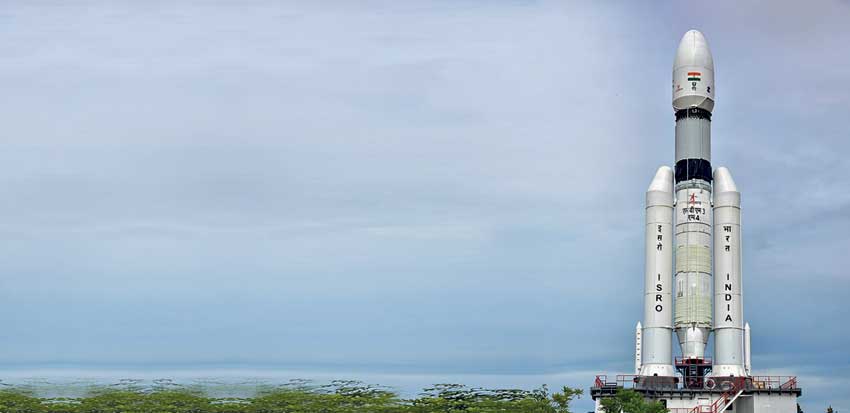
India made history by being the first nation to successfully land the Chandrayaan-3 spacecraft on the south pole of the Moon. Over the course of its two-week mission, the solar-powered rover Pragyan will investigate the surface and send data to Earth.
It is believed that the shadowed craters around the lunar south pole are home to water ice that could support a future lunar settlement. India's latest moon landing effort, which comes after a failed attempt in 2019, would undoubtedly strengthen its space sector in addition to showcasing its space technology capabilities. In the meantime, excitement could be felt among the populace on the streets of New Delhi and other parts of the nation.
The Chandrayaan-3 is pointed at the lunar south pole, where there is water ice, or frozen water, which might serve as a source of oxygen, fuel, and water for upcoming moon missions or a more long-term lunar colony.
The Chandrayaan-3 is planned to continue operating for another two weeks while carrying out a number of experiments, including a spectrometer investigation of the lunar surface's mineral composition.
Two spectrometers will search for elements from the ancient lunar crust as part of the Pragyan rover's two payloads, which will be mounted on its six wheels.

The Spectro-polarimetry of Habitable Planet Earth (SHAPE), one of the payloads, will also measure spectral and polarimetric radiation in order to comprehend what the signatures of habitable Earth-like planets might resemble.
Following lessons from the previous moon mission, ISRO claims to have upgraded the software and decreased the lander's engine count from five to four. Everything has been put through extensive testing. The space agency also revealed that even if some components fail, the new mission has been intended to land successfully. Measures were created to address a number of eventualities, such as sensor failure, engine failure, algorithm failure, and computation failure.
Significance of the landing
The Chandrayaan-3 mission is a highly complex and ambitious mission that has been successfully executed by the Indian Space Research Organisation (ISRO). The significance of the Chandrayaan-3 mission is threefold. First, it is a major technological achievement for India. The soft landing on the lunar South Pole is a challenging feat that has only been accomplished by a few other countries. This success demonstrates India's growing capabilities in space exploration.
Second, the Chandrayaan-3 mission will help scientists learn more about the Moon. The orbiter will map the entire lunar surface, and the lander and rover will study the lunar South Pole in detail. This information will help scientists understand the Moon's formation and evolution, as well as its potential for resources.
Third, the Chandrayaan-3 mission is a major boost for India's space program. The success of this mission will help India attract more international partners and funding, which will enable it to undertake even more ambitious space missions in the future.
Low costs
ISRO was able to do the Chandrayaan-3 mission in such low costs by using a number of innovative technologies. For example, the orbiter uses a solar electric propulsion system, which is more efficient than traditional chemical propulsion systems. This helped to reduce the amount of fuel required for the mission, which in turn reduced the cost.
The lander and rover also use a number of innovative technologies. For example, the lander uses a laser altimeter to measure its altitude, which helps it to land safely. The rover uses a robotic arm to collect samples of the lunar soil, which will be analyzed by scientists back on Earth.
The Chandrayaan-3 mission took 40 days to travel to the Moon. During this time, the spacecraft underwent a series of complex maneuvers. These maneuvers included:
The Chandrayaan-2 mission is a major milestone for India's space program. The success of this mission will help India to achieve its goal of becoming a leading spacefaring nation. In addition to the maneuvers mentioned above, the Chandrayaan-2 mission also involved a number of other challenges. Despite these challenges, the ISRO was able to successfully execute the Chandrayaan-2 mission. This is a testament to the skill and dedication of the ISRO team.
Growing India’s clout
The Chandrayaan-2 mission is a major achievement for India and for the global space community. The success of this mission will help to inspire future generations of scientists and engineers. It will also help to promote international cooperation in space exploration.
India has had a space programme for more than 60 years, since the country was still a young republic and was suffering from the pains of a bloody partition. The nation was no match for the aspirations of the US and the former Soviet Union, which were far ahead in the space race when it launched its first rocket into space in 1963.
India now has the fifth-largest economy in the world and is the most populous country. It has a sizable young population and is home to an expanding innovation and technological center. Additionally, under Modi, India's space goals have been playing catch up.
PM Modi sees India's space program as a sign of the nation's rising significance on the international stage after being elected in 2014 on an agenda of nationalism and future greatness.
India launched the Mangalyaan spacecraft into orbit around Mars in 2014, becoming the first Asian country to do so. The mission cost $74 million to launch, less than the $100 million Hollywood spent on the space drama "Gravity."
India set a record by launching 104 satellites in one operation three years later.
PM Modi in a rare broadcast address said that India has shot down one of its own satellites in an alleged anti-satellite test in 2019, making it one of only four nations to have done so.
In the same year, India's former head of ISRO, Kailasavadivoo Sivan, stated that the country intended to launch a space station by 2030. The International Space Station, a multi-national project, and China's Tiangong Space Station are the only space stations currently accessible to expedition crews.
Space technology has become one of India's hottest investment industries due to its rapid development and innovation, and foreign leaders seem to have taken notice. The White House stated that when Modi and US President Joe Biden met in Washington last month on a state visit, they both desired greater cooperation in the space sector.
Additionally, India has space aspirations beyond the moon and Mars and is planning to send an orbiter to Venus and Sun.
India Worships Women power
Prime Minister Narendra Modi recently met with ISRO scientists who were instrumental in the Chandrayaan-3 mission's accomplishment. When PM Modi arrived at the ISRO headquarters in Bengaluru, he was welcomed with open arms. PM Modi received an overview of the Chandrayaan-3 Mission's journey and the scientific work that went into the project from ISRO Chairman S. Somanath. After arriving in Bengaluru, the PM greeted locals outside HAL airport and raised the slogan "Jai Vigyan Jai Anusandhan" before meeting the ISRO scientists. "I could not stop myself as I was not in the country, but I decided to visit Bengaluru first and meet our scientists right after visiting Greece," PM Modi on his arrival to the Garden City.
Speaking to ISRO scientists in Bengaluru, PM Modi expressed satisfaction with the Chandrayaan-3 mission's accomplishment. "We have arrived in a previously unexplored area, he declared. We have achieved a remarkable success," he said. PM Modi at ISRO headquarters announced that the point where Chandrayaan-3 landed on the Moon will be called ‘Shivshakti’.
This naming has lot of significance not only for marking the India’s remarkable feat but it also shows the importance of our culture. PM Modi, himself in another video recorded message for G20 delegates in Varanasi, said, “Culture has the huge potential to unite,” and in this light, this naming also gets siginificant. Let me tell you how.
The name "Shivshakti" is a combination of the Hindu god Shiva and the word "shakti", which means power or energy. It is a tribute to the power and energy of the women scientists who played a key role in the Chandrayaan-3 mission. The lander Vikram was designed and developed by a team of women engineers, and the rover Pragyan was named after a woman scientist, Pragya Agarwal.
The naming of the landing point as Shiv Shakti also signifies India's growing clout in the space exploration club. India is one of the few countries to have successfully soft-landed a spacecraft on the Moon, and the Chandrayaan-3 mission is a major milestone in its space program. The name Shiv Shakti is a way of asserting India's pride in its achievements and its determination to continue to push the boundaries of space exploration.
In addition to the naming of the landing point, PM Modi also announced that August 23, the day Chandrayaan-3 successfully landed on the Moon, will be celebrated as the National Space Day. This is another way of recognizing India's achievements in space exploration and inspiring the next generation of scientists and engineers.
The successful landing of Chandrayaan-3 is a major boost for India's space program and a sign of its growing capabilities. The name Shiv Shakti is a fitting tribute to the women scientists who made this achievement possible, and it is a reminder of India's determination to be a leading player in the global space race.
The landing of Chandrayaan-3 is a significant event in the global space race, and the success of this mission further solidify its position as a leading spacefaring nation. The success of Chandrayaan-3 sends a strong message to the world that India is a serious player in this race.
Overall, the landing of Chandrayaan-3 is a major event with far-reaching implications. The success of this mission provides a major boost for India's space program and its economy, and it would further solidify India's position as a leading spacefaring nation.
The success of Chandrayaan-3 is a major milestone for India and for the global space race. It shows that India is a serious player in the field of space exploration, and it would help to pave the way for future missions to the moon and beyond.

By NILABH KRISHNA
(The content of this article reflects the views of writers and contributors, not necessarily those of the publisher and editor. All disputes are subject to the exclusive jurisdiction of competent courts and forums in Delhi/New Delhi only)














Leave Your Comment