


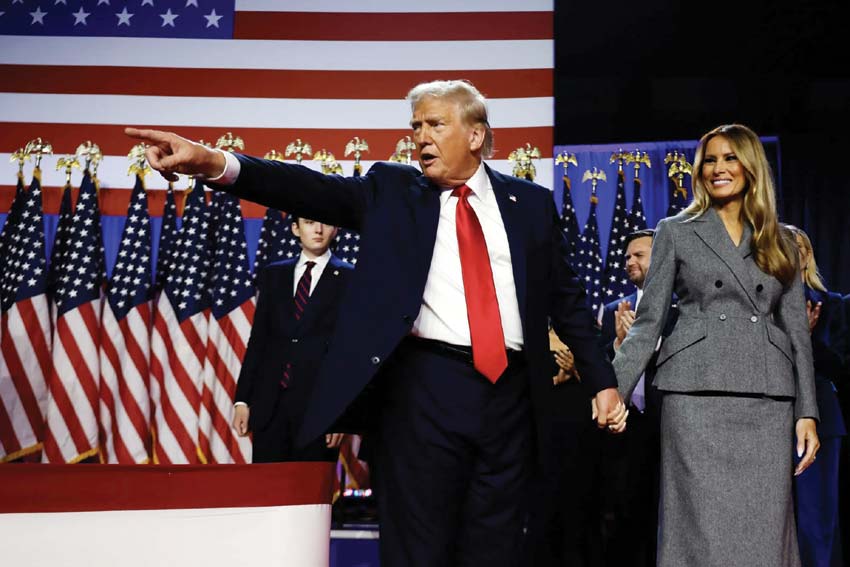
After a fierce and closely contested election, Donald Trump has returned to the White House as the 47th President of the United States, defeating Kamala Harris in a campaign marked by intense debates on economic policy, national security, and foreign relations. Trump's victory represents not just a personal comeback but a reaffirmation of his political movement. Donald Trump's return to the presidency has significant implications for both India and the world. His populist and nationalistic policies appeal to a segment of Americans seeking economic and social change, while his strong stance on foreign policy reflects an intention to reassert U.S. influence globally. For India, Trump’s presidency offers a mix of opportunities, particularly in defense and strategic partnerships, along with challenges in areas such as trade, immigration, and climate policy. As the world adjusts to a shifting U.S. foreign policy landscape, India will need to balance its engagements with the U.S. while diversifying its alliances and partnerships. This new era provides India with the chance to further its own strategic and economic interests, positioning itself as a significant player in the global order.
How Donald Trump Pulled Off His Victory
1. Economic Appeal and Populist Rhetoric
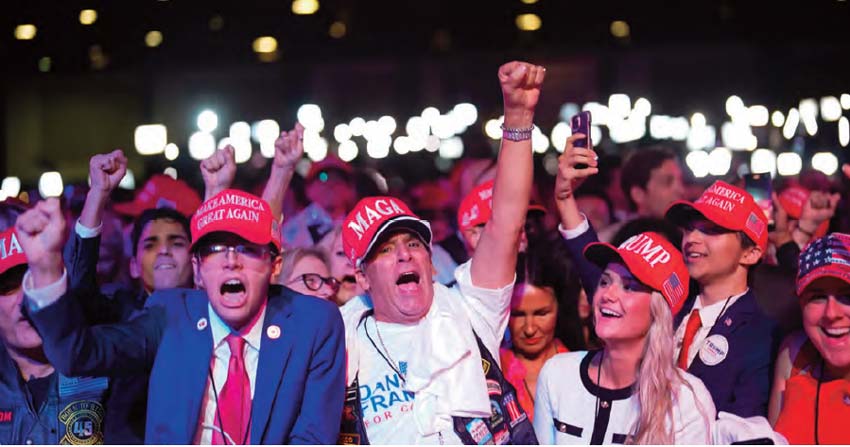
Throughout his campaign, Trump successfully leveraged his populist image, emphasizing a "Make America Great Again" message that resonated strongly with working-class Americans. Amid economic uncertainties and inflationary pressures, his promises of tax cuts, job creation, and reducing global dependency struck a chord with those impacted by job losses and rising costs. Trump’s strong stance on deregulation and economic nationalism—focusing on bringing jobs back to the U.S. and promoting local industries—appealed particularly to industrial states.
Trump’s campaign also targeted issues that resonate with the "forgotten" middle-class Americans who believe that the political elite often overlook their struggles. His ability to portray himself as an outsider—despite having previously served in office—worked effectively in galvanizing these voters who yearned for change.
2. Strategic Focus on Key Swing States
Trump’s campaign adopted a laser-focused strategy on swing states, tailoring messages to the local economic and social concerns in states like Pennsylvania, Michigan, and Florida. His campaign leveraged extensive data analysis to understand voter sentiment and focus efforts on undecided and independent voters. Trump’s outreach and rallies were critical in driving high voter turnout among his base in these competitive states, which ultimately tipped the balance in his favor.
3.Immigration and National Security
Trump’s emphasis on securing the border and strengthening immigration controls continued to resonate with a section of Americans concerned about border security and immigration. His administration’s previous stance on these issues had garnered support from conservatives who view immigration as a priority for national security. This approach not only reinforced his loyal base but also attracted moderates who favor stricter immigration controls.
Furthermore, Trump’s promise to take a tough stance on national security issues, including addressing the growing influence of China and enhancing defense spending, appealed to those who view a strong national defense as a top priority in an increasingly multipolar world.
4.Effective Use of Social Media and Communication
Trump's return to social media, combined with a robust digital presence, allowed him to communicate directly with his supporters and counter narratives in mainstream media. His campaign adopted innovative communication strategies, including digital rallies and direct messages, helping to energize his base and bypass traditional media channels that had often been critical of his policies. By reaching out to younger and first-time voters through these platforms, Trump expanded his reach and appealed to a broader audience.
5.Resilient Base and Grassroots Support
Trump’s loyal supporter base, who remained galvanized throughout the election cycle, was instrumental in his success. His grassroots efforts, bolstered by enthusiastic volunteer support, played a significant role in voter outreach, fundraising, and turnout efforts. Trump capitalized on his charismatic appeal to motivate voters who felt that their interests were not prioritized by traditional politicians, enabling him to mobilize an extraordinary level of grassroots activism.
Implications of Trump’s Win for India
1. Strengthened Defense and Strategic Partnership
Trump's win could further solidify the U.S.-India defense and strategic partnership. His administration is expected to maintain a strong stance against China, which aligns with India’s strategic interests, especially given the ongoing India-China border tensions. India could benefit from increased defense cooperation, intelligence-sharing, and possibly new defense deals, particularly in enhancing its naval and air capabilities. Strengthening the Quad alliance with the U.S., Japan, and Australia could also be a priority under Trump, contributing to security in the Indo-Pacific region.
2. Bilateral Trade Opportunities and Challenges
Trump’s administration may favor bilateral trade deals over multilateral frameworks, which could be beneficial for India. India might have opportunities to negotiate trade terms that are advantageous for sectors like technology, pharmaceuticals, and textiles. However, Trump's "America First" policy could also present challenges, as India’s IT and service sectors, particularly those relying on outsourcing and H-1B visas, may face heightened scrutiny and tighter regulations. Navigating these trade dynamics will require diplomatic and economic agility from India to maintain a balanced trade relationship with the U.S.
3. Energy and Climate Policy
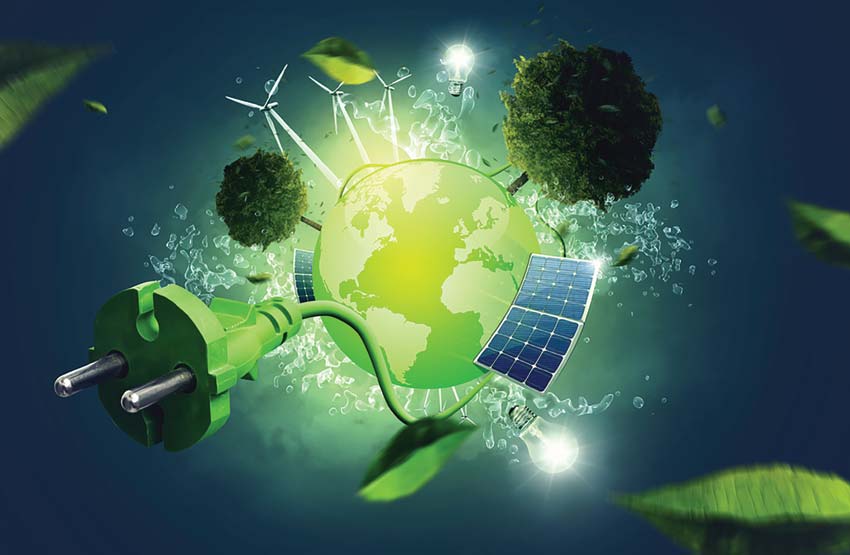
Trump’s focus on energy independence and fossil fuels could offer India affordable access to U.S. oil and natural gas, potentially strengthening India's energy security. However, Trump’s climate policies, characterized by skepticism toward global climate commitments, may complicate India’s renewable energy goals and climate commitments. India may need to increase its domestic efforts and collaborations with other countries to achieve its ambitious climate targets.
4.Technology and Digital Cooperation
With a mutual interest in countering Chinese influence in the tech sector, India and the U.S. may find opportunities to collaborate on secure telecommunications networks, including 5G. A Trump administration would likely support initiatives that strengthen technological alliances, allowing India to reduce its dependence on Chinese technology. However, Trump's stance on data localization and data privacy may create barriers for Indian companies, requiring negotiations to align tech policies that benefit both nations.
5. Potential Impact on Indian Diaspora and Immigration Policies
Trump’s immigration policies are likely to remain stringent, potentially affecting Indian professsionals and students seeking opportunities in the U.S. The H-1B visa program, which is essential for India’s IT sector, could face further restrictions, impacting the flow of skilled labor. For India’s diaspora, these policies may bring uncertainties, though Trump’s support for merit-based immigration could provide some flexibility for highly skilled workers.

Implications for the World
1. Reshaping U.S.-China Relations and Global Trade
Trump’s stance on China is anticipated to remain aggressive, possibly leading to continued trade restrictions and a decoupling of the U.S. and Chinese economies. This could drive shifts in global trade, prompting other countries to seek alternatives to China’s manufacturing dominance. Economies like India, Vietnam, and Mexico could benefit as companies diversify supply chains. However, this could also contribute to global economic volatility, impacting emerging markets sensitive to shifts in trade patterns.
2. Geopolitical Realignment in the Indo-Pacific
Trump’s strong commitment to the Indo-Pacific as a strategic priority could reshape alliances in Asia. The Quad alliance, with the U.S. as a key player, could take on more prominence as a counterweight to China’s influence. This focus on the Indo-Pacific aligns with India’s regional interests and could see increased cooperation among democratic nations in Asia.
3. Impacts on Global Climate Policies
Trump’s return to power may hinder global climate initiatives, particularly those led by the United Nations. His administration’s focus on energy independence, centered around fossil fuels, could slow progress on international climate commitments. For countries invested in renewable energy and sustainable development, Trump’s policies could create challenges. European and Asian countries may need to lead global efforts to achieve climate goals.
4. Global Security and Multilateralism
Trump’s administration has been known for its selective approach to multilateral organizations. His emphasis on national sovereignty over global governance could weaken institutions like the United Nations and the World Health Organization, impacting global health, humanitarian aid, and security initiatives. Other nations, including India, may need to assume greater responsibilities within these institutions or find alternative multilateral partnerships to address global issues effectively.
Donald Trump's return to the U.S. presidency is a significant geopolitical event, shaping a unique set of challenges and opportunities for India. As the world’s largest democracy and one of the fastest-growing economies, India maintains a close strategic partnership with the United States, and Trump’s administration could influence this relationship across trade, defense, technology, and regional security. Here’s a look at the specific areas where India may face challenges or find new opportunities under a Trump administration.
1. Strategic and Defense Partnerships
Opportunity: Historically, Trump’s approach to foreign policy has been characterized by strategic alliances aimed at countering China. Trump’s administration is likely to continue its efforts to challenge China’s expanding influence in Asia, especially in the Indo-Pacific. This presents an opportunity for India to bolster its defense partnerships and participate in regional security initiatives, such as the Quadrilateral Security Dialogue (Quad), which also includes Japan and Australia. A strengthened U.S.-India defense partnership could bring India access to advanced U.S. defense technology and intelligence-sharing capabilities, elevating India’s defense infrastructure.
Challenge: The Trump administration’s unpredictable stance on military involvement could mean India may face sudden shifts in U.S. foreign policy. Although India might benefit from enhanced military technology, reliance on the U.S. for critical defense equipment may lead to vulnerabilities if Trump’s administration changes course on defense support due to political or economic reasons. India will need to navigate this cautiously, possibly by diversifying its defense alliances with other nations like France and Israel.
2. Trade and Economic Relations
Opportunity: Trump’s policies tend to favor bilateral trade deals over multilateral agreements, aligning well with India’s own trade strategy. India might find an opening to negotiate favorable terms for sectors like IT services, pharmaceuticals, and textiles. Bilateral trade agreements could reduce tariffs and improve market access for Indian goods in the U.S., providing a boost to India’s “Make in India” initiative.
Challenge: Trump’s “America First” policies have historically focused on protecting U.S. jobs and industries, sometimes at the expense of outsourcing and imports. Indian technology companies, particularly those relying on H-1B visas, may face increased scrutiny and restrictions. Additionally, a shift toward U.S. protectionism could impact India’s exports to the U.S., affecting sectors that depend heavily on the American market. India will need to work strategically to protect its interests in this space by enhancing its self-reliance and by expanding exports to other markets.
3. Energy and Climate Policy
Opportunity: Trump’s focus on energy independence and reluctance to impose strict environmental regulations could benefit India’s energy trade with the U.S. His administration has supported fossil fuel production, making the U.S. a significant oil and gas exporter. This could help India, a major energy importer, secure energy supplies at competitive rates. Moreover, Trump’s emphasis on fossil fuels could enable India to leverage American energy technology to boost its oil and gas production.
Challenge: Trump's withdrawal from the Paris Climate Agreement during his first term and his skepticism towards climate change initiatives may complicate global climate action, in which India is an active participant. India’s climate goals require significant global collaboration, particularly funding and technology transfer from developed nations like the U.S. A renewed Trump stance against environmental commitments could disrupt India’s path toward renewable energy adoption and sustainability goals, pushing India to invest more domestically in green energy.
4. Technology and Digital Economy
Opportunity: With Trump’s focus on national security in the tech sector, India might find opportunities to collaborate on secure telecommunications networks, particularly 5G technology. Given the mutual concerns over Chinese tech giants, India could strengthen its partnerships with American tech firms to develop secure digital infrastructure and data protection measures. This collaboration could help India build a resilient digital ecosystem, support its digital transformation goals, and reduce reliance on Chinese technology.
Challenge: Trump’s administration has previously taken a hard line on data localization, which may create barriers for Indian companies operating in the U.S. and using cloud services provided by American firms. Moreover, restrictive data policies could complicate cross-border data flow, a key component of India’s IT sector. Additionally, policies aimed at bringing tech jobs back to the U.S. could affect India’s IT and services sector, which has traditionally benefited from American outsourcing.
5. Immigration and Indian Diaspora
Opportunity: While Trump’s immigration policies have been restrictive, there may be room for negotiating policies that benefit highly skilled Indian workers. Trump has previously shown openness to welcoming skilled labor as part of economic advancement. If India can negotiate effectively, it could secure more favorable H-1B visa policies or explore workarounds that allow skilled professionals to work in the U.S. while benefiting the American economy.
Challenge: Trump’s stringent stance on immigration poses risks for the Indian diaspora and Indian professionals aspiring to work in the U.S. Indian students and skilled workers could face additional barriers, impacting India’s talent exchange with the U.S. and potentially dampening remittance flows. This situation could also limit exposure for Indian talent to U.S. innovation hubs, affecting India’s technology and innovation landscape in the long term.
6. Countering China’s Influence
Opportunity: Trump’s hardline approach toward China is aligned with India’s interests, given ongoing border tensions and economic rivalry with China. Trump’s administration is expected to continue sanctioning China’s aggressive actions, which could relieve pressure on India. A strong U.S.-India alignment could allow India to focus on strengthening its own position in the region. India could leverage this to consolidate its influence in South Asia and the Indian Ocean, especially through initiatives that counter China’s Belt and Road Initiative (BRI).
Challenge: While Trump’s stance on China aligns with India’s, his inclination toward unpredictability in foreign policy may strain consistent support. The possibility of sudden policy shifts could leave India without reliable backing in the event of escalating tensions with China. Therefore, India will need to establish its strategic autonomy, ensuring that it does not overly rely on U.S. support and instead builds alliances with other regional players.
7. Human Rights and Religious Freedom Concerns
Opportunity: Trump’s administration has generally refrained from interfering in the internal affairs of other nations when it comes to human rights, adopting a pragmatic foreign policy approach. This approach could provide India more leeway in managing its internal policies without facing significant pressure from the U.S., which would allow India to focus on domestic development without as much concern for foreign intervention.
Challenge: However, Trump’s stance on human rights is not always predictable. Any major event concerning religious or social unrest in India could still attract attention from segments of the U.S. government or media, potentially affecting diplomatic ties. India will need to maintain a balanced approach to avoid any issues that could draw unnecessary focus from the U.S. and impact the bilateral relationship.
8. Health and Pandemic Preparedness
Opportunity: Trump’s pragmatic view on vaccine and drug production, as evidenced during his handling of the COVID-19 pandemic, could open avenues for collaboration in pharmaceutical production. India’s pharmaceutical industry, being a global hub for affordable medicines, could find a valuable partner in the U.S. for addressing global health crises and producing affordable vaccines and treatments.
Challenge: However, Trump’s inward-looking approach to healthcare may present barriers to collaborative efforts. His focus on U.S.-first healthcare and vaccine distribution policies might make it challenging for India to rely on the U.S. during future health emergencies. Furthermore, stringent U.S. drug regulations could affect Indian pharmaceutical exports, particularly if Trump’s administration continues to prioritize domestic production over imports.
9. Investment and Economic Growth
Opportunity: Trump's tax cuts and pro-business stance may attract U.S. investment to India. American firms looking for cost-effective production could increasingly turn to India, helping to boost local industries. Moreover, U.S. corporations might view India as an ideal base for diversifying their supply chains, especially as they seek alternatives to China, creating opportunities for investment and job creation.
Challenge: Trump’s policies may also focus on incentivizing American companies to repatriate jobs and production facilities, impacting India's potential for foreign direct investment (FDI). India may need to offer more competitive tax incentives and further ease of doing business to retain U.S. investors and prevent capital outflows, a challenging but critical endeavor for continued economic growth.

By NILABH KRISHNA
(The content of this article reflects the views of writers and contributors, not necessarily those of the publisher and editor. All disputes are subject to the exclusive jurisdiction of competent courts and forums in Delhi/New Delhi only)















Leave Your Comment