


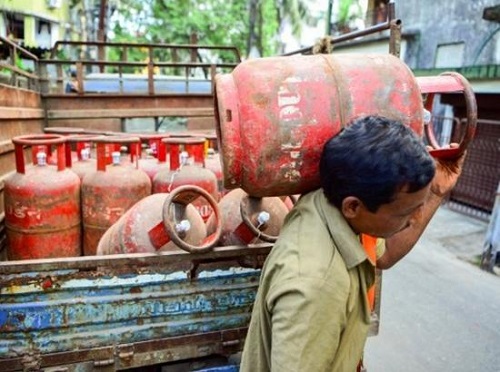
Amid an ongoing shortage of liquified petroleum gas (LPG) triggered by escalating geopolitical tensions involving the United States, Israel, and Iran, the Centre on Wednesday unveiled a strategic plan aimed at easing supply pressures while accelerating India’s long-term transition to piped natural gas (PNG).
The government has offered all states and Union Territories an additional 10 per cent allocation of commercial LPG, but with a clear condition — active support in shifting consumers, particularly in urban and commercial segments, from LPG to PNG.
Sharing details of the initiative, Sujata Sharma, Joint Secretary in the Ministry of Petroleum and Natural Gas, outlined a structured incentive framework designed to fast-track the rollout of City Gas Distribution (CGD) networks across the country.
Under this framework, states can receive:
1 per cent additional LPG allocation for establishing State and District-level committees to approve CGD applications and address grievances.
2 per cent additional allocation for issuing orders that grant deemed permissions for CGD projects.
3 per cent additional allocation for implementing a ‘Dig and Restore’ scheme, which facilitates pipeline laying by ensuring roads and infrastructure are restored promptly.
4 per cent additional allocation for reducing annual rental or lease charges imposed on CGD entities.
Despite these measures, Sharma acknowledged that the LPG situation remains “worrisome,” though there has been some improvement in online booking systems. She added that oil marketing companies (OMCs) carried out over 2,300 surprise inspections on March 17, 2026, to curb malpractices and ensure fair distribution.
Administrative preparedness has also been ramped up. According to official data, 30 states have established State Control Rooms, while 22 states have operationalised District Control Rooms to monitor supply and address consumer grievances more effectively.
As part of a broader push, the government is actively encouraging commercial users — especially in metros and large cities — to adopt PNG, which is considered a more stable and efficient alternative during supply disruptions. In response, several CGD entities have rolled out incentives to accelerate PNG adoption.
Earlier this week, the Centre also urged states and Union Territories to expedite approvals and eliminate procedural bottlenecks that hinder the laying of CGD pipelines, a critical step in expanding PNG infrastructure.
To further ease pressure on LPG supplies, alternative fuels such as kerosene and coal have been temporarily activated for specific sectors, including hospitality and restaurants.
The government’s dual approach — immediate relief through increased LPG allocation and long-term resilience via PNG expansion — reflects a calibrated effort to navigate the current energy crisis while strengthening India’s fuel distribution ecosystem against future global shocks.




















Leave Your Comment