


The caste-based census was first conducted in British India in 1931, and the decennial census of independent India was started in 1951. It has been conducted seven times, the last being conducted in 2011. Every census in India has published the count of Scheduled Castes and Scheduled Tribes, comprising of Dalits and Adivasis along with the gamut of data including religions, languages, socioeconomic status etc. All the castes other than Scheduled Castes and Scheduled Tribes are counted under general category. It however, has never counted Other Backward Castes (OBCs), the lower and intermediate castes, which according to the Mandal Commission make up around 52% (in the 1931 census, the OBC population was 52%). The next census which was to be held in 2021, has been postponed due to Covid 19 pandemic and is likely to be held in 2024. The census is conducted under the 1948 Census of India Act, which does not bind the Union government to conduct the census on a particular date or to release its data in a notified period.
The demand to include caste in the census is long pending because there is no documented data on OBC population in India. The constitutional body, National Commission for Backward Castes, urged the government to collect the data on the population of OBCs and now various parties in the states have voiced their support for caste census. It is also said that the census already documents huge data including religion, language, socio economic status, SC, ST, then why not count the OBCs too? Experts believe that economic status of the dominant castes has improved in the last 75 years and certain castes have not benefitted as much. So, the new caste census is required to measure the economic and social wellbeing of all the castes. However, in an affidavit filed in the Supreme Court, the Union ministry of social justice and empowerment said that it is not feasible to collect information on Backward Class of Citizens (BCC), in the forthcoming census and hence ruling out the possibility of caste-based census as of now.
The Socio-Economic Caste Census (SECC) was conducted in 2011. The UPA government. approved it after discussions in the Parliament in 2010. It is different from the census of 2011 and not conducted under the 1948 Census of India Act. It was conducted under the co-ordination of the Department of Rural Development, Government. of India. Its findings were revealed in 2015 by the NDA government. The SECC 11 data was criticised by a few experts as being unreliable. There is also criticism that the caste related data is deliberately withheld. In 2017, the government. accepted the recommendations to use SECC, instead of poverty line, as the main instrument for the identification of beneficiaries and transfer of funds for social schemes in the rural areas.
The Mandal Commission, the Socially and Economically Backward Classes Commission (SEBC) was established in 1979 by the Janta Party government. headed by Morarji Desai. It was headed by B P Mandal, an Indian Parliamentarian, to consider the reservation for other backward castes. In 1980, the Commission submitted its report to the Congress government headed by Indira Gandhi, recommending 27% reservation for the OBCs in Central govt. and PSU jobs, thus making the total reservation to 49.5% for SC, ST and OBC. Indira Gandhi put this report on the backburner. She coined a slogan “Na jaat par na paat par, mohar lagegi haath par” (vote for congress and not on caste and community lines). Rajiv Gandhi also ignored the Mandal Commission Report. PM Nehru opposed caste census in 1951.
In 1990, the National Front government.headed by V P Singh accepted the Mandal Commission report and announced 27% reservations for OBCs in govt. and PSU jobs. The decision was challenged in the Supreme Court by Indra Sawhney but the Supreme Court bench upheld the decision of the govt. and finally it was implemented in 1992. This resulted in shifting of Dalit and Backward class votes to regional parties like SP, RJD, BSP and upper caste to BJP. Even Muslims, one of the major vote banks of the Congress, began trusting caste-based parties. The Congress was left with no support of core groups in UP and Bihar.
Caste has historically remained a major factor in Indian politics and elections. At present, multiple political parties and party candidates indulge in collecting caste-based data in their constituencies during or prior to the elections. Those demanding cast census say that reservation to SCs and STs was given based on their population, but not in the case of OBCs. They say that the quota needs to be revised.
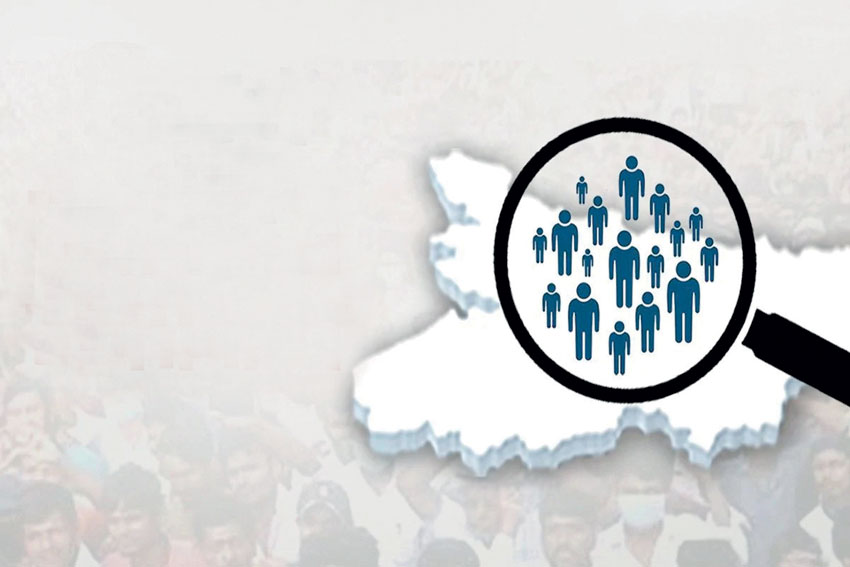
The Bihar government has recently conducted Caste Census and declared its findings on 2nd October, in which there are 27% backward classes and 36% extremely backward classes. Together, they constitute 63% OBCs, who have dominated Bihar Politics since the Mandal wave. Scheduled Castes account for 19%, Scheduled Tribes 1.7% and general 15.5%. This exercise is seen as having political undertones. The state’s coalition government comprising mainly OBC led Mandal era political parties and the BJP are believed to be on the opposite sides of the tussle. Nitish Kumar and Tejaswi Yadav, both spearheading caste-based parties might be its biggest beneficiaries. After the data from the survey, demand will be made to remove the cap on the quotas, according to which caste-based reservations are limited to 50% of the seats or jobs.
The perception is, the Samajwadi Party (SP) and the Rastriya Janta Dal (RJD) are led by and serve only dominant Yadavas. In Bahujan Samajwadi Party (BSP), the Jatavs have been the main beneficiary and Kurmis in Janta Dal United (JDU).
Interestingly, the BJP in Bihar has supported Nitish Kumar in carrying out the caste census but themselves not doing it at national level. It is also felt that the sensitive caste census data may ignite a fresh Mandal and Kamandal politics, as seen during the Mandal Commission Report implementation, across the country.
Bihar has been known for political activities. For instance, the movements by Mahatma Gandhi in Champaran and Jai Prakash Narayan (JP) during emergency. The contribution of the youth in civil services is also praiseworthy. Bihar has fertile land and is rich in minerals. Despite having such resources, the state is not developing and continues to be poor. The leaders talking of the welfare of poor are seen doing the welfare of their families only. On one hand the government does not have money to fill the existing vacancies, on the other hand it talks of reservation.
The Congress Working Committee (CWC) recently passed a resolution unanimously that a Congress led govt. will conduct a nationwide caste census and remove the cap of 50% on the reservation through legislation, calling it a “historic resolution”. Rahul Gandhi said caste census is a matter of ensuring justice and not politics and asserted that the Congress ruled states would conduct caste-based surveys similar to Bihar. Interestingly, this is a paradigm shift in the grand old party’s traditional view on caste enumeration. Jawaharlal Nehru, Indira Gandhi and Rajiv Gandhi did not support it. On the other hand, PM Modi says the poor people should have the first right over country’s resources as they form the biggest chunk of the population, which seems to be logical and progressive.
Now the big questions. How long will we continue to divide the society on caste lines and get votes? Can we ever have a casteless society this way? Politicians are attempting to play with the limited opportunities and resources available and giving priority to their families. Attempts should be made to develop the states to create more opportunities for the youth. There is an urgent need to have industries, good educational institutions and good health services in the state for the benefit of all. The need of the hour is not to do politics but make good developmental policies for all, above the caste line.˘

By Manoj Dubey
Principal (Retd.), Delhi Public Schools
(The content of this article reflects the views of writers and contributors, not necessarily those of the publisher and editor. All disputes are subject to the exclusive jurisdiction of competent courts and forums in Delhi/New Delhi only)




















Comments (1)
S
Cast base census may divide society , few political parties mayget vote benefits . Every poor person needs attention of the government , the views of author are to be appreciated