


The challenges of Indian Air Force, which it has faced since the past years, continue to remain. These include low squadron levels, a lack of modern frontline aircraft; concern about the two front threat; and an indigenous production capability that has disappointed. At the same time there have been some successes that can be built upon by the IAF if the government provides it in a timely manner with the resources it badly requires.
The Challenges
Indian air power continues to face a two front threat that is growing as both Pakistan and China are ramping up their air forces with new acquisitions. The Pakistan Air Force (PAF) has modernized its forces by procuring more than 150 JF-17, new J-10s, and is negotiating the purchase of fifth generation J-31 fighters from China or, possibly, Turkey (but even at the “friendship prices” China charges Pakistan it may be too expensive for Islamabad to procure these aircraft).
China is a different case. Its air force is rapidly modernizing as the legacy J-7 and J-8 fighters (the Chinese version of the MiG-21) have been replaced with substantial numbers of the J-10 (580 plus), J-11 (245 planes that are the Chinese version of the Su-27), J-16 (280), J-20 (210 aircraft that the People’s Liberation Army Air Force (PLAAF) claims are fifth generation fighters), and the Su-30 (97 in service). In effect, China has shifted its air force from a 1970s vintage fleet to a more modern and capable set of airplanes that have upped the ante for the IAF because they will be more difficult to deter.
Additionally, the Chinese have invested heavily in drone warfare building aircraft that are cheap, can be used tactically and in the Medium Altitude Long Endurance (MALE) and High Altitude Long Endurance (HALE) missions, and have the ability to carry precision guided ordnance. China has created a successful military drone industry having exported these systems to Iraq, Egypt, Saudi Arabia, Myanmar, and the United Arab Emirates among other countries. Also, there are reports that Russia has been building combat drones in China with the aid of Chinese specialists.
Along its Himalayan border, therefore, India faces a significant threat to its security and the old argument that Chinese aircraft taking off from Tibet will not have the range or be able to carry sufficient ordnance has been overtaken by events since the Chinese have built a fleet of aerial refueling aircraft. They have also strengthened the air defenses in the region and have expanded their missile forces which are precision guided and can strike deeper into Indian territory. Taking timely measures to counter the growing two-front threat, therefore, is of paramount importance to the IAF which is the only force that has the capability to strike deep into Pakistani and Chinese territory. The IAF has been promised 42 squadrons but now the force is down to 30 squadrons and the country is taking faltering steps to modernize the force structure of the air force.
Constraints
There are several constraints that have made it difficult for the IAF to build up its force structure and technological competence to meet the new challenges it faces in the air power domain. First, like all democracies India remains committed to preferring butter over guns. In other words, the government will always emphasize and fund human welfare projects over the building of a military capability. Thus, the last five governments, two Manmohan Singh and three Narendra Modi administrations, have kept defense expenditure at around 2% of GDP since there are more pressing developmental expenditures that needs to be taken care of. Unlike in the American case, where the pensions and healthcare of veterans come from a separate budgetary allotment, in India these expenses come out of the defense budget. This trend will not change in the short to medium term unless there is a catastrophic occurrence like the outbreak of a major war.
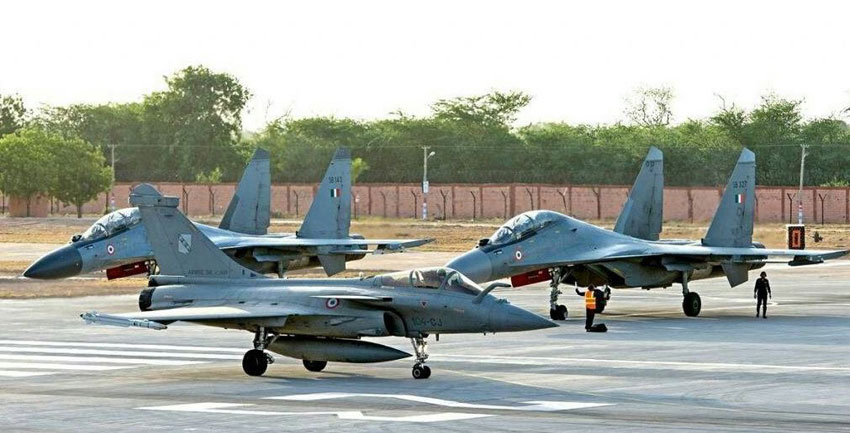
Secondly, India continues to have a cumbersome, slow, and complicated weapons acquisition process that makes it difficult and time-consuming to procure weapons from foreign suppliers. It took nearly fifteen years to negotiate the Rafale deal and the air forces’ requirement of 126 planes was cut to 36 because of the high cost of domestic production. The Air Force’s requirement of a Multi-Role Fighter Aircraft was first made in 2019 but has gone nowhere. Now the Indian media reports that a Request for Proposal will be made in 2025 and followed by a decision in 2026. Given past trends, the government is unlikely to hold to the reported schedule and even if it does, selection will be followed by lengthy price and technology transfer negotiations. Thus, the first plane is not likely to reach Indian shores till 2030 and not reach squadron strength for a few years after that. In the meantime, both China and Pakistan will continue to modernize and increase their forces levels.
Thirdly, India’s record of indigenous product is a disappointing one. The Tejas program, which should have provided over a hundred aircraft to the IAF by now has so far manufactured only thirty odd aircraft which barely covers two squadrons. In the same period, the PAF has received over 150 JF-17 Thunder fighters. Neither the JF-17 nor Tejas are comparable to the Rafale, Gripen, Typhoon, or F-15 that India has listed in its MRFA competition for 114 aircraft but, as the Soviets used to argue, quantity has its own quality. Two hundred to three hundred Tejas would allow the IAF to come near the stated goal of 42 squadrons with a high-low mix of aircraft. A high-low mix is one where there are a fewer number of expensive high performance combat aircraft that can be used to carry out initial strikes and weaken the enemy’s defenses. What follows is the use of cheaper, less capable aircraft to inflict continuous damage along the battlefield while the high value aircraft are kept for more specialized and difficult missions. Also, there are fronts which are less critical but ones where India still needs air power. It is not coincidental that the first Tejas squadron was based in Tamil Nadu leading wags to humorously, although somewhat unfairly, state that they were defending India from Sri Lanka. But, if lower capability aircraft are kept in less problematic theaters it free up the frontline aircraft to be used in high-threat environments.
The last constraint that the IAF faces in the nature of Hindustan Aeronautics Limited (HAL) particularly its ambitions and its record of not delivering the requisite aircraft in a timely fashion. HAL, has not brought the Tejas project to fruition since the IAF has yet to receive a Mk1.a aircraft and it will take some time to get enough aircraft to field a number of squadrons. In part this is due to the US company General Electric’s inability to deliver engines according to schedule but this brings out a more serious problem for HAL. If the delivery of engines is tardy, it means HAL and the IAF are at the mercy of foreign suppliers and their problematic supply chains. This leads to unacceptable delays in force building for the air force.
Further, if the Mk1.a project remains delayed it is not clear how far back the Tejas Mk.2 project will be pushed since it means fitting a new engine, the F-414, to the airframe and to allow for a modernization of the aircraft itself by incorporating new avionics and sensors. Depending on an undependable domestic supplier means the air force’s force building plans will be significantly delayed.
Added to this is are the travails of the indigenously designed Kaveri engine which has been in development for over forty years and has yet to produce an operational powerplant for the aircraft. Now there are reports that India will work with the French firm Safran to jointly develop a new aircraft engine. Again, one should not hold one’s breath on how long it will take to initiate this project or whether a workable engine will ever be produced. In the meantime, the IAF’s quest for a total force and its attempts to operationalize its doctrine will suffer.
Thirdly, India is not preparing for the rapidly shifting air combat environment particularly the employment of drones. The Chinese have developed operational doctrines for their HALE and MALE drones and the Pakistanis are quite likely to seek to import some from Chinese manufacturers since they are cheap to manufacture and the cost of countering them, as Ukraine, the US, and Israel have found out is very expensive. India’s indigenous drone, Rustom/Tapas, has run into production delays and the craft itself is considered too heavy, prone to crashing, and has difficulty in carrying weapons and sensors.
Fourthly, the IAF’s doctrine talks about the force being an aerospace power but with one dedicated satellite a more accurate assessment would be that it has a limited space capability. At the same time, China is building up its space capability primarily to counter the United States. One does not know, however, how much intelligence and satellite imagery is transferred by the Chinese to Pakistan but this should cause concern to the Indian military.
Fifthly, as part of its Atmanirbhar plan, India seeks technology transfers from the west but these come with their own set of problems. Tech transfers are expensive since they require setting up the infrastructure for domestic manufacture and training personnel to carry out production. The other issue is that supplier nations limit the amount of technology that they are willing to transfer as India has found in the case of the F-414 engine where the supplier is willing to transfer 80% of the technology while retaining proprietary rights over the critical components of the engine.
The most contentious issue with domestic production is that the foreign supplier retains control over where and to whom the manufactured systems are sold. For those seeking to build the F-16 in India it is worth remembering that Lockheed can ship Indian made spare parts to any country in the world without getting India’s permission and that includes Pakistan. While these constraints have to be addressed, however, the IAF has made several purchases that have improved the quality and lethality of the force.
Successes
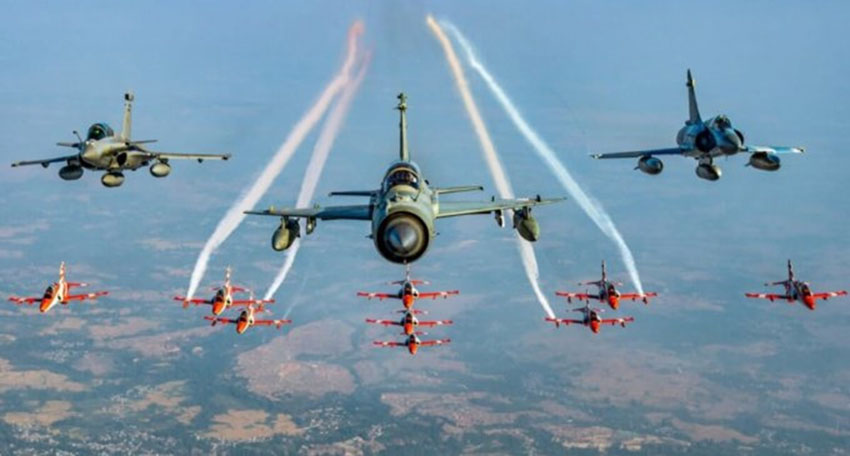
The IAF has had three major successes in the past few years: it was able to get a modern combat aircraft, the Rafale, along with a more capable missile in the Meteor; the S-400 anti-missile system which strengthens Indian air defenses; and the purchase of long and medium range transport aircraft. Each of these systems has increased the capabilities of the air force and given the Indian government more options in the employment of air power.
The Rafale addressed a growing gap with the capabilities of the PLAAF and the French continue to invest in the modernization of the aircraft which India should take advantage of. The plane will get upgrades since the next generation of fighter to come out of France will be the sixth generation fighter which is not likely to enter service before 2040. Furthe, if more squadrons are procured, and given that the Navy will be buying the maritime Rafale, this will give an economy of scale on the purchase of spare parts and the maintenance of the aircraft fleet.
The effective use of missiles by both Ukraine and Russia have shown that any modern air defense must have anti-missile batteries in sufficient numbers and the S-400 provides India with that capability. Its combat effective has been proven in the Ukraine War and the Iranians may have some batteries to use in a future conflict. If paired with an indigenous developed Akash missile it would significantly enhance India’s air defense capabilities.
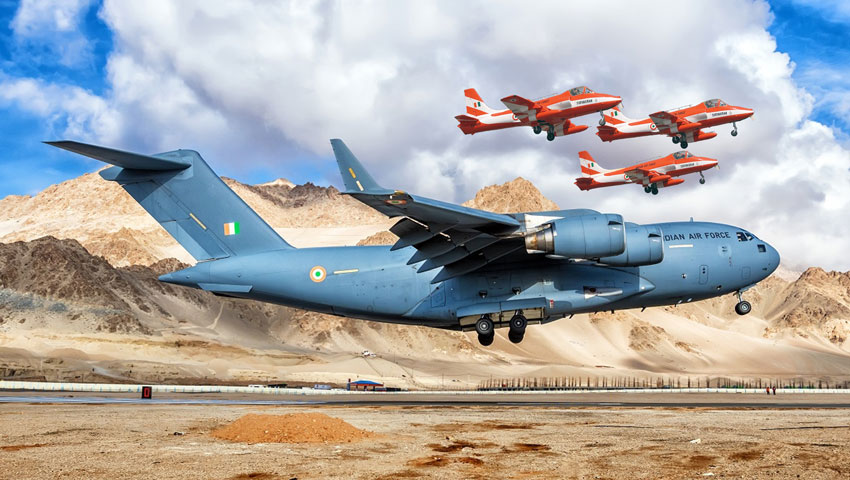
The acquisition of transports—the long range heavy lift C-17 and the medium range Airbus C-295 and C-130 Hercules—have provided an airlift capability that allows India to participate in humanitarian missions in fairly distant parts of the world. While the Indian government does not favor expeditionary missions it is happy with the idea of using the IAF to help other countries facing severe humanitarian crises. This builds up India’s image while not allowing it to be sucked into a conflict in a faraway nation.
While such acquisitions have made the IAF a more effective fighting force several things need to be done fairly quickly to give the Air Force the weaponry it requires to face the two-front challenge.
Immediate Recommendations
First and foremost, the government needs to expedite the purchase of 114 combat aircraft under the Multi-Role Fighter Aircraft purchase. This should not be a difficult decision to take since all the aircraft in contention, with the exception of the F-15, were evaluated by the IAF before deciding on the Rafale. It makes sense, therefore, to sign an accelerated purchase of 114 Rafales for the Air Force. The IAF is happy with the performance of the plane and when one combines the Air Force and Navy purchases India would have a fleet of 176 aircraft making it the largest user of the aircraft in the world. The economy of scale aspect has already been discussed but the other factor in favor of the Rafale is that the French allow India to use the plane to carry strategic weaponry (something that some of the other suppliers are hesitant to do). IAF pilots and maintenance crews are now familiar with the aircraft so it makes little sense to buy yet another type of aircraft which would take a few years to fully integrate into the force structure.
The big question here, however, is whether India is willing to float the bill for the domestic manufacture of the aircraft since it would see costs balloon because of the need to set up infrastructure, purchase expensive machine tools, and to train the workforce to reach French standards. When the initial Rafale deal was done, HAL estimated that it would take three million man hours to complete the domestic production of 118 airplanes while the French said their estimate was a million man hours. The government, therefore, has to be cautious before entering into a domestic production agreement since it should not become one where HAL or a private company cannot meet delivery schedules.
The other major requirement is for the government to hold HAL’s feet to the fire and get it to deliver planes in the annual numbers it has promised the IAF, especially in the case of the Tejas. The Tejas program has been hit by design, development, and production delays that have led the aircraft to become a 40-year project with the Mk.1 version of the aircraft, which is underpowered and without a first-rate radar, finally entering service in small numbers. The recent delay over the supply of GE F-404 engines has caused a bigger backlog of aircraft. As a consequence, the IAF will have to wait a long time to get the required 123 Tejas it expects to induct into service. The IAF has shown faith in the project by ordering an additional 97 aircraft from HAL but if deadlines are not met it will just compound the shortages of aircraft entering into squadron service.
It should also be acknowledged that the plane as it exists does not meet the performance level that the IAF requires. The IAF, however, will also have to meet HAL half-way in terms of what the aircraft company delivers to it. The IAF, instead of looking for the perfect plane, should accept what HAL is producing and seek improvements in the subsequent models (so by the time the Mk 2 is in service the IAF will have the plane it really wants). As the Russians point out, quantity has its own quality and 200 odd Tejas, even of lesser quality, add to the country’s force structure and make the enemy face a greater number of aircraft. Most countries in the world today have a high-low mix of aircraft and the IAF should also go in that direction.
HAL is also lobbying to develop a new supersonic trainer, the HLFT-42. Since the Tejas is already under production and there is a two-seat version of the aircraft, there is no need for HAL to waste time and valuable resources on making yet another aircraft in the form of the HLFT-42 trainer. The plane adds little to the technological capabilities of HAL because it is not a fifth-generation aircraft but a trainer that is meant to teach recruits. Instead, it makes sense to make the Tejas into an attack trainer. The plane can fly at supersonic speeds, it has a weapons payload for training, and can carry out aerobatics. Further, a trainer version does not need an expensive radar or the avionics that are required for air combat. Moreover, HAL has sunk costs in the infrastructure, trained personnel, and machine tools needed to build the Tejas so there would be an efficiency of scale in making a trainer version of the plane. Another bonus would be to take older Mark 1 Tejas and put them into the trainer mission once newer models become available.
The Drone Imperative
Modern warfare has been revolutionized by the use of drones as Turkish and Iranian drones that have shown their worth in the battlefields of Ukraine. In the future all three services, therefore, will require HALE and MALE drones as will the Coast Guard, and the BSF. This means the development of a common drone acquisition policy, talk of which is already there between the services. A common policy could lead to the manufacture of a over 500 drones across the three services, the Coast Guard, and BSF allowing them to be used for surveillance, intelligence gathering, reconnaissance, and in the case of the ones with the military they could also be used to carry out tactical air strikes.
The problem for the military is that the domestic drone program has not delivered an effective aircraft so the answer lies in collaborating with friendly nations like Brazil and South Africa which have their own need for a drone and this would lead to producing an even larger number of aircraft. This would lead to economies of scale and open the door for exports as well since globally nations are looking for drones that are cheaper than those made in the United States or in the West.
Space and Missiles
The use of missiles both in Ukraine and in the Israeli wars with Hezbollah and Iran show that these weapons can get through the best of air defenses to hit their targets. With this in mind, the IAF should work with DRDO and the private sector to acquire more surface to surface and surface to air missiles that fit into its battle plans. This is where the India-Russia military link becomes important since India should seek joint production of a hypersonic missile for the IAF. Right now, there is the push to build the Brahmos-2 as a hypersonic system but this may take years to develop. Instead, jointly producing one of the new series of Russian missiles may serve India’s immediate interests.
Lastly, the IAF’s doctrine talks about the importance of a space force in its future planning:
“The near space and space applications towards national security include Intelligence, Surveillance and Reconnaissance; transit of military vehicles, weapon passage and guidance; secure military data links and communication; tracking and interception of weapons utilising the medium of space. Space based assets are the new centres of gravity due to their expanding operational capabilities and capacities but they are also vulnerable to targeting. The increasing usage of the continuum between atmosphere and space by ballistic missiles, long range vectors, hypersonic glide vehicles, high altitude pseudo satellites etc. pose a greater challenge to air defence.”
Building a space based force therefore is a priority for the IAF since much of the war of the future will require direction by space based assets. This means having a number of dedicated military satellites, rather than the sole satellite the IAF currently has, to make Indian weapons more accurate, to carry-out a true netcentric war, and have redundancy in case Indian satellites are rendered inoperable by anti-satellite systems.
Air power is crucial for the success of modern warfare and the IAF has laid out its needs quite clearly as well as pointed out the urgency in meeting them. Most of the choices discussed above do not impose a heavy financial burden on the country and not pursuing them in a timely fashion will put the Air Force at a disadvantage in a rapidly changing modern combat environment.
By Amit Gupta
( The writer is a Senior Fellow of the National Institute of Deterrence Studies, USA. The views in this article are personal. )
(The content of this article reflects the views of writers and contributors, not necessarily those of the publisher and editor. All disputes are subject to the exclusive jurisdiction of competent courts and forums in Delhi/New Delhi only)














Leave Your Comment