


By Prof Srinivas Subbarao Pasumarti
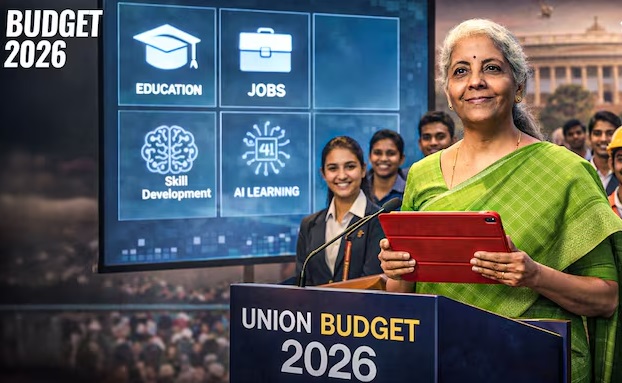
Arguing that the 2026-27 Union Budget is a Yuva Shakti-based Budget, the finance minister stated that it is based on three kartavyas: accelerating growth, capacity building, and inclusive participation in India's journey towards Viksit Bharat. The speech has highlighted structural changes, technology-based governance, and long-term state investment as components of the economic policy.
This framing is critical to India's startup ecosystem, which is currently the third-largest in the world. Startups are not just passive takers of growth; they are also productive, innovative, job-creating, and global competitors. The ultimate litmus test of Budget 2026, however, is the degree to which these lofty goals are translated into institutional support for startups throughout their lifecycle.
The Startup Moment in India--and the Policy Expectations.
There are now more than 1.8 lakh recognised startups in India, over 120 unicorns, and rising activity across fintech, health-tech, enterprise SaaS, climate-tech, defence-tech, space-tech, and legal-tech.
The policy narrative has helped support this increase, as have Startup India, the ease of doing business, and the growth of domestic and international venture capital. With the ecosystem's age, however, expectations of the Union Budget have changed — symbolic encouragement has given way to structural, lifecycle-sensitive support.
The Signals: Budget 2026 in line with Startup Growth.
Budget 2026 includes several macro and sectoral signals that are favourable to startups.
First, the government has reiterated its focus on state-led growth through capital spending, which is expected to increase to 12.2 lakh crore in FY 2026-27, up from 11.2 lakh crore last year. Sustained capex can improve infrastructure, logistics, network connectivity, and urban ecosystem-enabling provisions that can be critical to the growth of startups, particularly in Tier-II and Tier-III cities, although not specific to startups.
Second, the Budget has a strong focus on technology and frontier areas, such as AI, semiconductors, biopharma, electronics, clean energy, and carbon capture, which offer indisputable, yet indirect, opportunities for startups. India Semiconductor Mission 2.0, Biopharma SHAKTI with an outlay of 10,000 crore, and increased electronics manufacturing support are among the initiatives that signal the desire to integrate innovation into robust production systems in India.
Third, the creation of a 10,000 crore SME Growth Fund and the topping up of the Self-Reliant India Fund are indicators of the intention to develop so-called Champion SMEs. For growth-stage startups converting to SMEs, this may facilitate easier access to non-dilutive capital and minimize overreliance on venture capital.
Combined, these actions can reinforce the government's bias towards scale, manufacturing depth, and macro stability, which are key pillars of a thriving startup ecosystem.
The Silences: What the Budget fails to deal with.
Based on these indicators, Budget 2026 shows some striking gaps as a startup.
The former is associated with startups at the first and seed level. Even though there is a focus on growth funds and credit mechanisms, there is no focus on risk capital for idea-stage and campus startups of enterprises not located in large metropolitan agglomerations. To date, the geographical concentration of an Indian startup success story is still significant, and Budget 2026 does not decentralize innovation
Secondly, the Budget is not much concerned with simplifying regulations for start-ups. The finance minister pointed out more than 350 reforms aimed at easing compliance costs, such as GST simplification and labour code notifications. However, new companies with lean teams, unstable income streams, and high failure rates remain subject to compliance regimes designed for established, stable companies. And the lack of the Startup Compliance Framework is an untapped opportunity.
Third, no special attention is given to ESOP taxation and talent incentives. In the context of startups competing worldwide in the professional services market, ESOPs may be the primary wealth-creation tool. This area faces policy uncertainty that undermines India's ability to retain and attract good talent.
Strategic Gaps: Forging Budgetary Announcements.
Below, Budget 2026 reveals strategic gaps in the policy framework for startups in India.
An example of such a gap is the exit ecosystem. The survival of startups requires entry-level funding, an exit level via IPOs, mergers, and acquisitions, and a secondary market. Though India has seen a modest recovery in the number of startup listings, Budget 2026 offers little in the way of institutional reforms to deepen exit routes or accelerate capital recycling.
The other gap is in ESG and climate-tech funding. The Budget proposes a massive expenditure of 20,000 crore on Carbon Capture, Utilisation and Storage (CCUS) over the next five years. Nevertheless, blended finance models involving public capital, private investment, and risk guarantees that startups in climate adaptation, clean technologies, and sustainability solutions may need remain an area where clear, startup-oriented mechanisms have yet to be put in place.
To sum up, though education-to-employment correlations are already presented in the Budget and university townships, and skilling programs are suggested, universities are not wholly integrated as a startup creation center. More advanced incentives on university-backed seed funds, IP commercialisation, and access to procurement would have greatly increased the innovation pipeline in India.
From Signals to Systems
Budget 2026 points to continuity, confidence, and macro prudence. It confirms India as a technology-based, globally accessible economy, well-founded on government investments and structural reforms. When it comes to start-ups, the policy signal-to-operational reality translation process is not fully realized.
To make startups the long-term growth drivers of India, future Budgets should not repeat the general sectoral push to establish institutional frameworks that promote startups from idea to scale till exit. That change, between glorifying entrepreneurship and systematically empowering it, will eventually make the difference between whether the stories of startup success in India will be the rule rather than the exception.
(The writer is an award winning professor of Management, currently the Head of Management School at NALSAR University of Law, Hyderabad.)



















Leave Your Comment