


Budget Day is an eagerly awaited event in India, with both businesses and general public waiting with bated breath to understand the schemes and initiatives that could potentially benefit them. This year, due to elections, budget 2024-25 has been presented later than usual, i.e. Feb 1. The Union Finance Minister (FM) Nirmala Sitharaman on 23rd July presented her 7th consecutive budget and the first one by the BJP led NDA government of the third term. The budget reflected the changed political landscape with the BJP no longer enjoying a sole majority in the Lok Sabha. She laid down nine priorities of the budget with the focus on four major castes- Annadata (Farmers), Garib (Poor), Yuva (Youth) and Mahilayen (Women) with the theme based on employment, skilling, MSMEs and middle class.
Productivity and resilience in agriculture

She announced initiation of farmers into natural farming involving one crore farmers across the country, achieving self-sufficiency in pulses and oilseeds, 109 new high-yielding and climate resilient varieties of 32 field and horticulture crops will be released for cultivation by farmers. Financing of Shrimp farming processing and export will be facilitated through NABARD. Digital Public Infrastructure (DPI) will cover farmers and their lands in three years and a digital crop survey in 400 districts will be conducted.
Employment and Skilling

She announced three new employment linked schemes, providing internship opportunities in 500 top companies to one crore youth in five years with an allowance of Rs 5000 per month along with one time assistance of Rs 6000 through CSR funds. Government will reimburse EPFO contributions of employees and employers up to Rs 3000 per month for first four years, expected to benefit 30 lakh youth. In a support to employers, govt will reimburse EPFO contributions for employers up to Rs 3000 per month for two years for all new hires. Over 20 lakh youth will be skilled in next five years, and 1000 industrial training institutions will be upgraded. The students who have not been benefitted from any govt. scheme will get education loan up to Rs 10 lakh at 3% interest.
Inclusive Human Resource Development and Social Justice

Plan for endowment of rich states in eastern parts covering Bihar, Jharkhand, West Bengal, Odisha and Andhra Pradesh titled ‘Purvodaya’ is being proposed for the generation of economic opportunities. Bihar alone will receive about Rs 56,000 crores for roads, airports, medical colleges, sports facilities etc. Under the Andhra Pradesh Reorganization Act, funds of Rs 15,000 crore will be provided to support basic infrastructure. These two major allies JDU and TDP have been suitably rewarded for their support to the government. A sum of Rs 3 lakh crore has been allocated for schemes benefiting girls and women. Over 100 branches of Indian Post Payment Bank will be setup in North East region.
Manufacturing and Services
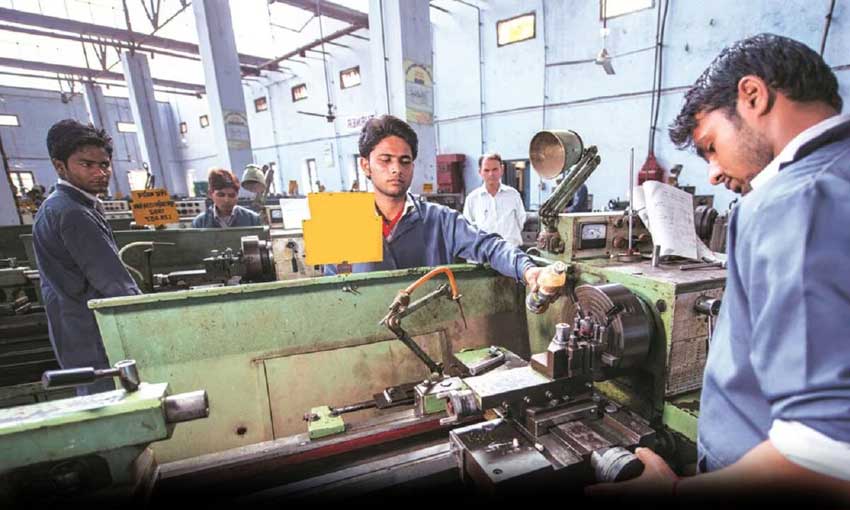
The Mudra loan limit has been enhanced to Rs 20 lakh from current Rs 10 lakh. The credit support to MSMEs during stress period is promised along with credit guarantee scheme in the manufacturing sectors. 12 industrial parks under the National Industrial Corridor Development Programme will be setup.
Urban Development

States have been encouraged to lower stamp duty on property purchased by women. Scheme has been announced to develop 100 weekly haats for street food hubs in select cities to encourage street markets. A programme to promote water management including sewage treatment and solid waste management projects for 100 large cities has also been announced. The construction of houses under PM aawas yojana will continue.
Infrastructure
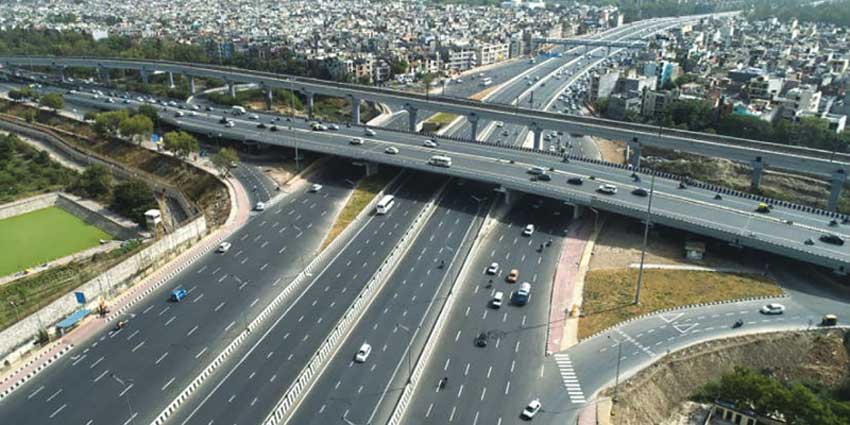
Provision of Rs 11.11 lakh crore (3.4% of GDP) for infrastructure along with Rs 1.5 lakh crore to states as long-term interest free loans to support resource allocation has been made.
Irrigation and flood mitigation
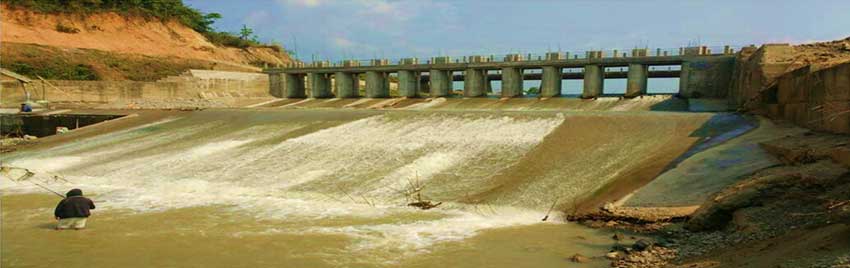
Financial support for the flood management and related projects in Bihar, Assam, Sikkim, Uttarakhand and Himachal Pradesh will be provided.
Energy Security

Setting up of Bharat small modular reactor and newer technology for nuclear energy have been announced. A joint venture between NTPC and BHEL will be setup for a full scale 800 MW commercial plant, and financial support for shifting of micro and small industries to cleaner form of energy. Over one crore households will obtain free electricity under PM Surya Ghar Muft Bijli Yojana.
Innovation, Research and Development

Anusandhan National Research Fund for basic research and prototype development will be operationalized. Private sector driven research and innovation with the financial support of Rs one lakh crore and a venture capital fund for Rs 1000 crore will be set up.
Touris
Comprehensive development of Vishnupad temple corridor and Mahabodhi temple modelled on Kashi Vishwanath temple corridor, development of Rajgir, a religious place for Hindus, Buddhists and Jains, development of Nalanda as tourist centre besides reviving its glorious university stature. The scenic beauty of Odisha, temples, monuments, wildlife and beaches to be improved to attract tourists.
Standard deduction for salaried class has been hiked from current Rs 50,000 to Rs 75,000 and with minor changes in the tax slabs. The highest tax slab for salaried person is 30% whereas in corporates it is 25%, this needs to be reconsidered. The hike in the tax in STCG and LTCG, albeit minutely, has not been well received by investors in the share market. During farmers agitation, the government promised to purchase pulses, maize and cotton crops, without quantity limitations, at MSP. This was the high time for the government to announce it in this budget to satisfy the farmers to some extent. The customs duty on gold has been reduced from 15% to 6%, which would lead to lower input cost, cut down smuggling, stimulate domestic manufacturing and boost exports. The total expected revenue will be Rs 31.3 lakh crore against the projected expenditure of Rs 48.2 lakh crore, the fiscal deficit is 4.9% of the GDP. The controlled fiscal deficit reflects healthy economy of the country.
The input cost of agriculture needs to be reduced, the equipments required by the farmers must be made free from all taxes. The country needs one more green revolution. The government’s efforts in positioning India as a global tourist destination will create jobs, stimulate investment, and unlock opportunities in other sectors. The specific actions and reforms will help realize the goal of Viksit Bharat. Overall this is a good budget focusing on the key requirements of the country.
(The content of this article reflects the views of writers and contributors, not necessarily those of the publisher and editor. All disputes are subject to the exclusive jurisdiction of competent courts and forums in Delhi/New Delhi only)
By Manoj Dubey














Leave Your Comment