


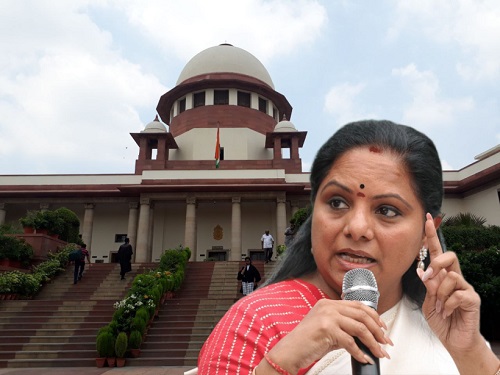
BRS leader K Kavitha finds herself embroiled in legal turmoil as the Supreme Court denied her relief in the Delhi liquor policy case, instructing her to seek recourse through the trial court. This decision marks a significant turn in the ongoing saga, reflecting the judiciary's stance on uniformity and equitable access to legal processes.
The Supreme Court's special bench, comprising Justices Sanjiv Khanna, MM Sundresh, and Bela Trivedi, emphasized the importance of adhering to a uniform policy, stating that individuals, regardless of their political stature or financial means, cannot bypass lower courts to directly approach the apex court for bail.
In response to Kavitha's plea, the court directed her to file a bail petition in the trial court promptly. This directive underscores the judiciary's commitment to due process and fair trial, ensuring that legal matters are addressed through appropriate channels.
The court's decision also drew attention to the provisions of the money laundering law invoked in Kavitha's arrest, highlighting the gravity of the allegations against her. As the legal proceedings unfold, the Enforcement Directorate's role in investigating the case will undoubtedly be scrutinized.
K Kavitha, the daughter of former Telangana Chief Minister K Chandrashekhar Rao (KCR), was arrested from her Hyderabad residence and transported to Delhi, where she has been in ED custody. With her custody ending soon, the legal battle ahead remains uncertain.
Kavitha's predicament is not isolated, as it comes amidst a broader crackdown on political figures implicated in the Delhi excise policy controversy. The arrest of Delhi Chief Minister Arvind Kejriwal, along with other Aam Aadmi Party leaders, underscores the widespread implications of the case.
According to the allegations put forth by the Enforcement Directorate, Kavitha and others purportedly conspired with top AAP leaders to manipulate the Delhi excise policy for personal gain. The agency claims that in exchange for favors, Kavitha was involved in facilitating substantial monetary transactions.
The unfolding legal proceedings against K Kavitha serve as a stark reminder of the accountability that public officials and political leaders must uphold. As the case progresses through the judicial system, the spotlight on transparency, integrity, and ethical governance intensifies.
In conclusion, the Supreme Court's decision denying relief to K Kavitha underscores the principles of judicial impartiality and adherence to due process. As the legal battle ensues, it remains imperative to uphold the integrity of institutions and ensure that justice is served impartially and equitably.




















Leave Your Comment