


Prime Minister Narendra Modi has clearly declared his intent towards making India a net exporter of defence products over the next three years. PM Modi’s strategic vision aims for India to emerge as the third-largest economy globally and as a first-rung global military power during his ongoing third term. Setting up of a robust and ultramodern defence industrial base in the country with the help of the domestic private sector will play a very crucial role in realising the Prime Minister’s dream of a ‘Viksit Bharat’ (developed India) over the coming years. The ongoing tariff war with the United States, and the success of Operation Sindoor aided by cutting edge indigenous defence products like drones and air defence systems, have further acted as catalysts towards achieving Atmanirbharta in swadeshi weapons production by cutting down on imports and encouraging manufacturing by private domestic players.
Boosting defence exports
Previously, India was known as an arms importer. However, the country has now risen from its comfort zone, securing a place among the top 25 arms-exporting nations. Just 7-8 years ago, defence exports barely touched Rs 1000 crore. Today, they have surged to Rs 38,424 crore as per the official figures of Financial Year- 2025-26. Moreover, India’s annual defence production in the Financial Year- 2025-26 is almost touching Rs. 1,75,000 crore and projections suggest that by 2028-29, annual defence production will reach Rs 300,000 crore, with annual defence exports hitting Rs 50,000 crore. The private sector has played a very critical role in achieving this objective.
While the government supports major corporations, it also encourages young minds to join the defence sector through startups, considering it a crucial step for the long term. Recent measures, including liberalising procurement from startups, payment terms, and eligibility criteria, were adopted during a Defence Acquisition Council meeting. The Department of Defence Production issues authorisations for exporting Munitions List items covered in Category-6 of Special Chemicals, Organisms, Materials, Equipment, and Technologies (SCOMET), following Standard Operating Procedures (SOP) issued by the DDP. Major defence equipment exported in the last six years includes weapon simulators, tear gas launchers, torpedo loading mechanisms, alarm monitoring and control systems, night vision monoculars and binoculars, lightweight torpedoes, fire control systems, armoured protection vehicles, weapons locating radar, high-frequency radios, and coastal surveillance radar systems, among others.
But with countries like Vietnam, the Philippines, and Armenia seeking cutting-edge Indian-manufactured weapons such as the BrahMos supersonic cruise missiles, Pinaka multiple rocket launchers, Akash anti-aircraft missiles, and Tejas fighter aircraft, exports are expected to skyrocket in the next three years. Exports of critical and advanced aerospace and defence platforms will not only generate revenues but will also shape India’s geopolitical strategy in the Asia-Pacific region and beyond. This leaves a golden opportunity for the Indian private sector to participate and earn lucrative revenues from the process.
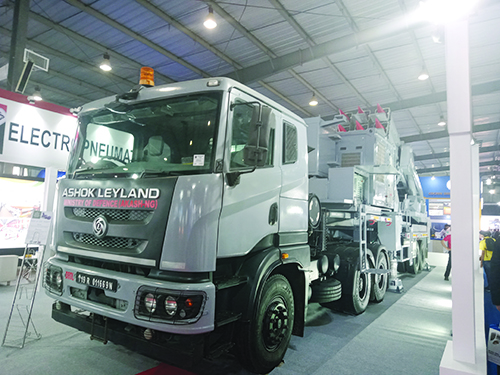
Akash-NG missile launcher developed by Electropneumatics and Hydraulics India
Increasing defence budget
In the Financial Year- 2025-26, in principle approval was granted for capital acquisitions worth over Rs 2,19,000 crore for defence modernisation, out of which 75 percent (Rs. 1,39,000 crore) is reserved for the domestic industry. The Ministry of Defence received an allocation of Rs 7.85 lakh crore in the Union Budget 2025-26, the second highest among all ministries. Allocation for research and development (R&D) to the Defence Research and Development Organisation (DRDO) reached a staggering Rs. 29,100.25 crore. The DRDO is already well-known for outsourcing R&D, designing and manufacturing from Indian private corporations. Given the two-front threat from Pakistan and China, and an unpredictable USA, a significant increase in capital expenditure in the defence budget is anticipated over the next three years.
Focus on Atmanirbharta
Many high-value indigenous strategic projects have been ongoing since the turn of the millennium. They remained pending due to the union government’s reluctance to boost capital expenditures for military modernisation in the annual budgets. The government is now shifting focus from Make in India towards self-reliance or Atmanirbharta, realising the need for robust supporting policies. The groundwork for this shift began with the creation of the post of Chief of Defence Staff and the establishment of the Department of Military Affairs (DMA), enhancing jointness, synergy, and coordination among the three services. The DMA is also responsible for creating positive lists for indigenisation, specifying products and weapon systems that cannot be imported in the future.
Indigenisation initiatives
In the major steps taken in the field of defence manufacturing, the Ministry of Defence has notified five positive indigenisation lists for the services, comprising 509 items, and five other lists with 5012 items for DPSUs, to ensure that soldiers use weapons and platforms made in India. The decision to earmark 75 percent of the capital acquisition budget for procurement from local companies is leading towards the foundation of a robust defence industrial ecosystem in the country. By taking initiatives like setting up defence industrial corridors in Uttar Pradesh and Tamil Nadu, the government is ensuring that modern military hardware is not only manufactured in India but also exported to friendly countries. Now is the time for the Indian private sector to tap this vast potential by investing more of R&D and scaling up the full-scale manufacturing of aerospace and defence products in India.
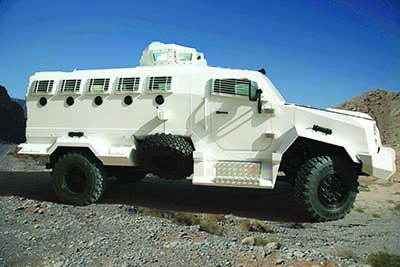
Indigenously developed MEVA Straton Plus light armoured personnel carrier
How things are stacking up
In recent years, the Indian private sector has transitioned from a supporting role to a core driver of national defence production, accounting for 23 percent of the total annual production value in Financial Year- 2024-25. Private companies contributed Rs. 33,979 crores to India's total defence production of Rs. 1,50,590 crores in Financial Year-2024-25. While the overall defence production grew by 18 percent, private sector output surged by 28 percent year-on-year in Financial Year- 2024-25. Private firms are leading India's defence exports, contributing roughly 60-64 percent of the total export value, which reached Rs. 23,622 crores in Financial Year- 2024-25.
MSME and startups
Through the iDEX (Innovations for Defence Excellence) initiative, over 600 Indian startups and MSMEs are developing cutting-edge technologies like AI, drones, and quantum systems. Approximately 16,000 MSMEs now form the backbone of the domestic supply chain, reducing reliance on foreign components. Private firms are in the process of teaming up as strategic partners with global Original Equipment Manufacturers (OEMs) to facilitate technology transfer and domestic manufacturing of complex platforms like fighter jets and submarines.
Aerospace: breaking the glass ceiling
Historically, the aerospace sector was the exclusive domain of Hindustan Aeronautics Limited (HAL). Today, private giants are building entire airframes and complex avionics suites.
The Tata-Airbus C-295 Project: Perhaps the most significant milestone in Indian private defence is the Tata Advanced Systems (TASL) partnership with Airbus. In a sprawling facility in Vadodara, TASL is manufacturing 40 C-295 transport aircraft. This is the first time a private Indian company is producing a complete military aircraft. This project isn't just about assembly; it involves the creation of an entire ecosystem of over 125 MSMEs (Micro, Small, and Medium Enterprises) supplying parts, thereby modernising the national aerospace supply chain.
 weapon indigenously developed by Advanced Weapons and Equipment India Ltd.jpg)
JVPC carbine developed by KSSL, DRDO and AWEIL
Global supply chain integration
Indian firms are now single-source suppliers for global giants.
• Tata Boeing Aerospace (TBAL) in Hyderabad is the sole manufacturer of fuselages for the AH-64 Apache attack helicopter globally.
• Tata Lockheed Martin produces all empennages (tail assemblies) for the C-130J Super Hercules aircraft.
This integration ensures that Indian manufacturing meets the highest global precision standards, which are then applied to domestic modernisation projects.
Artillery and land systems
If aerospace represents the high-tech peak, artillery represents the muscle of modernisation. Private companies have fundamentally changed the Indian Army’s fire-power profile.
The ATAGS revolution: The Advanced Towed Artillery Gun System (ATAGS) is a 155mm/52 caliber howitzer co-developed by DRDO with Bharat Forge (Kalyani Group) and TASL. The ATAGS has outperformed international competitors in range and mobility, reaching targets over 48 km away. This marks the transition from licensed production to indigenous design and manufacturing of heavy artillery.
K9 Vajra-T: Larsen & Toubro (L&T) successfully delivered 100 K9 Vajra-T self-propelled howitzers to the Indian Army, completing the order ahead of schedule. The Vajra, based on South Korean technology but with over 50 percent indigenous content, has been a game-changer for high-altitude deployment in Ladakh, proving that private sector efficiency can drastically reduce the induction-to-deployment timeline.
Protected mobility: In the realm of armoured vehicles, the Wheeled Armoured Platform (WhAP), developed by TASL, and the M4 armoured vehicle by Bharat Forge have provided the Indian Army with rapid-response capabilities. These vehicles are now being exported to countries like Morocco, showcasing that Indian private products are now globally competitive.
Anti-drone Indrajaal system: Grene Robotics has developed Indrajaal- the world's only autonomous wide area anti-drone/ counter-unmanned aircraft system. It stitches 12 proprietary technologies, which can be used in combinations with each other depending on the need. Indrajaal’s hive-like network is modular, and repeatable over areas up to 4000 sq km. It counters all sizes of drones, from nano to large; and all levels of autonomous drones and is capable of protecting military installations, critical industries, moving targets like convoys and large areas like the border. Indrajaal uses AI (Artificial Intelligence) to analyse threats, and suggest mitigative actions.
Sophisticated small arms: SSS Defence is a Bengaluru-based Indian private defence company specialising in the design and manufacture of high-end small arms, ammunition, and weapon accessories. It has developed a range of indigenous weapon systems that focus on modularity, ergonomics and reliability. It manufactures assault rifles like the P72-series, M72 (Manohar) and Raptor; battle and marksman rifles like the T72; along with sniper rifles like the Saber and Viper. Moreover, another private Indian company- Kalyani Strategic Systems Limited (KSSL) has partnered with the DRDO and AWEIL for manufacturing the JVPC- the first ever world-class swadeshi carbine of the country.
Naval modernisation
While the Indian Navy has traditionally been the most indigenised of the three services, private participation has scaled up from basic hulls to nuclear-capable systems.
Strategic submarine programmes: L&T has been a silent but critical partner in the Arihant-class nuclear-powered submarine programme. Their expertise in heavy engineering and high-grade steel fabrication allowed for the construction of the submarine's hull and critical pressure components- tasks previously requiring foreign intervention.
Auxiliary vessels and radars: Private shipyards like L&T Shipbuilding in Kattupalli are constructing cadet training ships and floating docks. Furthermore, the electronics on these ships, such as the Revathi 3D surveillance radars, are being produced by private entities like Astra Microwave and Data Patterns, replacing older and bulkier European systems.
Naval drone boats: India is rapidly developing and deploying indigenous naval drone boats (Unmanned Surface Vessels - USVs) for maritime surveillance, anti-submarine warfare, and swarm intelligence to secure its coastal borders, particularly in the Indian Ocean and Pangong Lake. Key players include Sagar Defence Engineering, producing the Matangi and Abhimanyu platforms, with features like AI-powered navigation, 24-hour endurance, and weaponised options.
The digital battlefield
Modernisation is increasingly defined by bits and bytes rather than just steel and fire. This is where the Indian private sector, particularly startups, is most disruptive.
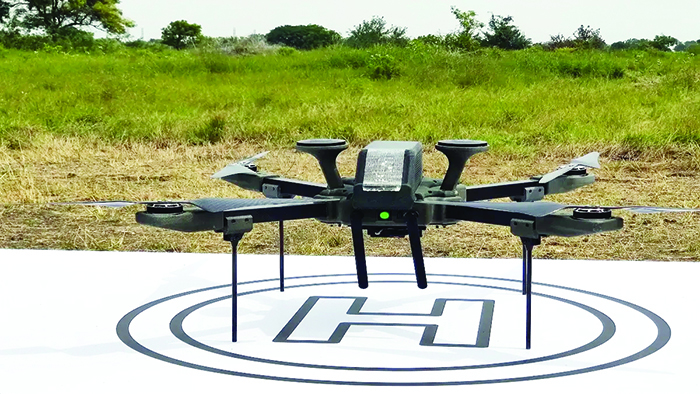
The rise of Indian drones: Companies like ideaForge have become market leaders in tactical UAVs. Their SWITCH UAV is used by the Indian Army for long-duration surveillance in the harsh climates of the Himalayas. Unlike imported drones, these are hardened specifically for Indian topography.
Loitering munitions and swarm tech: Solar Industries (Nagpur) and its subsidiary Economic Explosives have successfully tested the Nagastra-1, a loitering munition (kamikaze/ suicide drone). In parallel, firms like NewSpace Research and Technologies are pioneering swarm drone technology, which allows dozens of drones to communicate and strike targets autonomously- a capability that places India in an elite club of very few nations.
The final frontier of space
The democratisation of space has allowed private Indian firms to contribute to military surveillance and communication. Ananth Technologies and Dhruva Space are now integral to ISRO’s defence-related launches. Under the SBS-3 (Space-Based Surveillance) program, the government has tasked private consortiums with building a constellation of 52 satellites to monitor the Line of Actual Control (LAC) and the Indian Ocean Region. This shift ensures that the military has a 24X7 eye in the sky built on secure, indigenous hardware.
A giant leap forward
With a decisive government led by global statesman Prime Minister Narendra Modi at the helm of affairs, and under the visionary pathbreaking leadership of Defence Minister Rajnath Singh, India’s military industrial complex continues to reach new heights of excellence with every passing year. Attracting private investments directly into the defence industrial base always remained a challenge under the highly inefficient and visionless erstwhile Congress-led UPA governments. But the BJP-led NDA government in just 12 years of its rule, has proved that with the right policies and with the right nationalist and honest intent, all hurdles can be exterminated. Today, more than a billion Indians feel proud, confident, blessed and extremely fortunate that they are witnessing the transformative leadership of a Yugpurush Mahamanav Jan Nayak Prime Minister Narendra Modi in their lifetime. His legacy will be written with diamond letters in the golden pages of history, which will be revered by countless future generations to come.

AMARTYA SINHA
(The content of this article reflects the views of writer and contributor, not necessarily those of the publisher and editor. All disputes are subject to the exclusive jurisdiction of competent courts and forums in Delhi/New Delhi only)




















Leave Your Comment