


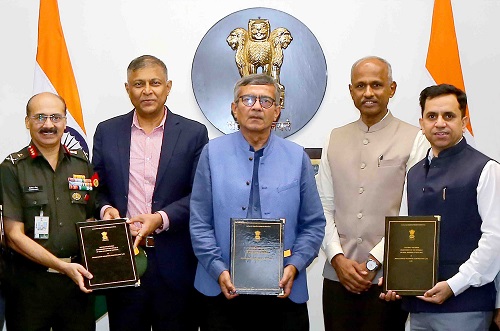
India has taken another step towards reducing dependence on imported defence sub-systems with the signing of a ₹586-crore contract for indigenous Auxiliary Power Units (APUs) for its T-72 and T-90 tanks. The agreement with Accurate Industrial Controls Private Limited is aimed at enhancing the operational readiness, reliability and sustainability of the Army’s mechanised formations.
The procurement focuses on a critical supporting system used by the Army’s armoured platforms. An APU provides an alternative source of electrical power for several essential tank functions, including the fire control system, firing circuit and gun stabilisation system. It also supports other auxiliary equipment required for tank operations.
The availability of an alternate power source can support the functioning of these systems without relying solely on the tank's primary power arrangements. The Ministry said the induction of the indigenously developed APUs is expected to strengthen the operational preparedness and sustainability of mechanised formations.
Beyond the immediate requirement of the armoured fleet, the contract carries significance for India's broader effort to develop and manufacture critical defence equipment domestically. The project has been taken forward under the Make-II framework, which provides an avenue for industry-led development of defence equipment.
The Ministry described the agreement as an example of how indigenous research and development can move beyond the development stage towards actual production and induction into the armed forces. Such projects are intended to encourage domestic industry to develop specialised technologies for military requirements.
For India's armoured formations, the procurement represents an effort to reinforce the supporting technology that keeps key tank systems operational. The focus on locally developed APUs also fits into the wider push to build domestic capabilities for critical components and sub-systems used on major defence platforms.
The contract is part of the government's larger emphasis on defence indigenisation and self-reliance. It is aligned with the vision of Viksit Bharat @2047 and the objective of creating a more resilient domestic defence manufacturing ecosystem.
The agreement therefore combines an operational requirement with a broader industrial objective: strengthening the Army's existing armoured capabilities while expanding the role of Indian industry in developing and supplying specialised defence technologies.





















Leave Your Comment