


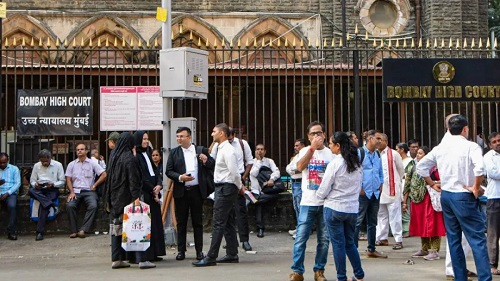
In a significant development in one of India’s most closely watched terror cases, the Bombay High Court on Wednesday discharged four men accused in the 2006 Malegaon blasts, setting aside an earlier order by a special court that had framed charges against them.
A bench comprising Chief Justice Shree Chandrashekhar and Justice Shyam Chandak allowed the appeals filed by the accused—Rajendra Chaudhary, Dhan Singh, Manohar Ram Singh Narwaria, and Lokesh Sharma. The court’s detailed order is awaited, but the ruling effectively overturns the special court’s decision to proceed with charges against them.
The four had been booked under multiple provisions of the Indian Penal Code, including murder and criminal conspiracy, along with stringent sections of the Unlawful Activities (Prevention) Act (UAPA), reflecting the gravity of the allegations.
The case stems from the tragic events of September 8, 2006, when four coordinated bomb explosions ripped through Malegaon in Maharashtra’s Nashik district. Three blasts occurred within the premises of Hamidia Masjid and Bada Kabrastan shortly after Friday prayers, while a fourth explosion took place at Mushawarat Chowk. The attacks claimed 31 lives and left over 300 people injured, marking one of the deadliest incidents in the region.
Initially investigated by the Maharashtra Anti-Terrorism Squad, the case saw the arrest of nine Muslim men. However, after the National Investigation Agency (NIA) took over the probe, the direction of the investigation shifted. The NIA alleged the involvement of right-wing extremists and subsequently arrested the four men who have now been discharged.
Notably, the nine men arrested in the initial phase of the investigation had earlier been discharged by a special court, raising questions about the trajectory and handling of the case over the years.
In September last year, a special court had framed charges against the four accused, prompting them to challenge the order before the High Court. In January this year, the High Court admitted their pleas, observing that a prima facie case for interference existed, and stayed further proceedings in the trial court.
In their petitions, the accused contended that the NIA had failed to produce credible evidence linking them to the blasts. The High Court’s decision to discharge them suggests that it found merit in these arguments, though the detailed reasoning will only be clear once the full order is made public.
The ruling is likely to reignite debate over investigative lapses, prolonged trials, and the challenges of securing convictions in complex terror cases. It also underscores the judiciary’s role in ensuring that prosecutions are backed by substantive evidence, particularly in cases involving serious charges under anti-terror laws.
As the legal proceedings continue to unfold, the verdict brings renewed focus on the pursuit of justice for the victims of the Malegaon blasts and accountability in the investigative process.




















Leave Your Comment