


The Bharatiya Janata Party (BJP) has once again demonstrated its electoral prowess with a decisive victory in Maharashtra, routing political heavyweights like Uddhav Thackeray, Sharad Pawar, and Rahul Gandhi. Coming off the back of a surprise win in Haryana and a clean sweep in by-elections in Uttar Pradesh and Bihar, the BJP’s success in Maharashtra underscores a significant tactical shift. By moving the electoral focus from Prime Minister Narendra Modi’s national appeal to strong local leadership, grassroots organization, and targeted welfare schemes, the BJP has refined its strategy to counter regional challenges. This victory not only fortifies the party’s position in Maharashtra but also sends a powerful message about its ability to adapt and dominate in diverse political landscapes.
The Maharashtra Triumph: A Lesson in Strategic Acumen
Maharashtra’s political battlefield was expected to be a tough test for the BJP, given the formidable alliance of the Shiv Sena (UBT) under Uddhav Thackeray, the Nationalist Congress Party (NCP) led by Sharad Pawar, and the Congress party helmed nationally by Rahul Gandhi. These parties had sought to frame the election as a referendum on the BJP’s governance and to galvanize anti-incumbency sentiment against the Eknath Shinde-led government, which the BJP supported. However, the BJP turned the tables by focusing on hyper-local issues, leveraging welfare schemes, and showcasing unity within its state unit.
One of the critical aspects of the BJP’s strategy was its emphasis on women-centric welfare schemes. Programs like Ujjwala Yojana, which provides subsidized LPG cylinders and financial support under PM Matru Vandana Yojana were marketed effectively to women voters, a demographic that played a decisive role in the outcome. The party also highlighted state-specific initiatives such as the development of agricultural infrastructure, better irrigation facilities, and urban development projects to connect with farmers, rural voters, and urban middle-class constituencies.
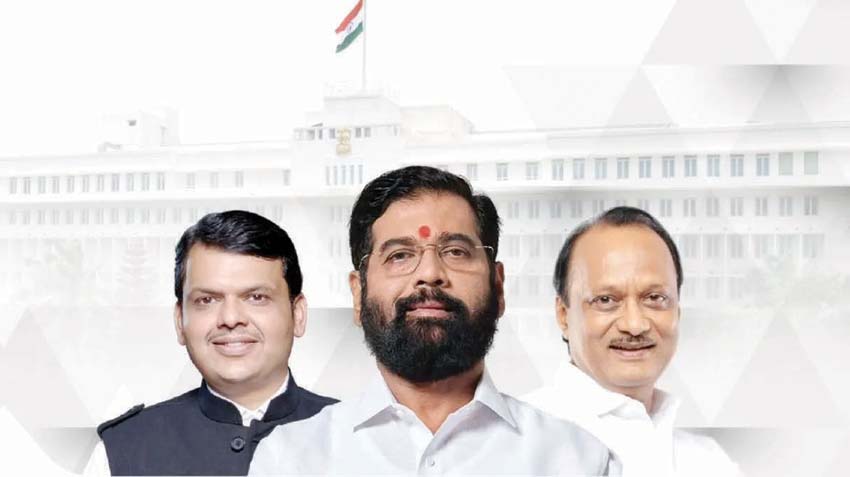
The BJP also made strategic use of its organizational machinery, mobilizing grassroots workers and aligning local leaders to ensure that voter outreach was comprehensive and targeted. Unlike the opposition, which struggled to present a cohesive agenda, the BJP’s campaign was sharply focused on development and governance, steering clear of polarizing rhetoric. The decision to project Devendra Fadnavis and Eknath Shinde as the joint faces of the campaign was particularly astute, as it neutralized any perception of infighting and demonstrated a unified leadership model.
Routing the Titans: Thackeray, Pawar, and Gandhi
The BJP’s ability to outmanoeuvre the Shiv Sena (UBT), NCP, and Congress stems from its adept handling of the political narrative. Uddhav Thackeray, once a staunch ally of the BJP, attempted to leverage the emotional appeal of his split from the saffron coalition, portraying it as a fight for Maharashtra’s identity. However, the BJP’s narrative of betrayal by Thackeray in the formation of the Maha Vikas Aghadi (MVA) government resonated more strongly with voters, particularly in traditional Shiv Sena bastions.
Sharad Pawar, despite his reputation as a political stalwart, faced the dual challenge of internal party dissent and the BJP’s effective campaign. The NCP’s split, with Ajit Pawar aligning with the BJP- Shinde camp, weakened the opposition coalition’s organizational strength. This internal discord, coupled with the BJP’s focused outreach in western Maharashtra—an NCP stronghold—helped the saffron party make significant inroads in the region.
Rahul Gandhi’s Congress, while buoyed by his Bharat Jodo Yatra’s success in creating a nationwide buzz, failed to translate that momentum into votes in Maharashtra. The party’s disorganized campaign, lack of strong local leadership, and limited voter connect in key constituencies allowed the BJP to dominate urban and semi-urban areas traditionally contested by the Congress.
A Tactical Shift in BJP’s Strategy
The recent string of electoral successes indicates a marked tactical shift in the BJP’s approach, especially after its relative underperformance in the Lok Sabha elections earlier. Traditionally reliant on Modi’s charisma and the party’s national appeal, the BJP has now shifted focus toward empowering state leaders, addressing localized issues, and tailoring its campaign strategies to suit regional contexts.
The BJP's recent electoral victories in Maharashtra, Haryana, and by-elections in Uttar Pradesh and Bihar reflect a significant shift in its strategy. This evolution is marked by a decentralization of leadership, a nuanced focus on local issues, and a strong reliance on welfare schemes, particularly for women. While Prime Minister Narendra Modi remains the party’s face at the national level, the BJP has strategically moved towards empowering regional leaders and tailoring campaigns to address localized grievances. Let’s explore this shift in greater detail.
Decentralization of Leadership
In earlier elections, BJP relied heavily on the charisma and popularity of PM Modi, with campaigns often centered on his vision and persona. However, recent electoral strategies indicate a calculated delegation of responsibilities to regional leaders. This shift ensures that the BJP remains rooted in local politics while benefiting from Modi’s overarching appeal.
Regional Leaders Taking Center Stage
Maharashtra: The BJP placed a significant emphasis on leaders like Eknath Shinde (Shiv Sena faction) and Ajit Pawar (NCP faction), giving them prominence in campaign narratives. This move highlighted local governance and diluted the opposition’s attempts to make the elections solely about national politics.
Haryana: The BJP allowed Chief Minister Nayab Singh Saini to take the lead, projecting him as a steady hand in the state’s administration, despite earlier criticisms over unemployment and farmers’ issues.
Uttar Pradesh: CM Yogi Adityanath played a pivotal role in consolidating the Hindu vote and positioning himself as a protector of law and order. His popularity among the state’s electorate provided a distinct identity for the BJP in UP.
By allowing regional leaders to spearhead campaigns, the BJP countered the criticism that it was overly dependent on Modi while presenting itself as a party with a deep bench of capable leaders.
Tailoring Campaigns to Local Concerns
Maharashtra: The BJP crafted its messaging around urban infrastructure development, farmer support, and drought relief, which were pressing issues for the state. It also targeted the Shiv Sena's perceived betrayal of its core Hindutva ideology under Uddhav Thackeray.
Haryana: The BJP emphasized welfare measures for farmers and women while addressing rural employment concerns. Earlier CM Manohar Lal Khattar’s governance record was pitched as a balance between progress and tradition.
By addressing specific regional grievances, the BJP prevented opposition parties from monopolizing these narratives, effectively neutralizing their local advantages.
Localized Issue-Based Campaigning

One of the BJP’s most significant tactical shifts is the move away from one-size-fits-all national campaigns to a more nuanced approach that addresses specific regional concerns. This adaptation reflects the party's understanding of India’s diverse electorate and its varied priorities.
Building a Robust Welfare State
The BJP has increasingly aligned its electoral strategy with welfare-driven governance, emphasizing tangible benefits over ideological rhetoric. This shift has particularly resonated with economically disadvantaged groups, including women and rural voters.
Women-Centric Initiatives
Women voters have become a core constituency for the BJP, thanks to targeted welfare schemes:
Pradhan Mantri Ujjwala Yojana
Provided free LPG connections to rural households, significantly improving women’s quality of life.
Ujjwala Yojana PM Awas Yojana
Focused on affordable housing, often in the name of female family members, empowering women financially.
• Jan Dhan Accounts: Promoted financial inclusion by opening millions of bank accounts, especially for rural women.
The party has consistently highlighted these schemes during campaigns, positioning itself as a pro-welfare government that prioritizes women’s empowerment.
General Welfare Programs
BJP’s broader welfare agenda includes free ration distribution, health insurance through Ayushman Bharat, and infrastructure projects that directly impact voters' lives. This approach ensures the party’s appeal across caste, class, and gender lines.
Countering Opposition Unity
A critical aspect of BJP’s new strategy is its ability to navigate and neutralize united opposition alliances. While earlier campaigns were often aggressive and Modi-centric, recent strategies show a more sophisticated approach.
Splitting Opposition Votes
In Maharashtra, the BJP strategically allied with the Shinde faction of Shiv Sena and Ajit Pawar’s faction of the NCP, causing significant fissures in the opposition. This not only divided their vote base but also weakened their credibility.
Positioning Local Leaders Against Opposition Stalwarts
By elevating regional leaders, the BJP countered the narrative that it was overly centralized. This allowed it to frame elections as a contest between capable governance (led by its regional leaders) and the opposition’s perceived opportunistic alliances.
Strengthening Grassroots Organization
The BJP has also doubled down on its organizational strength, ensuring its cadre remains engaged and responsive to local voters’ needs. This network plays a critical role in disseminating campaign messages and mobilizing voters on Election Day.
Booth-Level Management
BJP’s electoral machinery ensures high voter turnout through systematic booth-level management. The party invests heavily in training its grassroots workers,enabling them to act as both campaigners and trouble-shooters.
Use of Technology
The BJP leverages technology for voter outreach, including apps to coordinate cadre activities and monitor campaign progress. Social media platforms are also used extensively for real-time engagement with voters.
Strategic Appearances
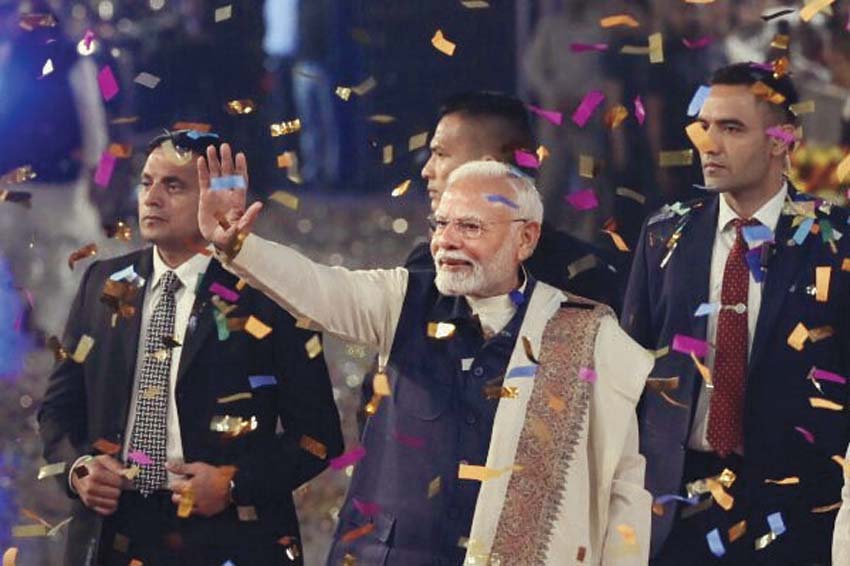
Modi’s involvement is carefully timed to amplify the party’s messaging at crucial junctures. For example, his rallies are typically held in constituencies where the BJP faces tough battles, adding momentum to the campaign.
Recalibrating Modi’s Role
While Modi remains the BJP’s most potent campaigner, his role has been recalibrated. Instead of being the sole face of campaigns, Modi now serves as a unifying figure that reinforces the party’s achievements and vision, while regional leaders focus on state-specific issues.
Blending National and Local Narratives
Modi’s speeches now strike a balance between highlighting national policies and praising regional leaders’ contributions. This dual focus strengthens the party’s narrative of unified leadership and decentralized governance.
Jharkhand: Decoding the JMM-Congress Triumph and BJP’s Failure

In the recent Jharkhand Assembly elections, Hemant Soren’s Jharkhand Mukti Morcha (JMM), in alliance with the Congress and Rashtriya Janata Dal (RJD), delivered a decisive victory, securing a second consecutive term. This triumph not only reaffirmed Soren’s leadership but also underscored the strength of regional politics in addressing local aspirations. Soren’s governance, rooted in welfare-driven policies and a strong focus on tribal rights, resonated with the electorate, helping him consolidate his position. On the other hand, the BJP, despite its formidable organizational machinery and national appeal, failed to breach the JMM’s fortress, largely due to its disconnect with grassroots issues and the absence of a strong regional face.
Hemant Soren’s ability to foster a pro-incumbency wave, a rarity in Indian politics, was a cornerstone of his victory. Unlike many state governments that grapple with voter dissatisfaction, Soren’s administration succeeded in building goodwill through its welfare-centric approach. Initiatives like the Guruji Kitche n Scheme, which provided free meals to school children, and the Sona Sobran Dhoti Saree Scheme, which distributed free clothing to the poor, were pivotal in winning over the rural electorate. His government’s pandemic response, particularly the support extended to migrant workers and the underprivileged during the COVID-19 crisis, further cemented his image as a leader attuned to the needs of the marginalized. These efforts created a perception of governance that prioritized people over politics, earning him widespread support.
A significant factor in Soren’s success was his ability to consolidate the tribal vote. Tribals constitute nearly 27% of Jharkhand’s population, and as a leader deeply connected to tribal communities, Soren positioned himself as their champion. His staunch opposition to amendments proposed by the BJP-led Central government to forest and land laws, which were perceived as threats to tribal autonomy, resonated deeply with these communities. Soren’s emphasis on preserving tribal lands and culture not only safeguarded their trust but also fortified his party’s core support base. This tribal solidarity became a decisive factor in the electoral outcome.
A significant factor in Soren’s success was his ability to consolidate the tribal vote. Tribals constitute nearly 27% of Jharkhand’s population, and as a leader deeply connected to tribal communities, Soren positioned himself as their champion. His staunch opposition to amendments proposed by the BJP-led Central government to forest and land laws, which were perceived as threats to tribal autonomy, resonated deeply with these communities. Soren’s emphasis on preserving tribal lands and culture not only safeguarded their trust but also fortified his party’s core support base. This tribal solidarity became a decisive factor in the electoral outcome.
The JMM’s pre-poll alliance with the Congress and RJD proved to be a masterstroke. This coalition brought together diverse voter groups, creating a united front that effectively countered the BJP’s campaign. While the JMM dominated tribal and rural areas, the Congress contributed its urban and minority voter base, ensuring comprehensive coverage across the state. The alliance showcased remarkable cohesion, avoiding the vote-splitting that often plagues opposition coalitions. By contrast, the BJP’s inability to form a meaningful pre-poll alliance diluted its appeal and left it unable to match the combined strength of the JMM-led coalition.
Soren’s focus on regional identity and local issues was another critical element of his victory. In a state that has long grappled with challenges like unemployment, displacement, and rural poverty, his campaign centered on Jharkhand’s unique identity and the specific concerns of its people. By opposing the privatization of Coal India subsidiaries and advocating for greater autonomy in implementing welfare schemes, Soren reinforced his image as a leader committed to Jharkhand’s interests. This approach helped him counter the BJP’s emphasis on national narratives, such as the abrogation of Article 370 or major infrastructure projects, which failed to address the immediate concerns of the state’s electorate.
In stark contrast, the BJP struggled to present a compelling alternative to Soren’s leadership. One of the party’s critical weaknesses was its lack of a strong regional face. While it relied heavily on Prime Minister Narendra Modi and Union Home Minister Amit Shah to drive its campaign, it lacked a credible state-level leader who could rival Soren’s popularity. The sidelining of former Chief Minister Raghubar Das after the BJP’s defeat in the 2019 elections left a leadership vacuum that the party could not effectively fill. This absence of a relatable local figure further alienated the electorate, who found Soren’s grounded leadership more appealing.
The BJP’s campaign also suffered from a disconnect with grassroots issues. Its focus on national achievements, while effective in other states, did little to address Jharkhand’s pressing concerns. Policies perceived as anti-tribal, such as the proposed amendments to forest laws, further alienated a significant section of the electorate. Additionally, the BJP’s fragmented approach to opposition politics, including its alliance with smaller parties like the All Jharkhand Students Union (AJSU), failed to coalesce into a cohesive strategy. This lack of coordination diluted its ability to challenge the JMM-Congress alliance effectively.
The election results also highlight the efficacy of alliance politics in countering the BJP’s electoral juggernaut. By presenting a united front, the JMM-Congress-RJD coalition managed to consolidate anti-BJP votes, preventing fragmentation and ensuring a decisive victory. This unity starkly contrasted with the BJP’s inability to build meaningful partnerships, which left it isolated in the face of a formidable opposition bloc.
Hemant Soren’s victory serves as a testament to the power of welfare-driven governance and the importance of addressing regional aspirations in Indian politics. By focusing on tribal rights, local identity, and grassroots issues, he managed to build a coalition of support that transcended traditional divides. For the BJP, the election outcome underscores the limitations of relying solely on national narratives and the importance of cultivating strong regional leadership. As Jharkhand
embarks on another term under Soren’s leadership, his decisive win reaffirms the enduring relevance of regional politics in shaping the state’s future.
The By-Election Clean Sweep: Uttar Pradesh and Bihar
While the Maharashtra win was a blockbuster achievement, the BJP also showcased its electoral dominance in the recent by-elections in Uttar Pradesh and Bihar, where it won every contested seat. In Uttar Pradesh, the BJP capitalized on Chief Minister Yogi Adityanath’s popularity and the robust law-and-order narrative. The state’s welfare schemes, including free ration distribution and housing projects under PM Awas Yojana, found favor with economically disadvantaged voters.
In Bihar, the NDA’s victory highlighted its ability to consolidate its base despite being out of power in the state. The saffron party’s appeal among upper-caste voters, coupled with strategic inroads into the backward and Dalit communities, helped it outperform the Mahagathbandhan (RJD- Congress alliance). By focusing on local governance issues and Prime Minister Modi’s development initiatives, the NDA managed to overcome the opposition’s combined strength.

By NILABH KRISHNA
(The content of this article reflects the views of writers and contributors, not necessarily those of the publisher and editor. All disputes are subject to the exclusive jurisdiction of competent courts and forums in Delhi/New Delhi only)














Leave Your Comment