


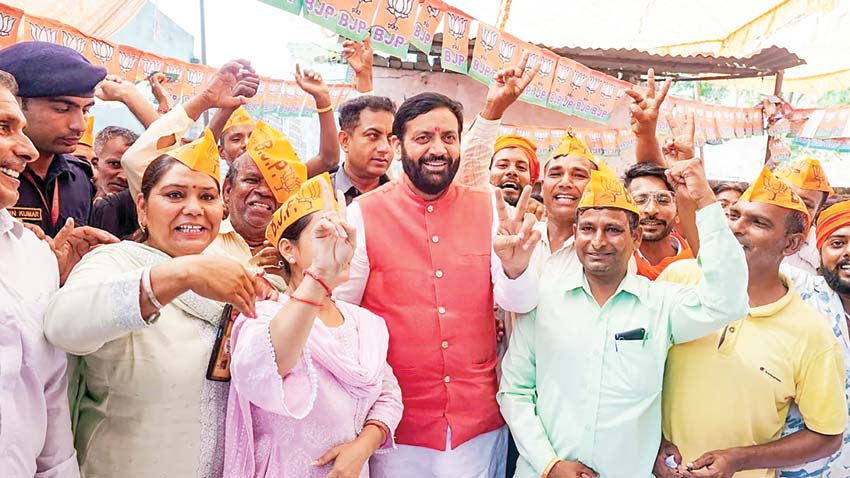
On October 8, 2024, the Bharatiya Janata Party (BJP) registered a sweeping victory in the Haryana Assembly elections, solidifying its position as the leading political force in the state. This victory was not merely a continuation of its previous success but a resounding statement of its organizational strength and ability to connect with the electorate at multiple levels. Much of this success can be credited to the meticulous, behind-the-scenes efforts of Union Minister Dharmendra Pradhan, who played the role of a quiet yet highly effective strategist. His work ensured that the BJP not only overcame challenges but also emerged stronger by addressing key local issues, navigating complex caste dynamics, and keeping the focus on development and governance. This victory holds wider implications as the party eyes upcoming electoral contests in Jharkhand, Maharashtra, and Jammu and Kashmir, where the BJP is steadily building a formidable presence.
One of the central factors behind the BJP's victory in Haryana was the effective leadership of current Chief Minister Nayab Singh Saini and former Manohar Lal Khattar’s government. Saini’s governance, often lauded for its focus on transparency and accountability, struck a chord with voters across the state. His administration's commitment to rural development, improved infrastructure, and law-and-order reforms helped cement the BJP’s image as a party of good governance. Under his leadership, the state saw substantial progress in sectors like agriculture, education, and healthcare, which were critical in winning over both urban and rural voters. Furthermore, welfare schemes targeted at farmers, women, and marginalized communities bolstered his image as a leader who genuinely cared for the common man. Khattar and Saini’s clean, no-nonsense persona resonated with voters, especially in a state where political corruption has often been a sore point.
The BJP’s campaign in Haryana was highly localized, focusing on the distinct needs of different regions. This nuanced approach, devised by Dharmendra Pradhan, ensured that the party didn’t fall into the trap of a one-size-fits-all national campaign, which often alienates regional voters. Instead, Pradhan orchestrated a campaign that spoke to the people’s immediate concerns. Farmers were promised better prices for their crops, urban areas were assured of improved infrastructure, and women were guaranteed safety and financial empowerment. Pradhan’s decision to tailor the campaign around these specific issues helped create a connection with the electorate, making the BJP's message more personal and relatable. This strategic focus allowed the BJP to avoid falling into divisive rhetoric and instead build a narrative that emphasized development, unity, and progress.
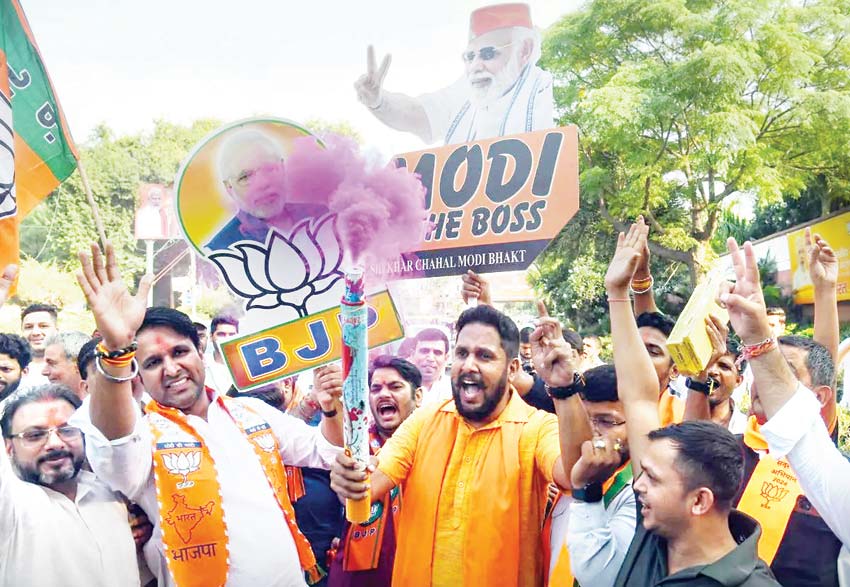
At the heart of this victory was Prime Minister Narendra Modi, whose enduring popularity continues to be a vital asset for the BJP. Even after more than a decade in power, Modi remains a leader who can galvanize support across demographics. His ability to communicate effectively with the masses, articulating both the challenges and opportunities facing the country, remains unparalleled. In Haryana, Modi’s focus on national issues, such as security, economic growth, and India’s rising global stature, complemented the local development agenda, creating a powerful synergy that resonated with voters. The prime minister’s speeches, which emphasized the strides India has made under his leadership—be it in terms of infrastructure development or digital transformation—rekindled a sense of pride among voters, reinforcing their belief in the BJP’s vision.
A key to the BJP's success in Haryana was its ability to forge smart alliances with regional forces. Dharmendra Pradhan played a crucial role here, negotiating partnerships that ensured the party could penetrate even those areas where it previously had limited influence. These alliances allowed the BJP to strengthen its presence in constituencies where local leaders held sway, thus broadening its electoral appeal. Unlike the 2019 elections, where caste dynamics had somewhat polarized the electorate, this time the BJP’s approach was more inclusive, balancing its focus on various communities, including the influential Jat population. The distribution of tickets and the promise of greater representation for different groups helped the party neutralize opposition claims that it had neglected key sections of society.
Dharmendra Pradhan’s role as the silent architect of the BJP's victory cannot be overstated. Known for his political acumen, Pradhan was tasked with overseeing the party's campaign in Haryana, and his approach was nothing short of a masterclass in political strategy. Rather than focusing on high-profile appearances or media-driven narratives, Pradhan worked quietly to strengthen the party’s organizational base at the grassroots level. Under his guidance, BJP workers were mobilized to reach every booth, ensuring that the party’s message was consistently communicated across the state. This micro-level management ensured that the BJP’s ground game was well-oiled and efficient, leaving little room for the opposition to make significant inroads. Moreover, Pradhan’s ability to read the pulse of the electorate and craft region-specific strategies allowed the BJP to effectively address local issues, reducing the anti-incumbency sentiment that often dogs ruling parties.
Looking ahead, the BJP's success in Haryana is expected to have a significant impact on the upcoming elections in Jharkhand and Maharashtra. In Jharkhand, the BJP faces stiff competition from the Jharkhand Mukti Morcha (JMM), but the victory in Haryana will undoubtedly boost the party’s confidence and organizational morale. The Haryana playbook, which combined development-focused narratives with strategic alliances, is likely to be replicated in Jharkhand, where the BJP will aim to consolidate its tribal support base while expanding its reach in urban areas. Similarly, in Maharashtra, where the Shiv Sena (Shinde faction) is a key ally, the BJP is expected to use the momentum from Haryana to strengthen its partnership with regional forces and ensure that local issues remain at the forefront of its campaign.
Another state where the BJP is making significant strides is Jammu and Kashmir, where the party has steadily built a formidable foothold. The abrogation of Article 370 in 2019, a landmark move by the Modi government, has transformed the political landscape in the region. While security remains a key concern, the BJP has successfully shifted the focus to development and integration, promising jobs, infrastructure projects, and improved governance. The party's efforts to reach out to marginalized communities, such as the Gujjars and Bakarwals, by offering them reservations and welfare benefits, have further broadened its electoral appeal. The result is that in Jammu, the BJP remains a dominant force, and even in parts of the Kashmir Valley, the party is making slow but steady gains.
How Congress Was Left Clueless Despite a High-Pitched Campaign
The results of the 2024 Haryana Assembly elections delivered a shocking blow to the Congress party, leaving it reeling and utterly clueless despite a high-octane campaign that many had anticipated would at least shake the Bharatiya Janata Party’s (BJP) stronghold. While the Congress leadership, buoyed by the participation of its star campaigners, had entered the electoral race with great expectations, the election outcome changed the script in a manner that the party could neither foresee nor counter effectively.
The Congress, led by Rahul Gandhi and regional leaders, had put its heart and soul into the Haryana campaign. Their rallies, roadshows, and sharp attacks on the BJP government were aimed at capitalizing on growing public discontent over agrarian distress, unemployment, and local grievances. At every stage, the Congress positioned itself as the party ready to reclaim power in the state by addressing the "failures" of the Manohar Lal Khattar/Nayab Singh Saini-led BJP government. The Congress crafted a narrative around the issues that it believed resonated most with Haryana’s voters—farmers' dissatisfaction, rural unemployment, and the struggles of the common man. Despite these efforts, however, the party found itself unable to translate its rhetoric into votes, ultimately leading to a dramatic shift in the election’s narrative.
Congress’s High-Pitched
Campaign: All Bark, No Bite
The Congress campaign in Haryana was high in decibels but low in impact. The party had carefully selected farmer issues as its main point of attack, focusing on promises of loan waivers, higher minimum support prices (MSP), and an overall revamp of Haryana’s rural economy. The party tried to rally the state’s influential Jat community and other agricultural groups by positioning itself as their saviour. Public grievances like inflation and unemployment were also brought to the forefront, and Congress aimed to position itself as the voice of the common man against an indifferent government.
Rahul Gandhi led several rallies across key constituencies, while the party’s regional leaders spoke passionately about the BJP’s supposed failure to address the growing concerns of ordinary Haryanvis. The Congress’s campaign was marked by aggressive media outreach, emphasizing corruption, farmer distress, and the perceived failures of the state administration. Yet, despite the volume of their rhetoric, the campaign lacked a clear, cohesive strategy that could inspire confidence among voters. The Congress failed to present a viable alternative to Saini's governance or offer a concrete vision for the state's future beyond criticisms of the ruling party.
While Congress leaders drummed up emotional issues, the BJP stuck to a far more pragmatic script. This made all the difference, and by election day, it was clear that the Congress had miscalculated the mood of the voters.
The Election Script Changes
Despite its hopes, Congress watched helplessly as the election script started changing in favour of the BJP. Voters, especially in rural areas, responded more to the BJP's development narrative than the Congress's emotional appeals. Under Manohar Lal Khattar’s previous administration, the state had witnessed significant strides in infrastructure development, public services, and welfare schemes that benefitted a wide range of people, from rural farmers to urban middle-class families. While Congress focused heavily on discontent, the BJP ensured that it highlighted its tangible achievements in governance, something Congress failed to adequately address or counter.
Dharmendra Pradhan, the BJP’s election in-charge, played a key role in ensuring that the BJP's campaign focused on hyper-local issues. BJP workers reached out directly to voters, listening to their concerns and positioning Saini’s government as a problem-solver, which helped counter any anti-incumbency sentiment. Rather than getting caught up in emotional political attacks, the BJP focused on practical issues such as infrastructure, water availability, road connectivity, and public healthcare. This ground-level engagement, along with a clean and transparent image projected by both Khattar and Saini, proved to be a winning formula, making Congress’s loud, emotional campaign seem hollow in comparison.
The Congress had also misread the changing caste dynamics in Haryana. While they banked heavily on the Jat vote, assuming it would swing overwhelmingly in their favour, the BJP, under Pradhan’s leadership, managed to stitch together a broader caste coalition, including non-Jat communities. This recalibration of caste alliances significantly undercut the Congress’s ability to polarize the election along caste lines.
Congress’s Disconnect with Voter Sentiment
Perhaps one of the greatest mistakes the Congress made during the Haryana elections was its failure to connect with the evolving aspirations of voters. While Congress strategists hammered on about distress, corruption, and communal politics, many voters had moved beyond these older political narratives. Haryana’s voters were not just concerned about historical issues but were increasingly focused on progress, jobs, and their aspirations for better infrastructure, education, and economic opportunity.
In contrast, the BJP’s election strategy, designed by Pradhan and executed with precision by Chief Minister Saini, spoke directly to these aspirations. Schemes like Ayushman Bharat for healthcare, rural electrification, road networks, and investments in agricultural technology were major talking points that resonated deeply with the electorate. The Congress, on the other hand, seemed stuck in an outdated campaign playbook that focused on problems without solutions.
Where Congress Went Wrong
The Congress campaign had several critical flaws that left it clueless in the wake of the BJP’s triumph. First, there was no clear leadership at the regional level to rival the stature of Nayab Singh Saini. While Rahul Gandhi and Priyanka Gandhi rallied large crowds, the lack of a strong regional face meant that the party struggled to present a credible chief ministerial candidate. Voters appeared reluctant to throw their weight behind a party that could not even put forth a leader who could inspire confidence in terms of governance.
Second, the Congress relied too heavily on attacking the BJP rather than presenting a positive agenda. While focusing on the negative aspects of previous Khattar’s and present governance, they offered little in terms of policy proposals or solutions that could convince voters of a new direction under Congress rule. This failure to articulate a clear plan left the Congress looking reactive rather than proactive.
Moreover, the Congress's over-reliance on national leaders like Rahul Gandhi, without building a strong local leadership, further alienated a section of voters who were seeking grounded, practical solutions to local problems. The party’s campaign felt distant and disconnected from Haryana’s realities, while the BJP’s locally tailored strategy, spearheaded by Pradhan, touched the right nerve with voters.
The Fallout: Congress Left Clueless
In the aftermath of the Haryana elections, Congress leaders were left grasping for answers. Their high-pitched campaign had raised expectations among the party's rank and file, and the defeat was a major setback, particularly because of the confidence the party had shown in its ability to challenge the BJP. The scale of the BJP's victory, driven by Modi's popularity and Saini’s governance, exposed Congress’s inability to adapt to the changing political landscape.
The party's post-election response was marked by confusion and internal blame-shifting, with some factions pointing fingers at the central leadership and others blaming the regional strategy. The Congress's inability to learn from previous electoral mistakes, such as its failure to connect with aspirational voters or offer a cohesive leadership alternative, was once again highlighted. In essence, the Congress’s approach seemed outdated, a relic of a bygone era where anti-incumbency and emotional appeals could sway voters.
Modi- The Masterclass
At the centre of this political momentum is Narendra Modi, whose popularity remains undiminished despite the challenges of governing a diverse and complex nation like India. Modi’s appeal lies in his ability to project himself as a leader who works for the people, is unafraid of tough decisions, and has a vision for India’s future. Whether it is through his flagship initiatives like the Pradhan Mantri Awas Yojana, Jan Dhan Yojana, or the Ujjwala Yojana, Modi’s government has consistently delivered tangible benefits to the underprivileged, ensuring that the BJP’s support base remains solid. His foreign policy successes, particularly in enhancing India’s global stature, and his tough stance on national security have only added to his aura as a strong, decisive leader. Modi's speeches, whether at international forums or domestic rallies, continue to inspire confidence, making him a favourite among a large section of the electorate.
(The content of this article reflects the views of writers and contributors, not necessarily those of the publisher and editor. All disputes are subject to the exclusive jurisdiction of competent courts and forums in Delhi/New Delhi only)

By NILABH KRISHNA














Leave Your Comment