


For those accustomed to the political landscape of South Asia, the acronym "BJP" immediately conjures images of India's ruling Bharatiya Janata Party. However, in a twist of nomenclature, a different party sharing the same initials has made its mark in Bangladesh's recent parliamentary elections. The Bangladesh Jatiya Party (BJP) has secured a single seat in the country's 13th General Elections, providing a talking point that transcends borders.
While the Election Commission (EC) has declared results for 297 seats, the overwhelming mandate has gone to the Bangladesh Nationalist Party (BNP) and its alliances. The BNP itself dominated the polls, winning 209 seats. Together with its allies—Ganosamhati Andolan, Ganao Odhikar Parishad, and the Bangladesh Jatiya Party (BJP)—the coalition bagged a total of 212 seats.
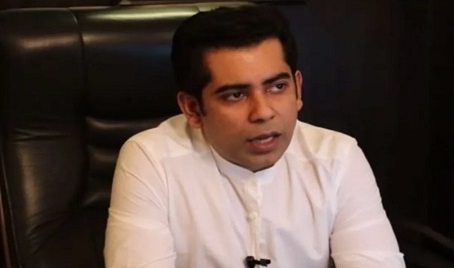
The spotlight on this particular ally falls on Andaleeve Rahman Partho, the candidate from the Bhola-1 constituency, who clinched the sole victory for the Bangladesh Jatiya Party. Partho defeated his nearest rival, Bangladesh Jamaat-e-Islami candidate Md Nazrul Islam, securing 1,05,543 votes against Islam's 75,337.
In the broader political landscape, the Jamaat-e-Islami and its allies performed as the primary opposition bloc, securing 77 seats. The Jamaat-e-Islami itself won 68 seats, while the newly formed National Citizen Party (NCP) secured six.
A total of 50 political parties and 2,028 candidates, including 273 independents, vied for the public's mandate in the February 12 elections. For Partho, victory was not just about national politics but about long-pending promises for his constituency in the southern district of Bhola.
Prior to the elections, Partho laid out an ambitious vision to transform Bhola into the 'Tilottama'—a modern and beautiful city—of the southern region. His electoral campaign was built on a platform of tangible infrastructure and development projects.
According to the Bangladesh Sangbad Sangstha (BSS), Partho's top priorities include the construction of the long-awaited Bhola-Barishal Bridge, the establishment of a medical college to improve healthcare, and providing household gas connections to the residents of the district. He also pledged to curb drug abuse and ensure the basic rights of his constituents.
Aligning himself with the broader vision of the BNP-led alliance, Partho emphasized that a vote for his party was a vote for visible and sustainable development. He specifically noted that BNP Chairman Tarique Rahman has a special focus on the development of the Bhola region.
Partho is not a newcomer to the political arena. A multifaceted professional, he is a politician, educationist, and lawyer. He previously served as a Member of Parliament (MP) from the Bhola-1 constituency and is currently the principal of the British School of Law in Dhaka.
His political journey began in 2008 when he first contested the 9th General Elections from Bhola-1 as a candidate for the then four-party alliance. In a significant upset, he defeated the Awami League candidate Yusuf Hossain Humayun. During his tenure from 2009 to 2014, he served as a member of the Parliamentary Standing Committee on the Ministry of Establishment, now known as the Ministry of Public Administration.
Partho comes from a prominent political lineage. He is the son of former minister and MP from the same Bhola-1 constituency, Naziur Rahman Manju, and Sheikh Reba Rahman.
While the acronym may cause a double-take for international observers, for the voters of Bhola-1, the victory of Andaleeve Rahman Partho and his Bangladesh Jatiya Party (BJP) represents a local mandate for change, development, and a bridge—both literal and figurative—to a more prosperous future.



















Leave Your Comment