


The Bhopal Municipal Corporation has taken unprecedented action following the explosive discovery of 26 tons of suspected cow meat at the city’s slaughterhouse, suspending nine officials and permanently shuttering the facility. The decision, made during a tumultuous council session, has ignited fierce political debate and communal tensions in the BJP-ruled Madhya Pradesh.
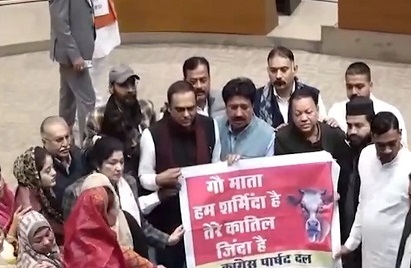
The controversy erupted this week when authorities uncovered the massive stockpile of beef, alleged to be from cows, at the government-run slaughterhouse. The discovery sent shockwaves through the municipal council meeting on Tuesday, with Congress councilors leading a furious uproar over glaring failures in oversight and certification protocols designed to prevent illegal cow slaughter.
In Madhya Pradesh, where cow slaughter is banned under the MP Govansh Vadh Pratishedh Adhiniyam, the incident represents both a massive administrative failure and a potent political flashpoint.
In response, the Divisional Commissioner ordered immediate suspensions targeting key personnel:
Dr. Beni Prasad Gaur, the municipal veterinary doctor responsible for certifying animals fit for slaughter
Eight regular employees stationed at the facility
Three temporary workers who were issued show-cause notices
Dr. Gaur’s role was particularly critical – as the certifying authority, he was tasked with verifying that incoming livestock complied with legal guidelines. The scale of the violation suggests a catastrophic breakdown in this safeguard.
Chaired by Municipal Corporation President Kishan Suryavanshi, the council session grew heated as members unanimously voted to cease all animal slaughter operations permanently.
"Bhopal Nagar Nigam will no longer conduct animal slaughter; the slaughterhouse stands permanently shut," declared officials, marking a dramatic policy shift. The move effectively ends municipal involvement in meat processing, pushing future operations entirely into the private sector.
The fallout extends beyond administrative halls. The All India Muslim Festival Committee has announced plans for demonstrations demanding immediate arrests in the case. Their protest highlights growing community anxieties over the targeting of livelihood practices and perceived inequitable enforcement of laws.
The incident has deepened existing political and social divides. While the ruling BJP faces criticism over the enforcement gaps that allowed such a large-scale violation at a corporation-run facility, the party also stands to galvanize its base by emphasizing its commitment to cow protection.
This scandal raises serious questions about monitoring mechanisms, corruption in certification processes, and the challenges of governing food practices in India's complex socio-religious landscape. The permanent closure shifts the burden of meat supply to unregulated private entities, potentially creating new challenges for food safety and municipal oversight.
As investigations continue, the Bhopal case serves as a stark reminder of how swiftly food regulation can become a flashpoint for larger political and communal tensions, with administrative failures costing officials their careers and altering urban policy permanently.
The coming days will test both the city’s social cohesion and the government’s ability to balance law enforcement with community rights, all under the shadow of 26 tons of seized meat that has already transformed Bhopal’s political and administrative landscape.
















Leave Your Comment